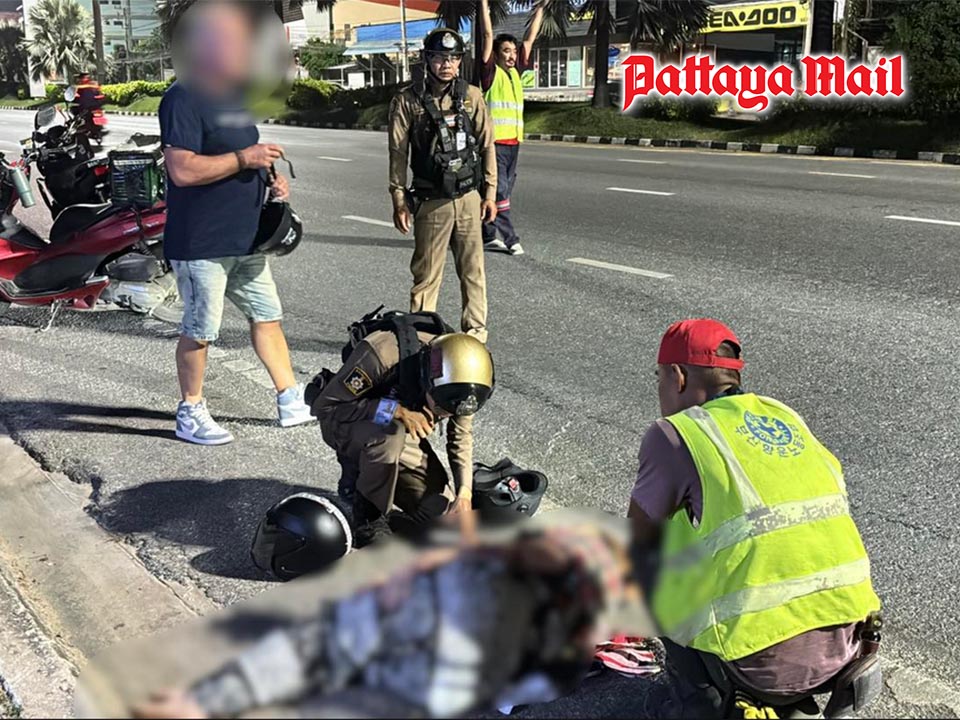
PATTAYA, Thailand – Pattaya likes to blame its road chaos on congestion, tourists, or long-term foreign visitors. But listen closely to the people who actually use the roads every day — foreign tourists, long-term visitors, and locals alike — and a different picture emerges. The problem, many say bluntly, isn’t the roads. It’s the behavior on them.
Across Pattaya and Jomtien, frustration has reached boiling point. Riders ignore red lights and pedestrian crossings as if traffic laws are optional. One-way streets are treated as suggestions, with motorbikes charging head-on into oncoming traffic. Footpaths are no longer safe spaces, regularly used as shortcuts by motorcycles. For many residents, simply crossing the road feels like a calculated risk.
Aggression is a recurring theme in public complaints. Drivers block junctions, refuse to let others turn, and stop inside yellow-hatched boxes, creating instant gridlock when lights change. Add alcohol, drugs, and sheer impatience, and the result is daily chaos. As one long-term rider put it, “I drove in Pattaya for a couple of years — I can’t believe I’m still alive.”
Motorcycles receive the harshest criticism. From weaving at speed through stationary traffic to racing children without licenses, many believe bikes have become the single biggest threat on Pattaya’s roads. Loud modified exhausts make parts of the city unbearable to sit outside, while enforcement remains virtually invisible. “When there are no repercussions for bad behavior,” one resident noted, “this is what you get.”
Infrastructure certainly plays a role. Pattaya’s roads were never designed for today’s volume or size of vehicles. Expanding one-way systems, such as sections of Second Road or Buakhao, is often suggested — but even these ideas are met with skepticism due to knock-on effects for baht buses and local access. “It’s a no-win situation,” one comment read, “but what we have now clearly isn’t working.”
What angers many long-term visitors most is the narrative that foreigners are the problem. “Before criticizing expats, look at local traffic,” one commenter wrote. The consensus is not about nationality, but accountability. Red lights ignored, crossings disrespected, laws unenforced — regardless of who is driving.
Without consistent enforcement, clear penalties, and a serious rethink of traffic management, residents say Pattaya’s roads will only become more dangerous as the city grows. Complaints are no longer just moaning — they are warnings. The city’s reputation as a tourist destination depends not only on beaches and nightlife, but on whether people feel safe getting from one place to another.