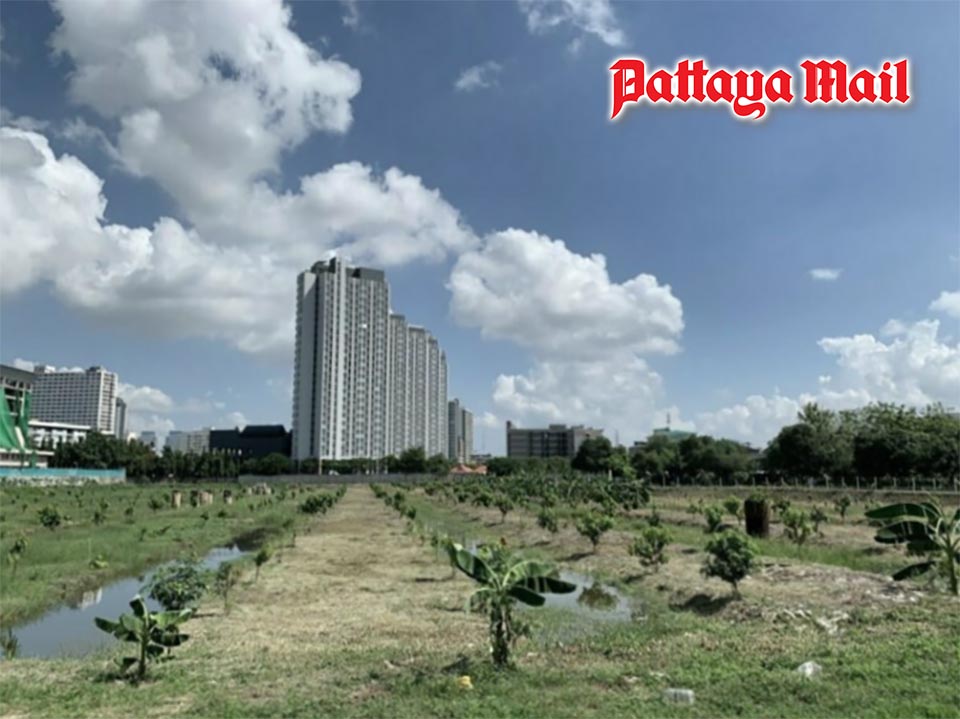
BANGKOK, Thailand – The Bangkok Metropolitan Administration (BMA) is preparing proposals to improve the efficiency of land and building tax collection after finding cases where some landowners allegedly planted crops on vacant plots to qualify for lower agricultural tax rates. A BMA source said on July 22 that the agency is compiling data on possible improvements to land tax collection before submitting the proposal to Bangkok Governor Chadchart Sittipunt for consideration. The proposal would then be forwarded to the Bangkok Metropolitan Council, the Ministry of Finance, and the Ministry of Interior for further review. The review comes nearly seven years after the Land and Building Tax Act B.E. 2562 came into effect in 2020. Bangkok officials believe the current system should be updated to improve fairness and ensure more effective collection.
One proposal is to increase the tax rates for agricultural land from the current range of 0.01–0.1% to 0.03–0.12%. Under the proposed adjustment, the tax burden would rise from around 100 baht per one million baht of assessed land value to approximately 300 baht per one million baht.
The move follows concerns that some owners of vacant land have planted trees or crops, such as bananas, mangoes, or limes, mainly to claim agricultural land status and avoid the higher tax rates applied to unused land. Officials said some landowners may genuinely use their properties for farming, but others may be using limited agricultural activity as a way to reduce their tax obligations without meaningful agricultural production.
Currently, vacant land is subject to tax rates of 0.3–0.7%. If land is left unused or not developed according to its condition for three consecutive years, an additional 0.3% tax increase applies in the fourth year. Further increases of 0.3% can be added every three years if the land remains unused.
The BMA said the current system has resulted in lower-than-expected tax collection because some vacant land has been classified as agricultural property. The proposed changes aim to close loopholes, improve transparency, and ensure land is taxed according to its actual use.
The proposal will undergo further consideration before any changes are implemented.