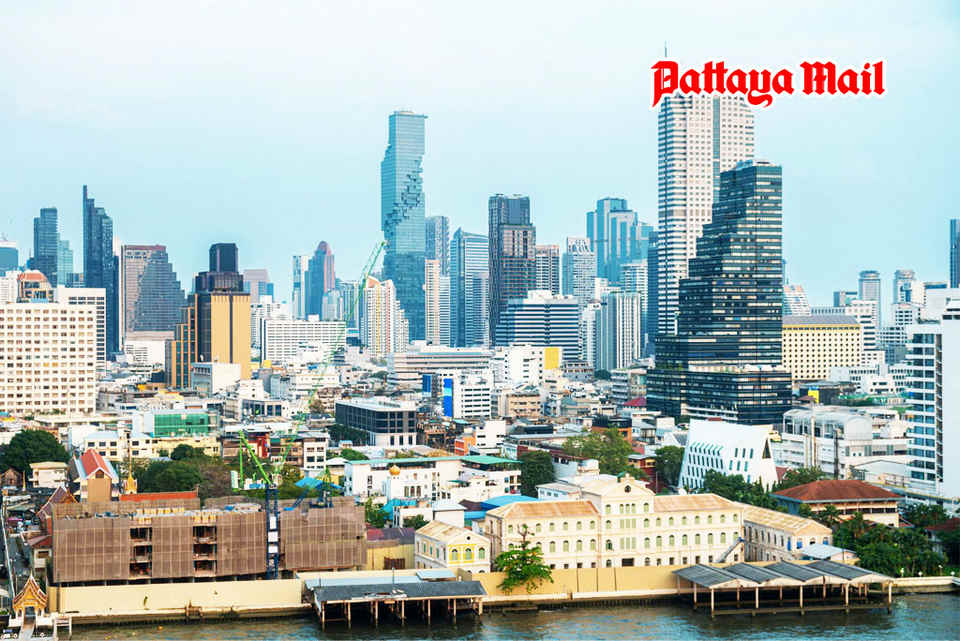
PATTAYA, Thailand – In recent years, the idea of positioning Thailand as a regional financial hub has increasingly become part of the country’s economic policy conversation. This ambition is not driven solely by domestic planning, but also by growing recognition from international economic institutions such as the International Monetary Fund (IMF), which has expressed confidence that Thailand possesses several structural advantages that could support such a transformation.
One significant milestone on this path will occur in October 2026, when Thailand hosts the IMF World Bank Group Annual Meetings 2026, a major global gathering of economic policymakers, central bankers, finance ministers, and financial leaders from around the world. The event will take place at the Queen Sirikit National Convention Center in Bangkok and is widely regarded as one of the most important annual meetings in the international financial community.

According to IMF Managing Director Kristalina Georgieva, Thailand has the potential to emerge as a significant economic and financial center in Southeast Asia. The country’s macroeconomic stability, well-developed banking system, and strategic geographic position at the crossroads of regional trade and investment all contribute to this outlook. At the same time, the Thai government has begun advancing this vision through the proposed Financial Hub Act, legislation designed to create a more competitive environment for global financial institutions seeking a regional base of operations. The goal is to establish a regulatory and economic ecosystem capable of competing with established financial centers such as Singapore and Hong Kong, as well as newer emerging hubs like Dubai.
Central to the proposal are several tax and regulatory incentives intended to attract financial firms and international investment. Among these are potential reductions in corporate income tax rates for qualifying financial businesses, exemptions on certain dividend income received from affiliated companies, relief from specific business tax for financial management services, and reduced withholding tax obligations on certain cross-border payments. Beyond corporate incentives, the policy framework also emphasizes the importance of attracting skilled professionals from around the world.
One of the proposed measures includes a flat personal income tax rate of approximately 15 percent for foreign experts working in designated financial sectors. Additionally, incentives are being designed to encourage highly skilled Thai professionals working abroad to return home. Under the proposal, those returning to work in targeted industries may face a personal income tax ceiling of around 17 percent for a period of five years.
Institutionally, the government also plans to introduce a One Stop Authority (OSA) to streamline licensing procedures and regulatory approvals for financial businesses. By consolidating multiple bureaucratic processes into a single administrative channel, policymakers hope to significantly reduce the time and complexity involved in establishing operations in Thailand. Other proposals include easing certain restrictions related to property ownership for foreign professionals and improving visa and work permit procedures to facilitate international talent mobility.
Nevertheless, transforming a country into a global financial hub is a long-term undertaking. Established financial centers did not emerge overnight; they were built over decades through strong regulatory frameworks, investor confidence, and highly developed financial infrastructure. Yet Thailand’s current efforts—ranging from legislative reform to hosting one of the world’s most influential financial meetings—may represent an important step toward positioning the country within the evolving landscape of global finance.
If these reforms are implemented effectively and consistently, Thailand may gradually expand its role beyond being a world-renowned tourism destination. In time, it could also develop into a new financial gateway for Southeast Asia, linking global capital with one of the most dynamic economic regions in the world.