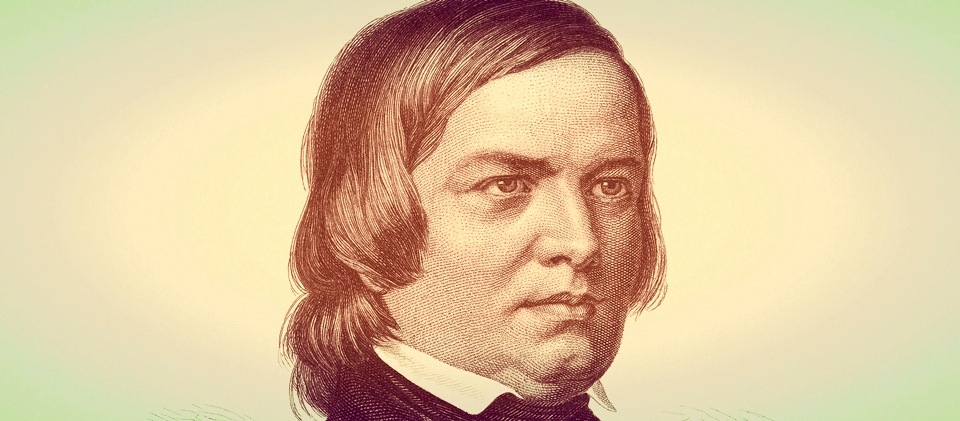
Ever since he saw the virtuoso violinist Niccolò Paganini dazzle crowds in Leipzig on Easter Sunday 1830, the 20-year-old Robert Schumann was determined to become a brilliant concert pianist. He abandoned his law studies at university and obtained tuition from the distinguished teacher Friedrich Wieck, considered the best piano teacher in Germany. Professor Wieck had high hopes for his new student but fate had other plans. Schumann’s dream of becoming a concert pianist was never fulfilled. As a student, he had begun to experience numbness and pain in his right hand. The condition deteriorated so much that even moving his fourth finger caused his entire body to twist convulsively. In desperation, Schumann tried all the various treatments available at the time including homeopathy and electric therapy (whatever that was) but the symptoms persisted.
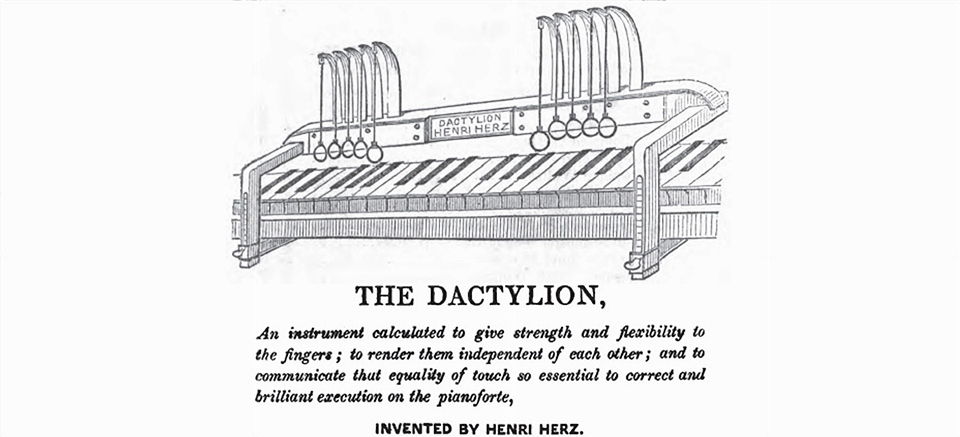
During the mid-19th century, you could buy various mechanical devices (of questionable merit) that claimed to improve finger strength. One of them was a bizarre-looking contraption called the Dactylion, patented in 1836 by the French virtuoso pianist, Henri Herz. Nobody knows whether Schumann bought a Dactylion, but his attempts to improve his hand using some kind of mechanical device resulted in severe injury, which left him almost unable to use his right hand. To his dismay, his piano-playing days were over and his dream of being a concert pianist was shattered. Only one option lay open: shifting focus from playing to composing, in which he had already enjoyed some publishing success.
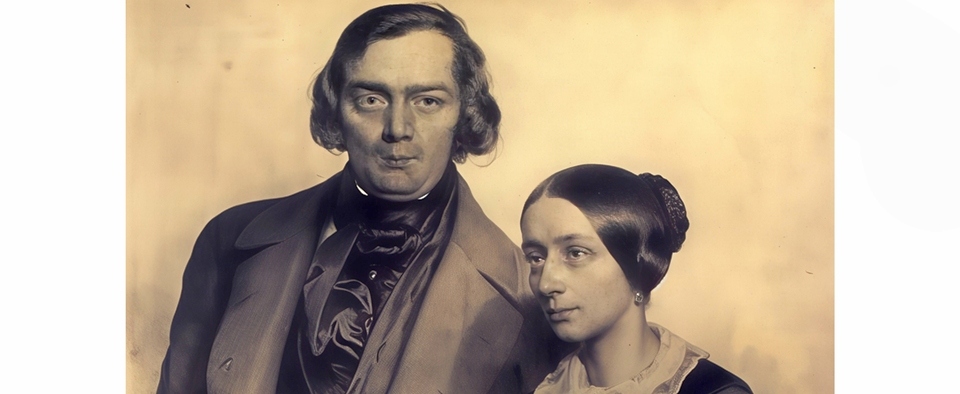
This snippet of musical history is important if you want to understand Schumann’s music, for both the hand injury and the failed dream must have exacerbated his unstable mental condition. Musicologist Georg A. Predota explains that “the violin sonatas have long been considered products of his diseased mind. Scholars and historians have readily found evidence of deterioration, with many later works dismissed on account of Schumann’s mental health.” Dr Predota is right of course, but the “scholars and historians” of yesteryear may have missed the point.
Schumann’s works from the 1850s are intensely personal and can be challenging to performer and listener alike, but through these works we get a glimpse of the mental demons that were churning around in the composer’s troubled mind at the time. Schumann’s Violin Sonata No. 2 for example, provides deep insights into the composer’s feelings. I was looking forward to hearing the work in the intimate surroundings of Ben’s Theater Jomtien in a concert entitled Notes of Passion. The recital was given by two distinguished musicians, violinist Omiros Yavroumis and pianist Eri Nakagawa who had previously delighted audiences last year with a memorable performance of Schumann’s Violin Sonata No. 1.
The second sonata was composed rapidly within a matter of days and followed hot on the heels of the first one. The composer modestly remarked, “I didn’t like the first violin sonata so I wrote a second one, which I hope turned out better.” The first movement opens with a series of powerful declamatory chords, requiring double-stopping on the violin and awkward left-hand stretches for the pianist. Omiros and Eri Nakagawa gave a thrilling performance of the movement. The violin plays a slightly mysterious wandering melody which is punctuated by sharp staccato piano chords played vigorously by Eri.
The way Omiros and Eri dealt with the interplay with the lyrical phrases between the violin and piano was impressive, and it brought that sense unease which is never far away in Schumann’s music. The sudden changes of mood were brought off extremely well and there were some lovely delicate violin passages too. Throughout the work, and indeed throughout the concert, I was greatly impressed by the wonderful, luminescent violin tone that Omiros creates. The quality of tone goes through the entire violin range: the upper notes are clear and bell-like, the middle register has a transparent silky quality and the lower register is warm, reedy and sonorous.
Eri and Omiros brought a touch of lightness to the energetic scherzo-like second movement which at times is almost dance-like in character. They played with excellent articulation and I especially enjoyed Eri’s spiky staccato playing in this movement. They brought forward the underlying tension in the music too. Towards the end of the movement, Schumann quotes the hymn composed by Martin Luther, Gelobet seist du, Jesu Christ. The triumphant quotation of the hymn melody seems to lift the spirit of the music and Omiros and Eri skilfully brought the movement to a dramatic close.
I thought that the lyrical third movement was one of the concert highlights. It’s really a set of variations, which begins magically with a guitar-like pizzicato on the violin played quietly and expressively by Omiros. Both Omiros and Eri seemed to capture the brooding beauty of the music. There was some excellent ensemble playing and in typical Schumann fashion, sudden passages of dark drama. Towards the end of the movement the lovely melody returns accompanied gently by arpeggios on the piano, with the movement finishing on a repeated low G on the violin. The movement was beautifully performed and a showcase for Omiros’s superb tone quality.
The finale revisits the troubled mood of the first movement which although touched with lighter moments, seems under a spell of darkness and foreboding. Eri and Omiros performed this movement with driving energy and Eri kept up the pace with the relentless agitated piano part. The sonata culminates with an exuberant and heroic conclusion which the two players accomplished dramatically. It was an excellent example of fine musicianship.
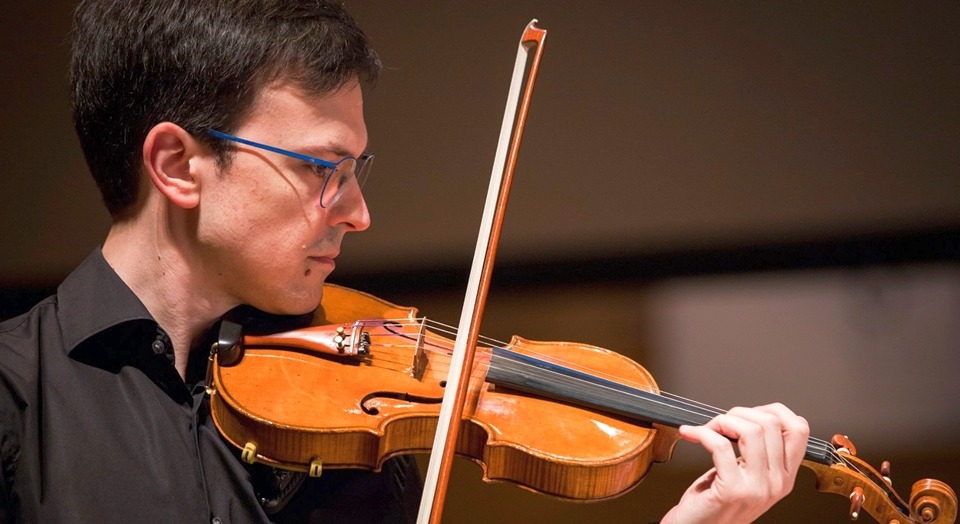
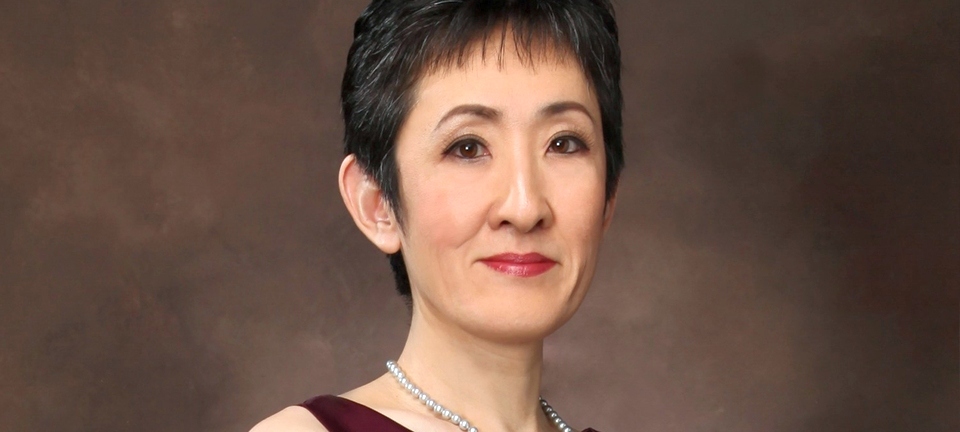
Of course, both Eri and Omiros already have distinguished musical careers. Omiros graduated in 2002 from London’s Royal Academy of Music with Bachelor’s and Master’s Degrees. He holds a degree in Musicology from the University of Athens and he’s won numerous awards in solo and chamber music competitions. He has appeared as the soloist with several international orchestras. Since December 2016 Omiros has been the Concertmaster (Leader) of the Thailand Philharmonic Orchestra. Eri Nakagawa, from Osaka has been on the Piano Faculty of Mahidol University College of Music since 1995. Before then, she was Assistant Professor of Music Performance at Ball State University, Indiana and been a guest at many distinguished international universities. Dr Nakagawa has performed many of the major piano concertos with numerous orchestras and also enjoys working as a collaborative pianist and accompanist.
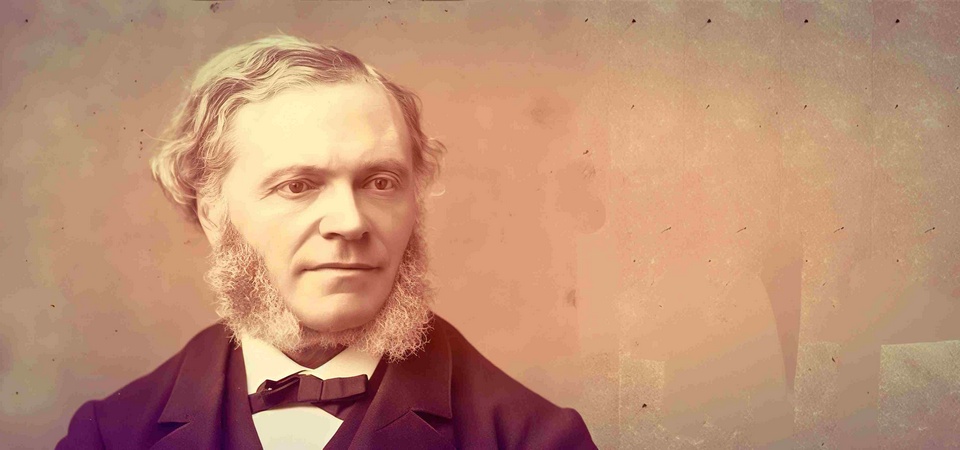
The second half of the concert began with Sonata for Violin and Piano in A major by César Franck. Although he spent most of his life in Paris, he was born in the Belgian city of Liège which at the time, was in the United Kingdom of the Netherlands. As a child, César showed exceptional musical skills and so did his younger brother, confusingly named César-Auguste. Their ambitious and somewhat irascible father, Nicolas-Joseph envisioned César as a young prodigy pianist-composer who would bring fame and fortune to his family. Despite his father’s wishes, César eventually became one of France’s most respected organists and teachers.
During the interval, I began to wonder what else Belgium has given the world, apart from César Franck. There are the famous waffles of course and the fine chocolates. There’s a vast array of splendid Belgian beers, reflecting a brewing tradition that goes back to Roman times. You might be surprised to know that French fries were apparently invented there, or so the Belgians like to claim. The country gave us the painters Rubens and Magritte and the guitarist Django Reinhardt. The Belgian inventor Adolphe Sax created the saxophone and the saxhorn, both of which he modestly named after himself. But Belgium’s musical peak was during the Renaissance, when it was known as Flanders. Those were the Golden Years, when the country was home to influential composers such as Josquin des Prez; Guillaume Dufay and Orlando Lasso.
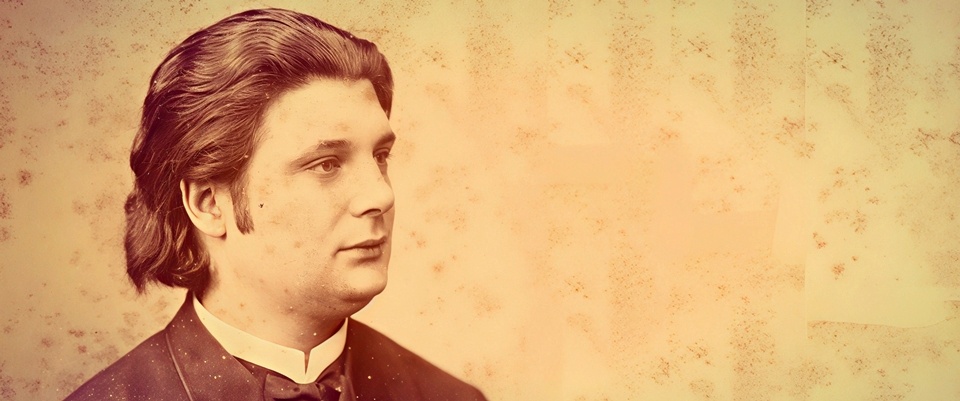
Franck’s Sonata in A major for Violin and Piano was written in 1886 as a wedding present for Eugène Ysaÿe, the brilliant Belgian violinist who like Franck, was also born in Liège. Ysaÿe (“ee-zah-YAY”) was known as “The King of the Violin” and made concert tours all over Europe, Russia and America. The first performance of the sonata was given by Ysaÿe and the pianist Marie-Léontine Bordes-Pène. It was the final item in a lengthy programme which had started during the afternoon at the Museum of Modern Art in Brussels. By the time the musicians finally got to the Franck sonata, it was early evening and the gallery was becoming bathed in stygian gloom. The two performers decided to continue regardless, even though they could barely read the music. In almost complete darkness they performed the last three movements from memory.
Omiros and Eri didn’t have this challenge, but I noticed that the lid of the Yamaha piano had been partially closed, producing a more satisfying instrumental balance. The Franck sonata begins with a lilting melody from the violin played expressively by Omiros and a chordal accompaniment played with sensitivity by Eri. This melody forms the basis of the entire movement and Eri performed the virtuosic and rhapsodic piano part with confident aplomb. The movement displayed excellent ensemble playing with some remarkably beautiful moments.

In the second movement, the turbulent piano part is brilliantly virtuosic and Eri performed this technically challenging music to perfection. Schumann would surely have appreciated this colourful and dramatic music had he lived long enough. The thrilling closing section builds from a slow scalic passage into the fiery coda which is technically challenging for both performers. It brought forth some sparkling playing from both Eri and Omiros and I especially enjoyed their heroic ending of the movement. The expressive third movement enters a mood of fantasy and reflection with wandering melodies and shifting tonality. It almost sounds improvised, a musical skill for which Franck was noted. There’s a hint of darkness in the music too, as the violin plays filigree chromatic patterns over a sustained piano part. The playing was thoughtful and expressive with some exquisite moments of delicacy. The wistful ending of the movement was beautifully timed by the performers.
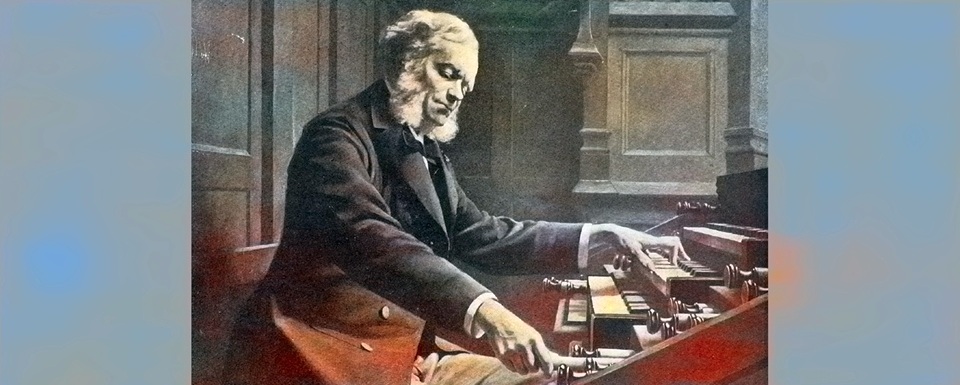
The last movement opens with an attractive flowing melody which sounded strangely familiar. I suddenly realised that the distinctive melody is similar to the opening theme of Beethoven’s Piano Trio No. 7 in B flat, completed in 1811 and known as the “Archduke Trio”. Back home after the concert, I dug out my score of the Beethoven work and sure enough, the two melodies have much in common. I wondered whether anyone else noticed, not least Franck himself who would surely have been acquainted with the Beethoven trio. Eri and Omiros brought out the joyful qualities of the music with its ever-changing moods and keys. It was a spectacular and rewarding performance.
The final work on the programme was Two Pieces for Violin and Piano by Sergei Rachmaninoff, composed in the summer 1893 when at the age of twenty, he was already becoming established as a composer and pianist. The first piece is entitled Romance in which Omiros played the main theme superbly over Eri’s flowing arpeggio accompaniment. It reminded me of Hungarian gipsy music – the kind of thing that one used to hear in the older restaurants of Budapest. Two or three violinists, accompanied by a cimbalom player would wander around the tables, playing soulful, melancholy gipsy melodies that seemed to speak of bygone days. The second piece, entitled Danse hongroise is a wild and high-spirited romp, intense colourful music requiring the highest technical abilities. The virtuosic dazzling violin part was superbly played by Omiros who played faultlessly and passionately. Eri’s rhythmic, fiery accompaniment pushed the music along superbly and to the delight of the enthusiastic audience, drew the concert to a breathless and triumphant conclusion.