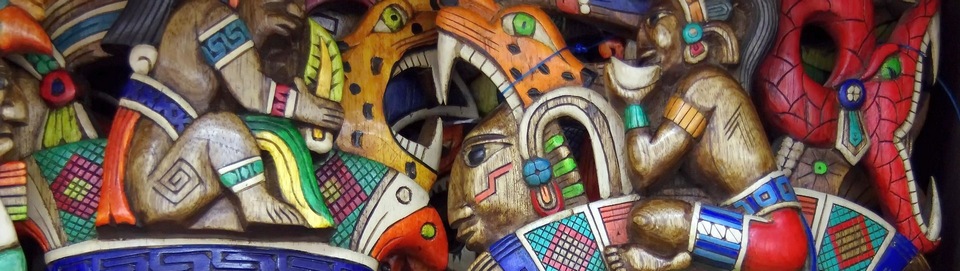
What are the first things that spring to mind when you hear the name “Mexico”? Perhaps you get images of sombreros or giant cacti. Or maybe tacos, margaritas, tequila or mariachi bands? If you are historically aware, you might have mental visions of Tulum, Palenque or Chichén Itzá, which always sounds to me more like a Mexican meal than a place.
During the late 1990s, I visited Mexico for a few weeks and I was amazed at the enormous size of many Maya temples. Some of the Spanish-built cathedrals are magnificent structures too, one of the finest being the Mérida Cathedral in Yucatán. It also struck me that many Mexicans looked vaguely like Thai people, and sometimes I absent-mindedly addressed them in broken Thai rather than in broken Spanish. The reason for the similarity was revealed when I visited the superb National Museum of Anthropology in Mexico City. An impressive diorama showed how 20,000 years ago (and possibly earlier) large groups of humans began the long trek from East Asia, across the land-bridge of the Bering Strait and then south, through what is now North America.
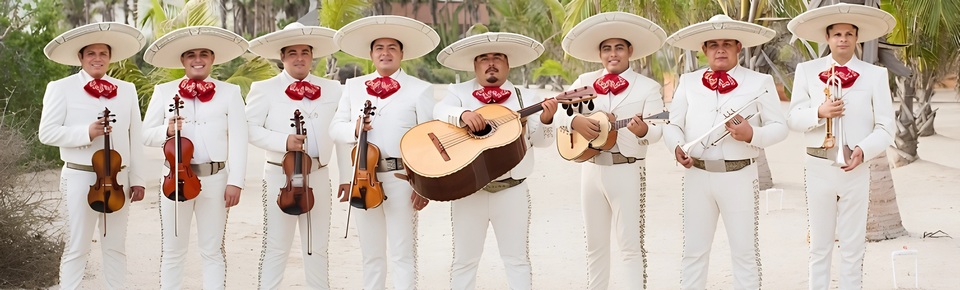
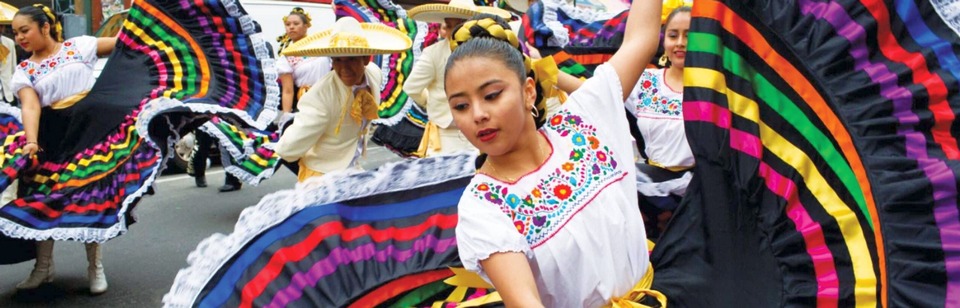
The term “land-bridge” is a bit misleading and gives the impression that it was a narrow embankment, but the “bridge” was hundreds of miles wide. Anyway, if the theory is correct, it appears that the original Mexicans came from Asia. I was thrilled to hear Mariachi bands, especially those in the city of Guadalajara, the spiritual home of Mariachi. This iconic genre originated during the 19th century and used violins, trumpets, guitars and the guitarrón, a large bass guitar.
Mexican music is incredibly diverse and to understand how it emerged, we need to go back to around 2000 BC. So please sit up straight and look as though you are interested, especially those people fidgeting in the back row. The country we now call Mexico has been the home to older civilizations, most notably being the Maya and the Aztec. They stand out as two of the most fascinating ancient cultures of Central America, sometimes known technically as Mesoamerica (“middle America”). The Maya civilization emerged around 2000 BC and left behind an impressive legacy of art and architecture.
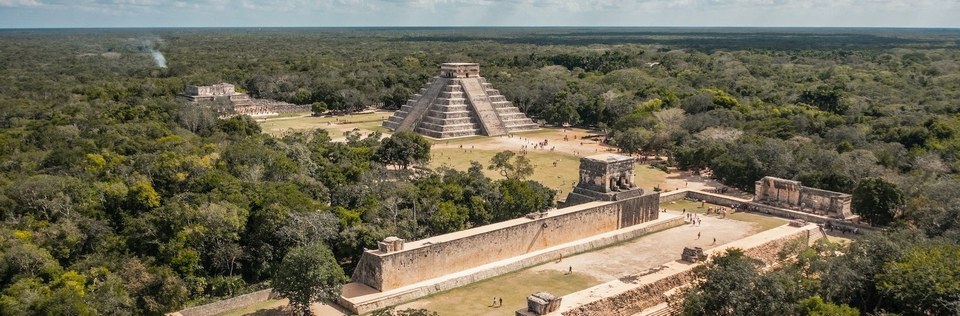
It had a population of about 19 million people and it established several independent city-states across present-day Mexico, Guatemala, Belize, Honduras and El Salvador. Each were united by a shared languages and culture. The Maya sophisticated hieroglyphic writing system was one of the most advanced of the ancient world. It was the Maya who constructed the awe-inspiring step-pyramids, such as El Castillo at Chichen Itza which served religious, ceremonial and astronomical functions.
Music was profoundly intertwined with the fabric of Maya society and played a role in religious rituals, mythology and everyday life. It served as a bridge between the human and supernatural realms and was even used in agricultural rituals. The Maya developed a wide variety of musical instruments: flutes, whistles and trumpet-like instruments made of wood or clay and an enormous range of percussion instruments that included drums, shakers, rattles and shells. The Maya civilization peaked in achievement between 300 to 900 AD but then began to fade. This was due to several factors, notably prolonged droughts, deforestation, economic changes and over-population. While many cities were abandoned, descendants of the Maya people still live in Central America and speak one of the Mayan languages.
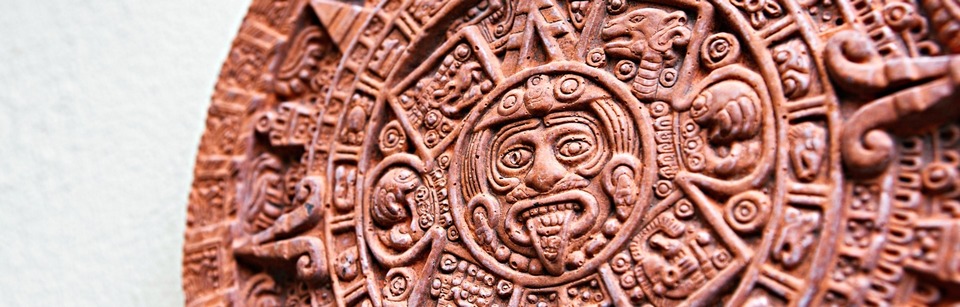
The Aztec civilization appeared during the early 13th century, around the same time as the European Middle Ages. It developed into a highly militaristic empire, built around the magnificent city of Tenochtitlán which stood on the site of modern-day Mexico City. Their society was clearly stratified and led by an emperor, supported by a class of nobles, priests and warriors and a large population of farmers and artisans. Music was an essential part of Aztec life and served both cultural and religious purposes. It was integral to education and children learned songs and instruments as part of their schooling.
European visitors commented on the proliferation of music in Aztec society, noting that everyone enjoyed singing and dancing and often improvised melodies, a skill which remains a feature of today’s mariachi and huapango. By the early 16th century, the Aztec Empire, also known as the Triple Alliance, was a powerful confederation of city-states in central Mexico. But it was also a fiercely brutal regime with an insatiable appetite for human sacrifice, a ritual deeply embedded in Aztec culture and probably inherited from the Maya.
But then the Spanish arrived. The Spanish explorer and adventurer Hernan Cortes imprisoned Emperor Montezuma II in 1521. Suddenly the country found itself at war and the simple Aztec weapons were no match for the invading Spanish guns and cannons. The Spanish invasion, together with internal conflicts, the destruction of Tenochtitlán city and the devastating impact of smallpox, brought the Aztec Empire crumbling to an end. Within three years, the whole of Central America had fallen under Spanish rule.
The Spanish introduced their own musical traditions and instruments, including the Spanish guitar and the vihuela, a high-pitched, five-string guitar popular in the Mariachi bands of later years. Christian missionaries introduced church music to the indigenous people to promote the Catholic religion. Local musicians were paid by the church to set up singing groups and teach the people hymns and liturgical chants. The few Mexican composers were usually employed by the church and they emulated European styles of choral music. By the middle of the 19th century, a Mexican upper-class society was beginning to emerge and consisted of landowners and employers. It created a demand for European classical music and many professional European musicians, sensing an exciting new opportunity, emigrated to Mexico. Many children of wealthier families were encouraged to learn European musical instruments, and music schools began to appear.
Aztec folk-music, Spanish music and African music have all contributed to Mexico’s cultural identity. In the early 20th century, Mexican orchestral music was driven essentially by a handful of composers who drew freely on the nation’s diverse cultural heritage and the spirited energy of Mexican folk music. The three most influential Mexican composers of the early 20th century were Carlos Chávez, Silvestre Revueltas and José Pablo Moncayo. Their work still influences much of Mexican orchestral music today, as a new generation of younger Mexican composers begins to emerge on to the world stage.
Carlos Chávez (1899-1978): Symphony No. 2, Sinfonía India. Minnesota Orchestra cond. Carlos Miguel Prieto. (Duration: 11:28; Video: 1080p HD)
Chávez is sometimes referred to as “the grandfather of Mexican music”. His full name is Carlos Antonio de Padua Chávez y Ramírez. It’s a bit of a mouthful, because Spanish names traditionally consist the given name followed by the paternal surname and then the maternal surname. The paternal surname is Chávez (the “z” is pronounced) and the maternal surname is Ramírez.

As symphonies go, Symphony No. 2 is short indeed and runs for less than twelve minutes. The work dates from 1935-6 when Chávez was making his first American tour as an orchestral conductor. The work is also known as Sinfonía India because it’s based on Indian melodies which are woven into three separate sections played without a break. From the opening bars with their irregular beats, we are plunged into the composer’s colourful and highly personal sound-world which uses indigenous Mexican percussion instruments. Much of the first section consists of repeated notes hammered out by the orchestra. The music moves into a quiet, reflective mood in which woodwind and soft percussion dominate. It develops into a hauntingly beautiful tune played by the full strings and sounds rather like a yearning Scottish ballad. Later, the tension increases and the music becomes increasingly powerful and menacing, eventually leading into the frenetic, pounding finale. This is all thrilling stuff, brilliantly written and orchestrated, and it’s the composer’s most popular composition.
Silvestre Revueltas (1899-1940): Sensemayá. National Youth Orchestra of the USA cond. Carlos Miguel Prieto (Duration: 06:49, Video: 1080p HD)
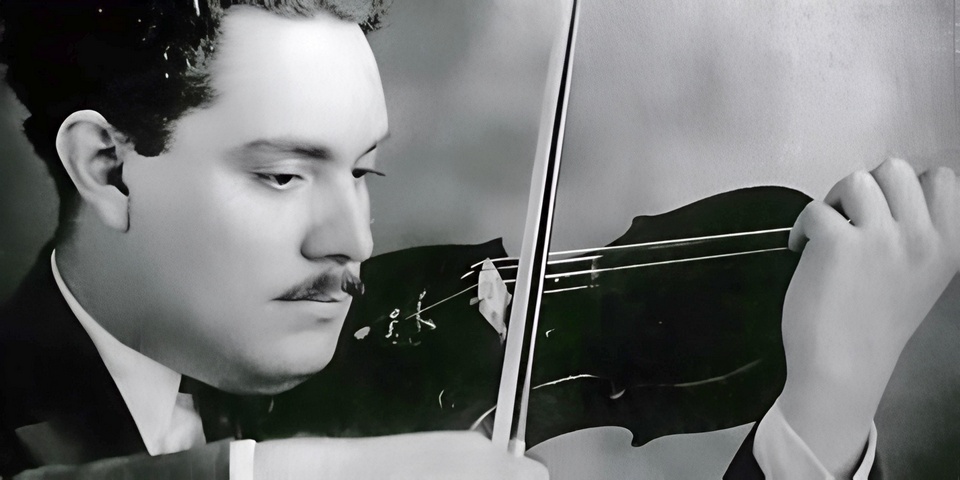
Known as the “great free spirit of Mexican music,” Revueltas first studied at the National Conservatory in Mexico City and later in Texas and Chicago. He was a brilliant violinist and became assistant conductor of the National Symphony Orchestra of Mexico. Sensemayá dates from 1938 and was originally scored for small orchestra. Later, the composer developed it into a full-scale orchestral work that required nearly thirty wind instruments, fourteen percussion and a full string section. Revueltas used clashing dissonances with abandon and many of his works have a passionate rhythmic vitality and raw visceral energy. The music was inspired by a poem of the same name by the Cuban writer Nicolás Guillén and evokes an Afro-Caribbean chant performed during the ritual killing a snake.
The work begins quietly and ominously; the volume gradually builds over obsessive, pounding rhythms. The music is mostly written with an irregular seven beats per bar and there are moments that might remind you of Stravinsky’s Rite of Spring, but this is an unmistakable Mexican voice which evokes the exotic legends and rituals of a bygone age. These talented young Americans, kitted out in their smart black tops and bright red trousers, give a terrific performance.
José Pablo Moncayo (1912-1958): Huapango. Frankfurt Radio Symphony Orchestra) cond. Carlos Miguel Prieto (Duration: 12:03; Video: 720p HD)
Huapango is Moncayo’s most popular work: a joyous, exuberant dance composed in 1941 and based on the traditional dance-song still performed on Mexican streets today. There are several different styles of huapango and these traditional dances, usually accompanied by singer, guitars and violin are tremendously exciting. If you listen to videos of Mexican street-musicians, you can hear where Moncayo got his musical ideas and how successfully he transferred them to symphony orchestra. One problem with transcribing a huapango is that the musicians rarely sing the same melody twice in the same way. Watch out for the violins playing “guitar style” at 01:20 and especially for the wonderful change of key from C major to F major at 02:06. It’s a simple musical device but creates a thrilling, elevating effect.
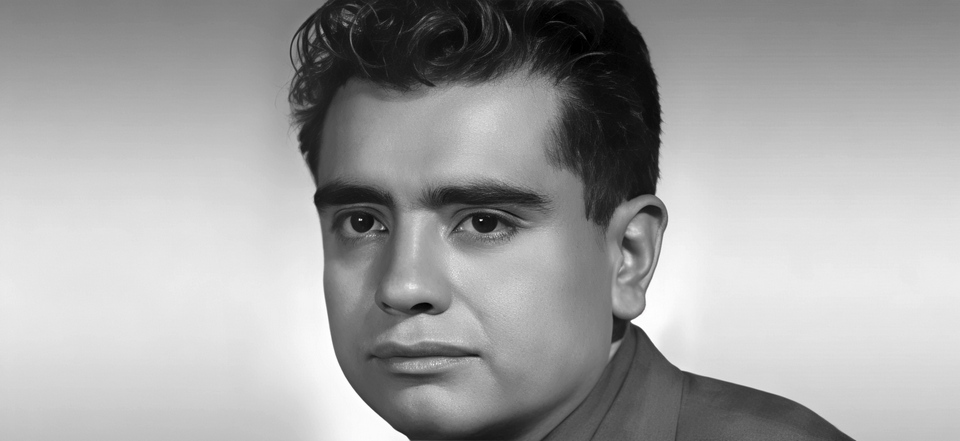
If you normally pay attention to detail, you may have noticed that in all three of these performances, the conductor is the same: the brilliant Mexican musician Carlos Miguel Prieto. Although he was from a musical family, Prieto earned his first degree in Electrical Engineering from Princeton University. In 1992, he earned a Master’s of Business Administration at Harvard University before devoting himself to music as a career. Oddly enough, in each of the three videos he looks like a different person.

And incidentally, if the expression Down Mexico Way has a vaguely familiar ring, it comes from the 1939 song South of the Border Down Mexico Way written by Jimmy Kennedy and Michael Carr. The song became an enormous hit and was evidently chosen by members of Western Writers of America as one of the “Top 100 Western songs of all time”. Why it was thus honoured is anyone’s guess, because the vapid lyrics sound as though they were written by a fourteen-year-old.