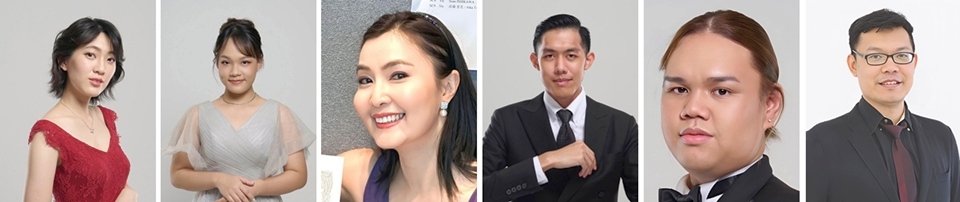
The Heavenly Voice Singers from Nancy’s Studio in Bangkok always attract capacity audiences at Ben’s Theater Jomtien because of the high-quality performances and the colourful and well-planned programmes. The singers recently returned to present their latest programme entitled Tales of the Opera. The five singers are advanced students of Professor Nancy Tsui-Ping Wei, voice teacher at the College of Music, Mahidol University and are also members of her Voice Studio in Bangkok. The singers included Chanakan “Noon” Amarangkun (soprano); Pimmada “Tidtee” Ko-amornsup, (soprano); Thuradee “Eing Eing” Kantapasara (soprano); Jatupol “Ohm” Pinthip (tenor) and Jatuphol “James” Nuanjan (bass-baritone). The entire programme was accompanied by the highly competent and ever-reliable pianist Siri Sranoi.
It was clear that as usual, careful planning had been given to the choice of songs. Sitting comfortably among the members of the audience, it’s easy to forget that the moment when the singer walks on to the stage is the culmination of many hours’ rehearsal and preparation over a period of weeks and sometimes months. And prior to those weeks and months, there are years of specialist training. The solo songs – some of them technically challenging – were performed entirely from memory and usually in the original language, a remarkable feat in itself.
The concert opened with the vocal duet Crudel! perché finora from the third act of Mozart’s 1786 comic opera, The Marriage of Figaro. It was sung by competently by Pimmada and James Nuanjan with a good sense of style. Mozart wrote the opera Così fan tutte a few years later and the title is usually translated into English as “Women are like that.” The aria Una donna a quindici anni (“At fifteen, a woman…should know the ways of the world”) was sung by Thuradee Kantapasara in her first appearance at Ben’s Theater. She has a delicate voice with pleasing tone quality and excellent intonation. She performed with excellent characterization and with confident stage presence. The elegant piano accompaniment was sensitively played by Siri Sranoi.
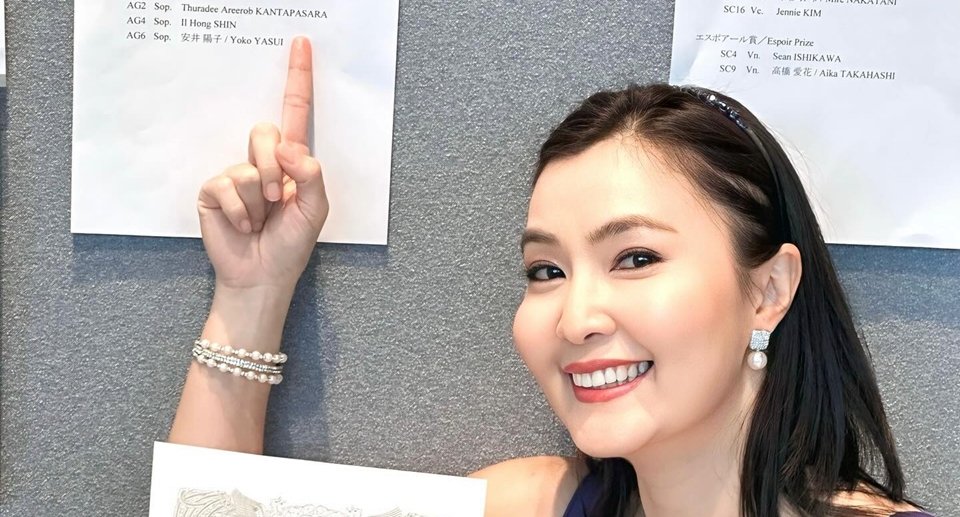
Later in the concert, Thuradee gave two more solo performances. Wiegenlied (“Lullaby”) is the first of a collection of five songs for voice and piano that Richard Strauss wrote in 1899. Thuradee’s performance was – for me at least – one of the many musical highlights of the evening. The songs featured her clear, luminous vocal tone, good stage presence and audience contact, with commanding voice projection. The vocal melody seemed to float effortlessly above the rippling piano accompaniment played with sensitivity by Siri. And in case you were wondering, the German composer Richard Strauss is unrelated to Johann Strauss, who was Austrian.
Thuradee’s third solo item was from the Berlioz song cycle Les nuits d’été composed during 1840 and 1841. The last of these songs L’île inconnue (“The Unknown Island”) is in the style of a barcarolle, a style of folksong traditionally sung by Venetian gondoliers. It has lilting rhythms that suggest the strokes of the gondolier’s oar. Thuradee gave a compelling performance with excellent vocal tone and intonation, and Siri’s excellent and sensitive piano work helped to catch the mood of the piece.
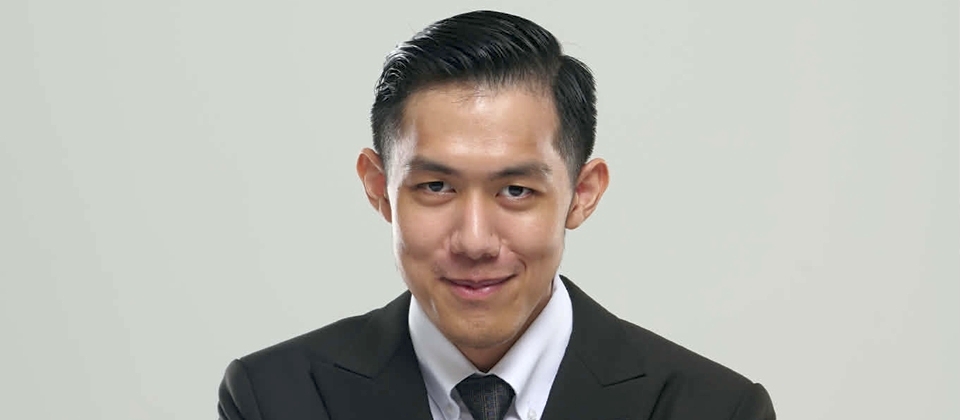
I was also impressed with James Jatupol’s stage presence in his performance of the attractive song Stars from Les Misérables, the popular 1980 musical with music by Claude-Michel Schönberg. He gave a confident performance with an appropriate soft tone and good phrasing.
During the concert, Pimmada Ko-amornsup sang three solo items. The first was a lovely performance of the vocal waltz Il bacio (“The Kiss”) by Luigi Arditi, an Italian violinist who composed numerous songs and vocal waltzes. The song displayed Pimmada’s confident stage presence and vocal control and her excellent intonation and strong upper range. She was supported by a superb piano accompaniment from Siri in which he captured the reflective mood of the piece. Later in the programme, she performed a song by Gabriel Fauré entitled Mai. It was the second of two songs that he wrote as a sixteen-year-old music student. This charming song proved a showcase for Pimmanda’s clear and well-focussed voice.

She sang with confidence, thoughtful phrasing and spot-on intonation. Her third solo item was the aria Quel guardo il cavaliere (“I look at the knight”) from Donizetti’s 1843 comic opera Don Pasquale. Pimmanda conveyed the meaning of song superbly with compelling characterization and supported by some fine rhythmic and well-articulated piano playing.
Viktoria und ihr Husar (“Victoria and Her Hussar”) is an operetta from 1930 by Paul Abraham, a Hungarian opera composer who sometimes included jazz-style interludes in his operas. The title doesn’t refer to England’s Queen Victoria but to a fictional countess Viktoria. The opera’s well-known duet Reich mir zum Abschied noch einmal die Hände is one of those melodies that always sounds tantalizing familiar, yet few people can identify it. The title translates as “Give me your hands one last time before saying goodbye” and Chanakan and Jatuphol Pinthip (Ohm) gave a quiet, moving and reflective performance with fine intonation and sense of style.
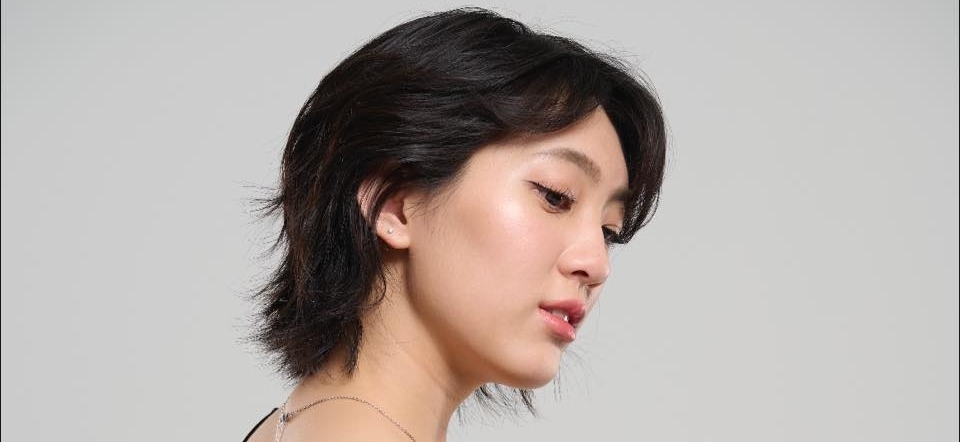
They also performed with an excellent sense of ensemble. The song Dein ist mein ganzes Herz (“You are my Heart’s Delight”), is another melody that seems to entered the public consciousness. It’s an aria from the 1929 operetta Das Land des Lächelns (“The Land of Smiles”) with music by Franz Lehár. The opera is not set in Thailand as the title might imply, but in China. For many years, the aria was associated with the tenor Richard Tauber for whom it was written. Ohm provided a compelling declamatory performance of the song, with spot-on intonation and confident audience contact. Later in the evening, there was another aria from the same opera, Bei einem Tee à deux. Sung by Pimmada and Ohm it was one of the highlights of the evening, with some excellent ensemble work.
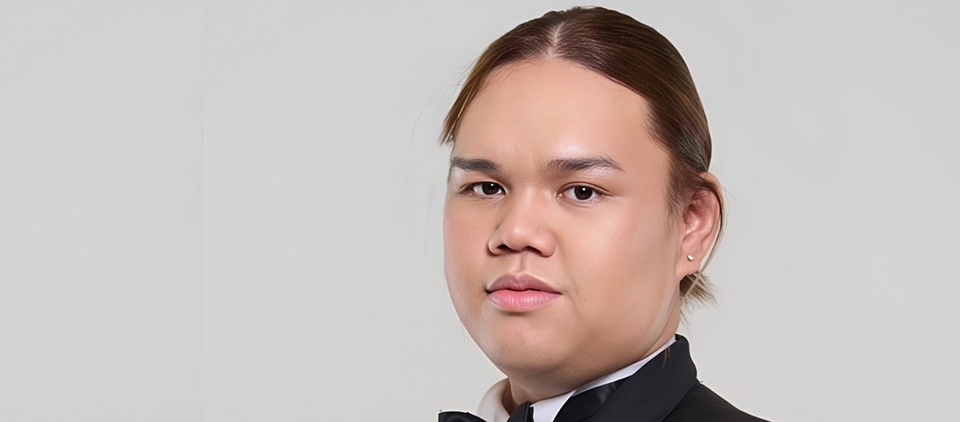
Ohm has sung at Ben’s Theater in the past, but I found that his style and confidence have developed enormously since then. He also sang Mattinata (“Morning”) by Leoncavallo, a song which is interesting historically because it was the first-ever song written specially for The Gramophone Company (present-day EMI). Composed in 1904, it has since become a favourite concert piece for tenors. Ohm gave a confident, committed performance with a good dynamic range and excellent stage-presence.
The aria My House is from Leonard Bernstein’s 1950 musical Peter Pan. It was an adaptation of J. M. Barrie’s well-known play and novel of the same name. The story is about a mischievous boy called Peter Pan who knows how to fly and who has many exotic adventures on the island of Neverland. For decades in Britain, Peter Pan has been a popular pantomime theme. Chanakan gave the Broadway-style song a quiet, gentle performance with good intonation and phrasing. I was also impressed with her clear tone quality.
Bellini was an exceptionally talented Italian composer, well-known for his meandering, elegant melodies. His full name (take a deep breath) was Vincenzo Salvatore Carmelo Francesco Bellini and his music was much admired by many other composers. His 1831 opera Norma is set in Roman times and the vocal duet, Mira, o Norma…Sì fino all’ore estreme is considered one of the most exquisite duet arias ever written. Sung by Pimmada and Chanakan, it was a compelling performance with beautifully-balanced voice blending. The second part of the song is technically challenging but the two singers gave a splendid performance, with dramatic characterization, impressive musical articulation and a splendid sense of ensemble.
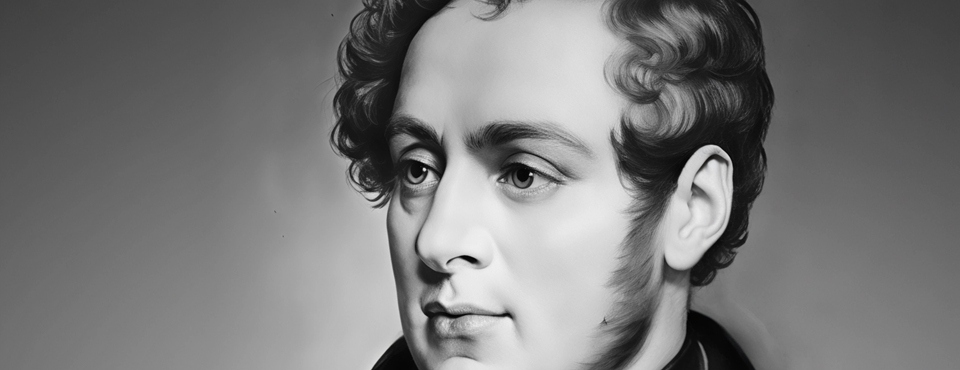
The singers ended the first part of the programme with a song which has roots in African music. Originally entitled Mbube, it was composed and first recorded in 1939 by a South African musician called Solomon Linda. He led an a capella vocal group called The Evening Birds and the recording became a hit in South Africa. In 1961, so the story goes, an American vocal group called The Tokens recorded an arrangement of the song under the name The Lion Sleeps Tonight with its catchy “Wimoweh” repeated phrases. It has since been recorded by countless artists and made an appearance in the 1994 Disney film The Lion King.
The members of the Heavenly Voice Singers gave an imaginative and well-planned performance, beginning with an off-stage unaccompanied voice singing the “Wimoweh” theme before each of the singers appeared on stage. The exuberant, rhythmic performance featured some confident and excellent singing, splendid audience contact and good clear diction. At the end, the singers departed the stage one by one to create a fade-out effect, ending the song as it had started, much to the delight of the enthusiastic audience who clearly enjoyed every moment of the entertaining performance.
At the start of the interval, I crept outside, partly to escape the babble of continuous chatter but also look at the beautiful patio plants. Standing among the well-tended plants, it was pleasant to reflect that each member of the Heavenly Voice Singers is busy pursuing their individual careers. Soprano Chanakan Amarangkun for example, has won prizes at the Osaka International Music Competition, the Singapore Lyric Opera Asean Competition and at the SET Youth Music Competition and performed in Vienna to celebrate Thai National Day. Pimmada Ko-amornsup won first prize at the Princess Galvani Vadhana Institute of Music Voice Competition. Thuradee Kantapasara won first prize at the Sala Chalermgrung Royal Theater competition and was one of finalists on the television show Academy Fantasia. She is currently completing her doctoral degree at Chulalongkorn University.
Jatuphol Nuanjan (“James”) was one of the finalists at the Osaka International Music Competition in Japan and Jatupol Phintip (“Ohm”) has been Thailand’s regional round winner at the Excellence International Music Competition in Taiwan and he won first prize in the final round. Throughout the concert, the piano accompaniment was provided by Siri Sranoi (“Kwan”) who performed with admirable skill, sensitivity and superb musicianship. Piano accompaniments are rarely mere “backing-tracks” but are often an integral part of the music, contributing to the mood, character and harmonic colour.

In some songs, the accompaniments can be more technically demanding than the voice part. Siri’s playing was exemplary throughout with a fine sense of style. He studied at the College of Music, Mahidol University, there he graduated with Bachelor’s and Master’s degrees and is currently a full-time collaborative pianist there.
In 1840, Schumann wrote his three songs for two voices and Chanakan Amarangkun and James Nuanjan gave a rewarding performance of them. The first two were sung in an appropriately restrained manner with excellent voice-blending and phrasing. I especially enjoyed their performance of the third song, Schön Blümelein which almost sounded as though it was written by Schubert. It was another highlight of the concert, sung with a good sense of ensemble and characterization and finished with a perfectly-timed ending. Chanakan and Thuradee gave a lovely feelingful performance of the song Licht und Liebe (“Light and love”) composed by Schubert when he was only 19 years old. I enjoyed their fine vocal blending, their sense of dynamic and the way they brought the song to a perfect ending.
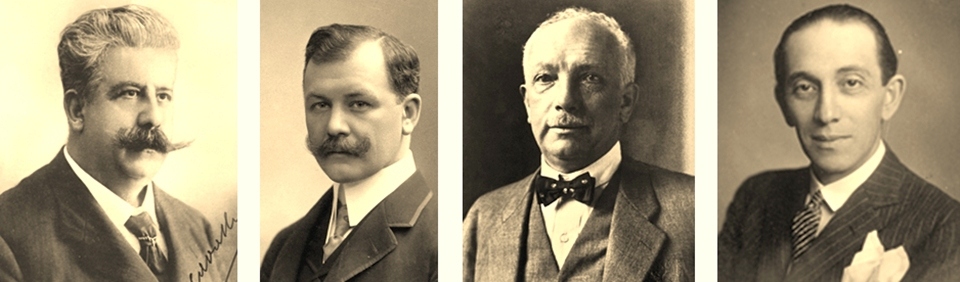
The duet entitled Ich hab’ ein Diwanpüppchen, from Paul Abraham’s 1931 operetta Die Blume von Hawaii (“The flower of Hawaii”) is written in a jazzy style that the composer enjoyed. Chanakan and James gave a spirited, energy-driven performance of the song and included an entertaining dance routine. James particularly impressed me with his bold stage presence. Their captivating performance was followed by yet another musical highlight; the drinking chorus Im Feuerstrom der Reben from the 1874 opera Die Fledermaus (“The Bat”) Johann Strauss II.
The entire ensemble gave the song a dramatic and captivating performance. Singing and dancing enthusiastically with (empty) wine glasses, they brought out the joyous character of the piece. I thought they performed it splendidly. Judging by the enthusiastic applause, punctuated by howls and hoots of appreciation, the audience clearly thought so too. However, during the concert it occurred to me that the louder the music and the higher the notes, the more enthusiastic was the audience response.
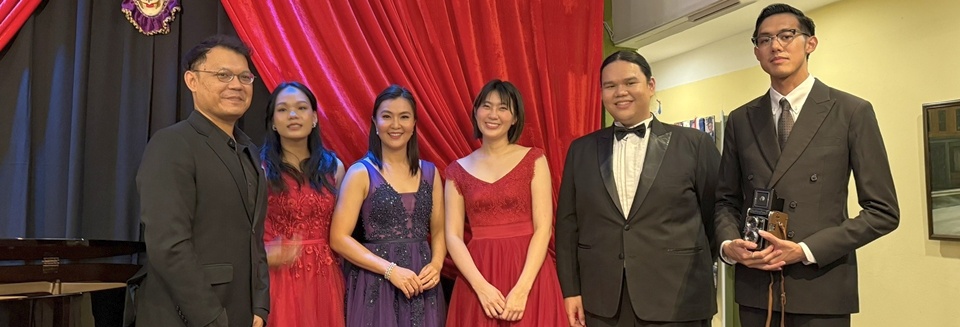
The concert ended with an ensemble performance of the old Scottish New Year Song, Auld Lang Syne. Accompanied by the audience, The Heavenly Voice Singers offered a rather reverential performance, much in the style of a hymn. But perhaps this unusual musical treatment added an alternative slightly melancholy dimension to the music. In Britain and especially in Scotland, the song is traditionally sung at New Year’s Eve parties, occasions normally associated with liberal amounts of wine and whisky. At the stroke of midnight, everyone present is expected to stagger to their feet (if they can) and join in the singing of Auld Lang Syne. After several hours of enthusiastic drinking, the song is belted out with abandon and as loudly as possible.