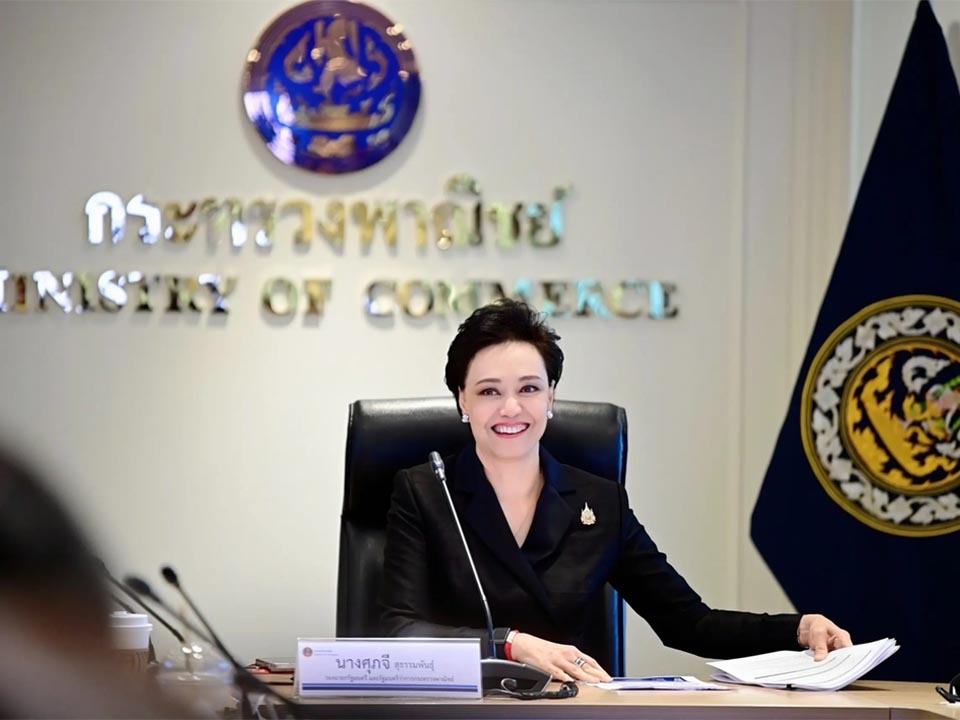
BANGKOK, Thailand – Deputy Prime Minister and Commerce Minister Supajee Suthumpun has reported on the Commerce Ministry’s first 90 days of economic measures, including 818 million baht in consumer savings under the Thais Help Thais campaign and more than 145 billion baht in trade generated by promotional activities. At an August 24 briefing, Supajee detailed policies covering living costs, agricultural prices, SMEs, exports, and longer-term economic reforms amid global economic volatility.
The Thais Help Thais program has generated more than 2.9 billion baht in economic activity since April through discounted goods, school campaigns, district networks, and mobile grocery services. The ministry has also expanded online and franchise opportunities for SMEs. In agriculture, agencies are developing community fruit-packing and purchasing facilities, precision rice production and shared data systems to anticipate harvests and market conditions, while monitoring prices for major crops.
The Department of Business Development has assisted more than 50,000 entrepreneurs with skills, financing, and market access. Enforcement by 23 agencies across 46 provinces has targeted illegal nominee arrangements, with the ministry reporting a 75% reduction in the number of identified at-risk groups. The creative economy generated more than 15.38 billion baht during the period, while geographical indication products accounted for over 117 billion baht.
Trade promotion generated more than 145 billion baht, including over 136 billion baht from THAIFEX. Thailand is pursuing trade negotiations with the European Union, Canada, South Korea, and the United States while expanding export markets. The country has set a 2026 rice export target of seven million metric tons and is seeking additional opportunities in Africa, Saudi Arabia, Malaysia, and China.
The ministry’s next priorities include accelerating trade negotiations, pursuing double-digit export growth in 2026, maintaining agricultural price stability, intensifying enforcement against nominee arrangements, and continuing economic stimulus measures through year-end. It will also expand digital services through MOC Plus and artificial intelligence, with all juristic-person registration services scheduled to become fully digital on October 1.