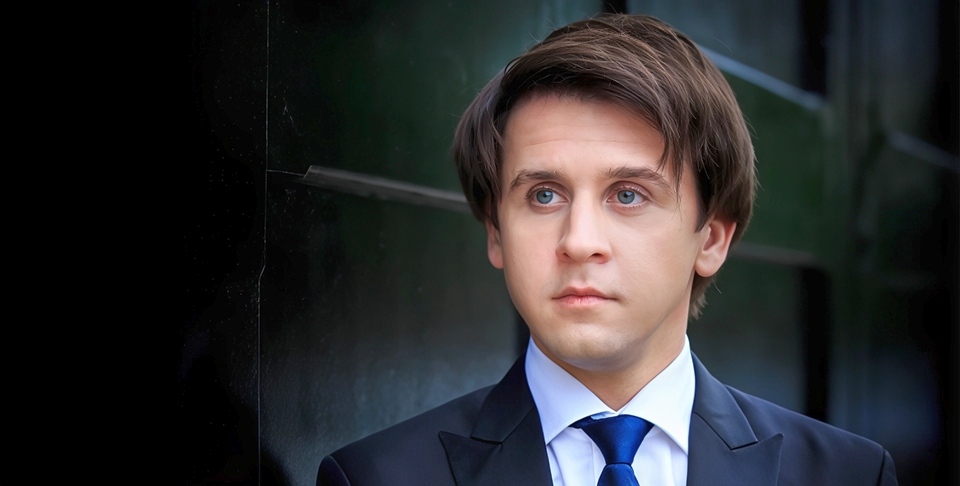

PATTAYA, Thailand – It has been a typically action-packed year for the Ukrainian pianist Vitaly Pisarenko. This year alone, he has given recitals at Victoria Hall in Singapore, the Pharos Arts Foundation in Cyprus, the Liszt Competition Gala in Utrecht, and Schloss Lichtenau in Potsdam, as well as in Malaysia, Italy and Belgium. In April, he returned to Mexico for concerts and master-classes, followed by a performance at the National Liszt Academy in Budapest. In July, he made his debut with the Shanghai Philharmonic Orchestra, performing at the Shanghai Symphony Hall. It was part of the Shanghai Music Festival and was followed by recitals and masterclasses in China.
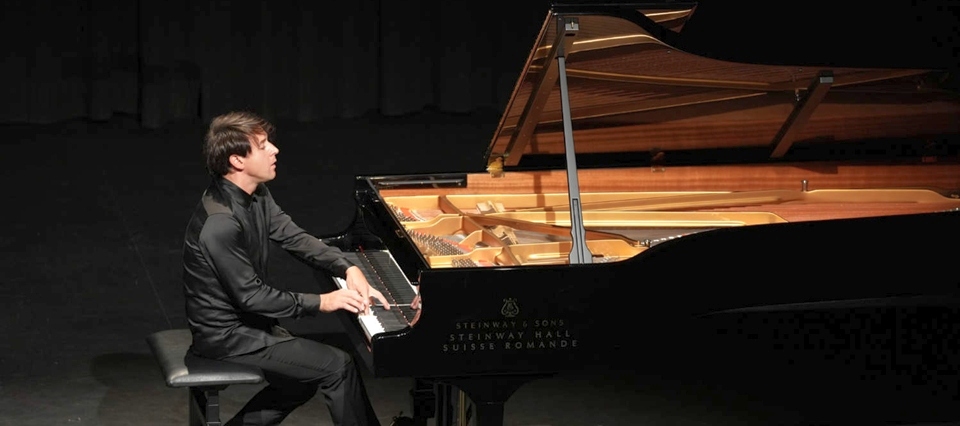
Amid all this activity, Vitaly Pisarenko made a whistle-stop visit to Thailand in mid-November, where he gave a recital at Ben’s Theatre Jomtien. Two days later, he repeated the recital at the Sangita Vadhana Hall at the prestigious Princess Galyani Vadhana Institute of Music in Bangkok. Vitaly’s Thailand recital programme was well chosen, encompassing a wide range of musical styles and moods while showcasing his remarkable virtuosity and musical understanding.

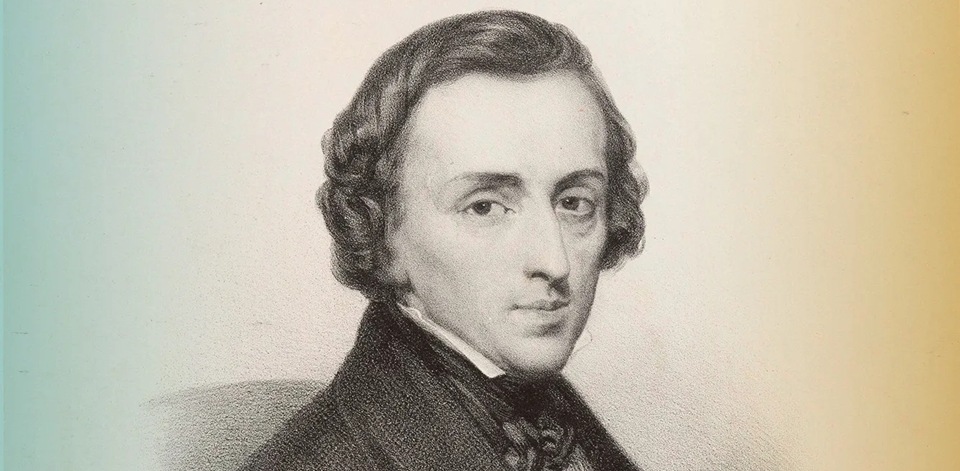
The recital at Ben’s Theater Jomtien opened with Chopin’s fiery and compelling Polonaise in F sharp minor Op. 44, written in 1841. The work is sometimes known as the “tragic” polonaise because of its somewhat gloomy and foreboding qualities. As the name implies, a “polonaise” was originally a Polish dance which was popular in Polish ballrooms. It still is. Although the classical adaptation of the dance is usually associated with Chopin, other composers had used the polonaise style for years. However, in this work, Chopin largely abandoned the old polonaise dance form for something more symphonic. He described the work as “a kind of fantasy in polonaise form”. Vitaly gave a thrilling, confident performance of this demanding work, and I was especially impressed by his ability to execute the difficult left-hand octave passages so perfectly. He used rubato thoughtfully and made the tempo changes work effectively. The slower central section was exquisitely played, with expressive phrasing.
I especially appreciated Vitaly’s business-like and “no-nonsense” style of performance. He avoids that superficial theatrical approach so popular among some professional pianists: the heroic flailing of the arms, the relentless swaying backwards and forwards on the piano stool, or gazing at the ceiling with a beatific smile during reflective moments.
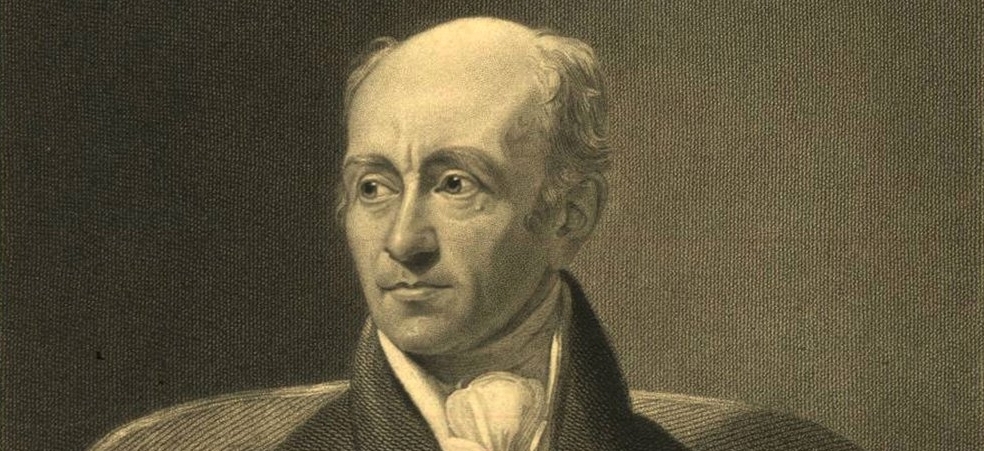
The second work in the recital was Clementi’s Piano Sonata Op. 25 Nr. 5. I’d guess that most students of classical piano have learned a work by Muzio Clementi, at some stage in their careers. Rejoicing in the name of Muzio Filippo Vincenzo Francesco Saverio Clementi, he was an Italian composer, virtuoso pianist, teacher, conductor, music publisher, editor and piano manufacturer. He was born four years before Mozart (whom he met in 1781) but lived mostly in England. Clementi wrote over a hundred piano sonatas, and he also wrote some piano sonatinas (the word literally means “little sonata”) for less experienced pianists. They are charming works and serve as a perfect introduction to the classical piano repertoire.
Clementi’s Sonata Op. 25 Nr. 5 dates from 1790 but seems far ahead of its time. Some of the chromatic writing could almost have come from the mid-19th century and must have sounded distinctly modern to contemporary audiences. A few phrases sound as though they were written by Schubert, born seven years after this sonata was published. The first movement blends high spirits with moments of melancholy, and Vitaly gave a splendidly assured performance, with brilliant passages requiring dexterous fingerwork. The second movement has a strangely hypnotic, ghostly quality, and Vitaly provided a telling, thoughtful performance with beautifully executed ornamentation. The fleeting last movement fairly races along. In many ways, it is extraordinary music and more romantic than classical: sweeping chromatic phrases, stormy octave passages, and exhilarating turns of phrase. It was a splendid showcase for Vitaly’s superb technical skills. His expressive phrasing and control of dynamic contrast were impressive, as was his ability to handle extremely difficult passages effortlessly.
The Hungarian composer Franz Liszt wrote his lovely short piano piece Faribolo Pasteur (“Pastoral Whimsy”) in 1844. It was inspired by a poem by Jacques Jasmin, whom Liszt met during the same year while touring in France. No one is sure whether Liszt composed the melody or adapted it from a Pyrenean folk song. The lonely, enchanting melody floats over arpeggiated left-hand chords supported by warm harmonies, then appears in the tenor voice with chromatic, whimsical writing in the right hand. It’s profoundly expressive music, and Vitaly played the piece with charm, sensitivity and understanding. His timing at the end of the piece was expressive. I was impressed by the way in which Vitaly emphasised the atmospheric, haunting quality of the music.
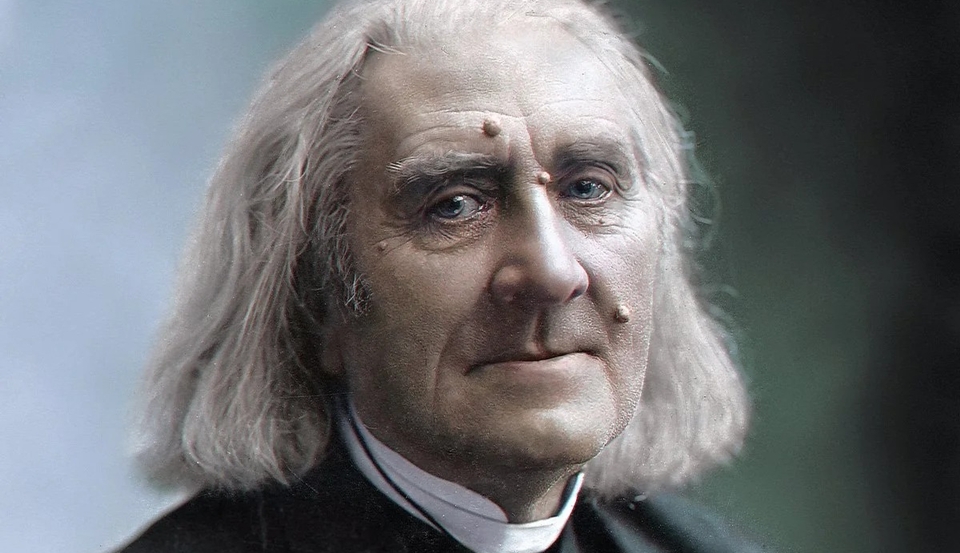
The first part of the concert concluded with Maurice Ravel’s enchanting Sonatine. With three contrasting movements, it was probably written between 1903 and 1905, and the first movement was composed for a competition sponsored by the Parisian magazine Weekly Critical Review. From the opening few notes, we hear the distinctive voice of Ravel: the kaleidoscope of colour and rhythm that is so characteristic of his music. Vitaly made the opening movement sound like a breath of fresh air, and I was struck by his evident musical understanding of the work. The brief second movement is entitled Mouvement de menuet, but the pervasive cross-rhythms and unexpected accents make this piece distinctly un-minuet-like. It’s more like a slow waltz. Even so, Ravel’s signature style is unmistakable, and Vitaly gave a thoughtful, reflective performance, bringing forward the melodies and imparting a timeless quality with his delicate playing. Vitaly’s perfectly paced ending brought a pleasing sense of finality. The third movement is characterised by rippling, dazzling music, with fragmented melodies seeming to sparkle in the sunlight. Vitaly brought meaning to this music with mesmerising colours, subtle variations in tempo and rhythm, and dazzling technique.
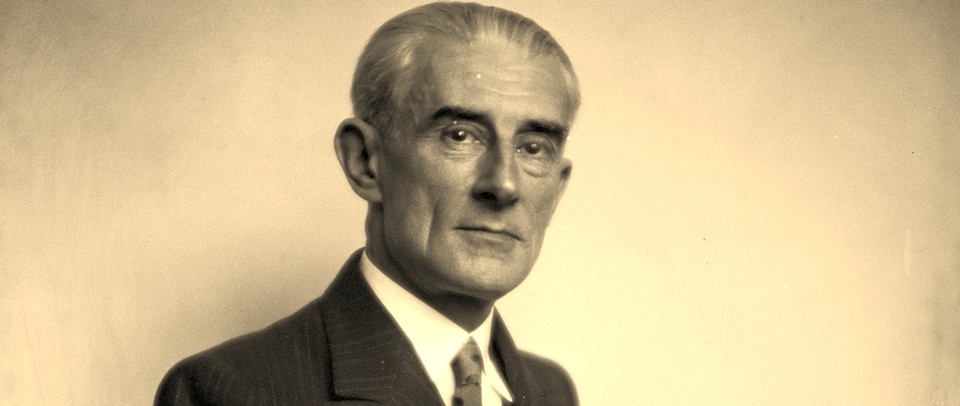
The concert interval offered a welcome opportunity for a glass of wine and a moment to reflect on Vitaly Pisarenko’s many achievements. The music critic for The New York Times wrote that Vitaly is an “immensely gifted pianist…with prodigious technique, myriad shadings and scrupulous accuracy.” Vitaly was born in Ukraine in 1987 and began studying piano in Moscow at the Central Music School and the State Tchaikovsky Conservatory. He later studied at London’s Royal College of Music and completed his Master’s degree in 2014. Vitaly has won prizes at the International Franz Liszt Piano Competition in Utrecht and the Leeds International Piano Competition. In recent years, he has performed in over thirty countries. He has also performed concertos with many international orchestras, including the Netherlands Radio Philharmonic Orchestra, the National Philharmonic Orchestra in Warsaw, the Moscow Philharmonic Orchestra, the Johannesburg Philharmonic Orchestra, the London Mozart Players, and the Brno Philharmonic Orchestra. When he’s not giving concerts, Vitaly teaches at the Purcell School for Young Musicians in England and, in 2023, was appointed Professor of Piano at the Royal College of Music, London. He told me that he currently lives in London’s Notting Hill district.
The second half of the concert opened with Schumann’s Piano Sonata Nr. 1, Op. 11, completed in 1835. Schumann’s biographer Eric Frederick Jensen described this work as “the most unconventional and the most intriguing” of Schumann’s piano sonatas. Strangely enough, Chopin published the work anonymously as a “Pianoforte Sonata, dedicated to Clara by Florestan and Eusebius”. “Clara” was Clara Wieck, whom Schumann loved deeply. “Florestan and Eusebius” were two fictional characters Schumann created to symbolise the contrasting aspects of his slightly schizophrenic personality. These alter egos frequently influenced his music. Schumann’s desire to remain anonymous might also have been because at the time, he was twenty-five and Clara was only sixteen.
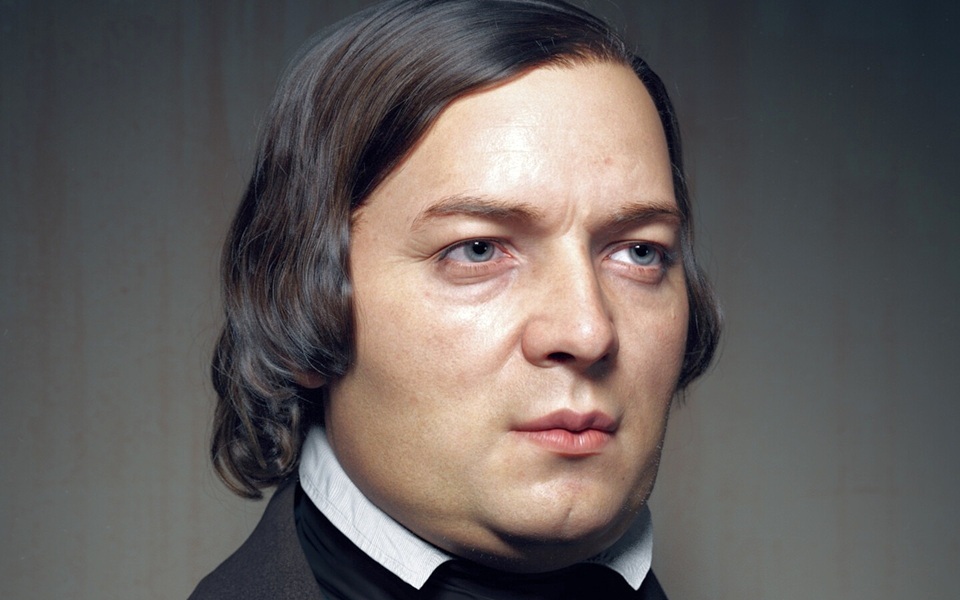
The work has a sombre opening with fragments of melody, leading into a ponderous movement with flowing, dark melodic lines. In typical Schumann fashion, darkness pervades the music, and Vitaly brought out its troubled character. In the faster second part of the movement, with its spiky rhythmic melody, Vitaly gave some splendidly rhythmic and dynamic playing. The slow movement was based loosely on a song Schumann that wrote when he was eighteen. Franz Liszt especially praised this movement, calling it a “song of great passion, expressed with fullness and calm”. Vitaly gave a compelling performance of this lovely melody with its moving harmonic changes. I was impressed by his sensitive rubato and expressive sense of pace. Vitaly gave a triumphant performance of the last movement with its sprightly but troubled mood and brought out the tremolos in the bass, the brilliant staccato writing and the loud chords pounded out at high speed – a formidable technical challenge. I enjoyed Vitaly’s confident and exuberant playing, which made this work one of the musical triumphs of the evening.
The concert ended with Franz Liszt’s delightful reworking of a Schubert piece, a caprice which he called “Soirées de Vienne.” It is the sixth of nine waltzes composed between 1846 and 1852, and they were part of many arrangements Liszt made of Schubert’s works. Liszt was very fond of the Soirées, and they featured in many of his own concert performances. It was an excellent choice to end the programme, especially after Schumann’s heart-rending sonata. Vitaly played the melody with the utmost delicacy and light touch. With expressive rubato, he emphasised the character and colour of the joyous music, bringing the concert to a profoundly satisfying conclusion.