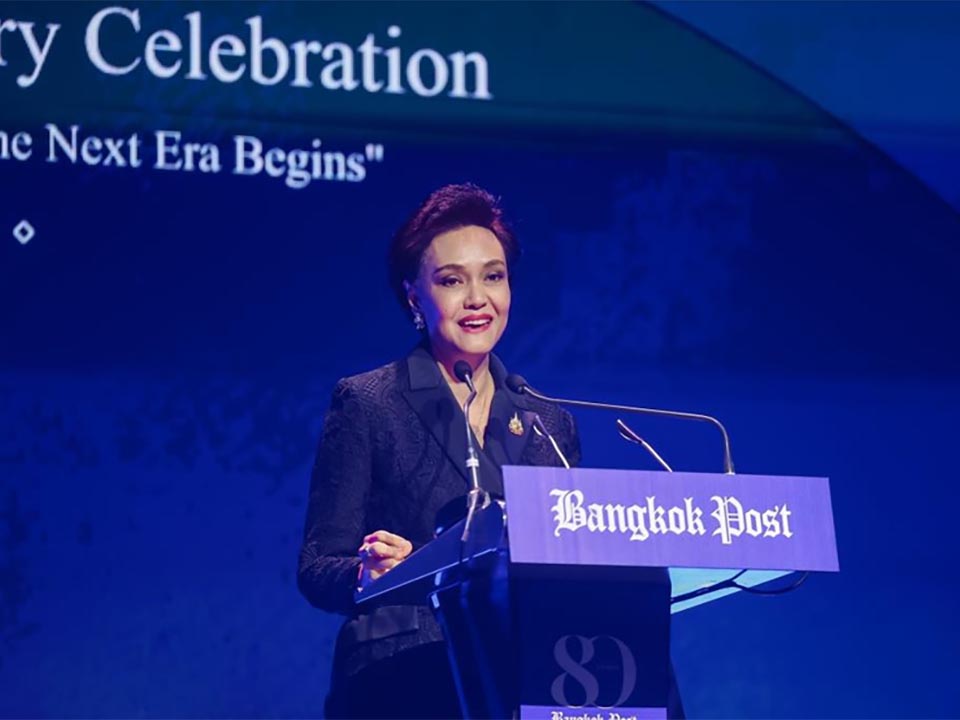
BANGKOK, Thailand — Thailand must adapt to a rapidly changing global economy by diversifying trade, maintaining a balance among major powers and creating new opportunities for growth, Deputy Prime Minister and Commerce Minister Suphajee Suthumpun said. Speaking at the Bangkok Post Forum 2026 on August 14, Suphajee said Thailand must look beyond simply increasing export value and use trade as a tool to create new opportunities and sustainable economic growth.
She said geopolitical tensions, artificial intelligence and technology, trade barriers, sustainability concerns and increasingly vulnerable supply chains were reshaping the global economic landscape.
Thailand must therefore prepare for a multipolar economy by keeping its trade policy open, diversifying risks and maintaining balance while working with partners across the world.
Suphajee warned that around one-third of Thailand’s export value currently comes from just two major markets, creating risks from excessive market concentration. She called for faster expansion into new markets through free trade agreements, trade negotiations, business missions and other forms of cooperation.
“Thailand must remain open, diversify its markets and maintain balance,” she said, stressing that Thailand, as a relatively small and mid-sized economy compared with global powers, must create more choices for itself. Suphajee identified agriculture and food, advanced manufacturing, tourism, healthcare, culture and the creative economy as areas where Thailand can build greater value. She also highlighted Thailand’s strategic location in the heart of Asia, which offers opportunities to develop logistics and supply-chain connectivity. She said Thailand needs to close three major gaps — the value gap, market gap and participation gap.
The value gap requires Thailand to move beyond volume-based production by focusing more on brands, intellectual property, design, standards and customer experience. The market gap requires new destinations, channels and growth engines, while the participation gap focuses on bringing more SMEs and smaller businesses into the country’s economic growth. SMEs account for about 35% of Thailand’s GDP, but their contribution has changed little over the years. Of roughly 30,000 registered exporters, around 22,000 are SMEs and MSMEs, yet they generate only about 12% of export value, highlighting significant room for expansion.
Suphajee outlined four priorities: unlocking markets, unlocking value, unlocking opportunities, and unlocking trust and resilience. The government will work with the private sector through four groups focusing on the creative and visitor economy, agriculture and food security, community economies and SMEs, and international trade. The groups will target measurable results, including “Quick Big Wins” within six to 12 months, alongside longer-term structural changes designed to create new engines of growth for Thailand.