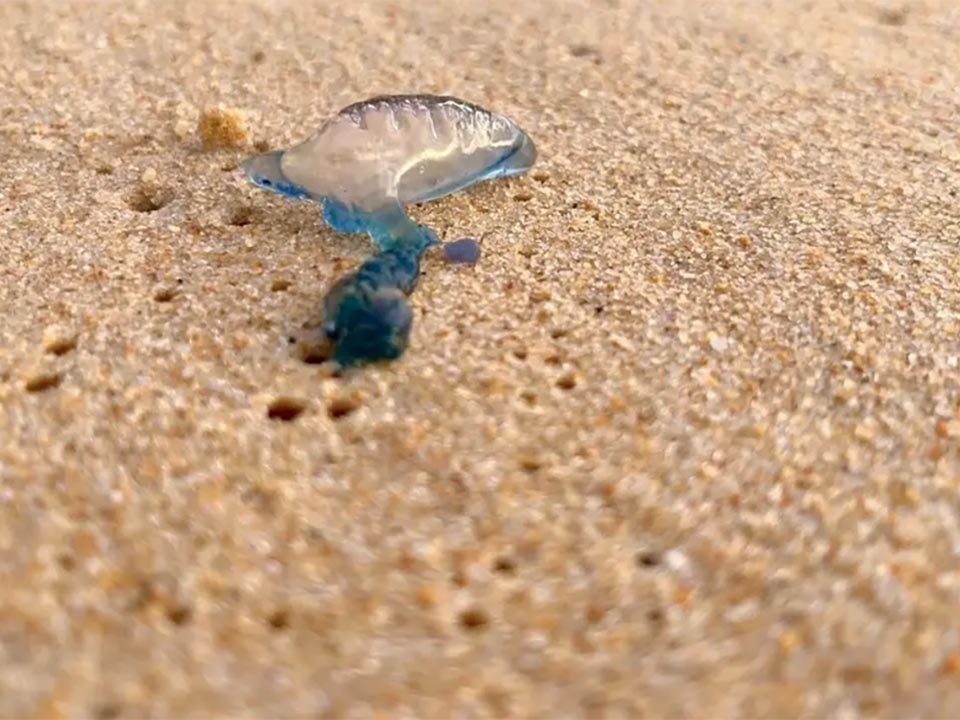
PHUKET, Thailand – The Department of Marine and Coastal Resources has issued an urgent warning to local residents, tourists, and coastal business operators to remain vigilant following sightings of highly toxic Portuguese man-of-war jellyfish washing ashore on Karon Beach and the western coast of Phuket. Minister of Natural Resources and Environment Suchart Chomklin instructed the department to closely monitor and issue timely marine safety alerts, particularly during the active monsoon season, to minimize public health risks.
Marine scientists from the Upper Andaman Marine and Coastal Resources Research Center launched an immediate field survey after alerts from local networks and beach lifeguards. The inspection occurred during intense monsoon conditions with strong winds and waves 2 to 3 meters high. The team found Portuguese man-of-war specimens with floats about 2 to 3 centimeters long, scattered along the tide lines. The average density was 0.5 individuals per 100 square meters.
The Portuguese man-of-war is known for its potent venomous stings. Contact with its tentacles causes excruciating burning pain. In severe cases, victims may experience chest tightness, respiratory distress, or systemic shock. Fortunately, local officials have reported no injuries or severe envenomation so far. In response, the department has coordinated with local rescue networks and professional beach lifeguards to monitor coastlines, prepare medical response teams, and distribute official public safety materials detailing correct first-aid measures for marine stings during this high-risk monsoon period. (NNT)