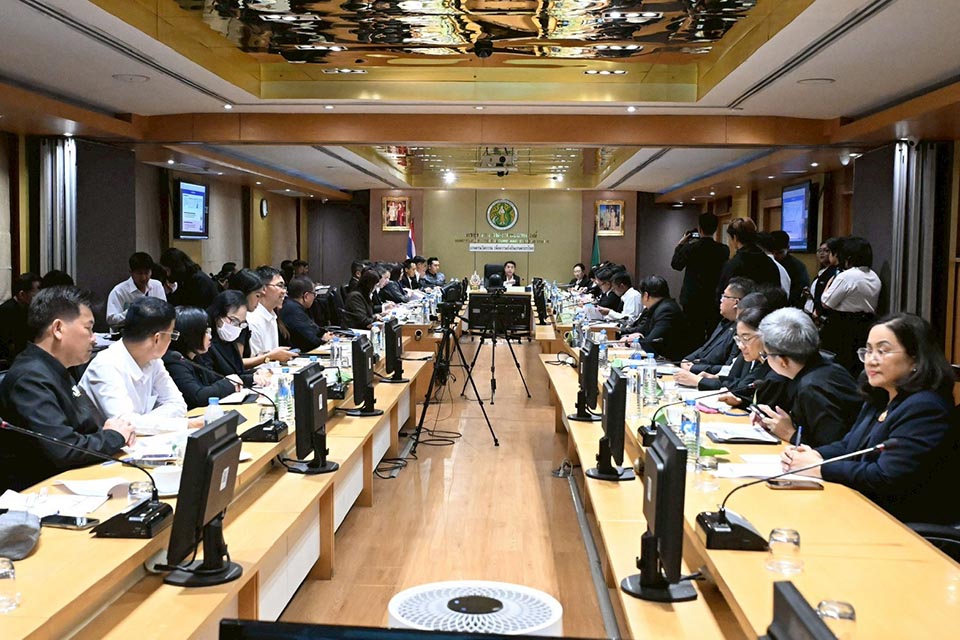
BANGKOK, Thailand – Thailand’s Ministry of Agriculture and Cooperatives has ordered the creation of a nationwide “war room” to monitor floods, drought, and El Niño risks across the country, as officials move to protect farmers using real-time Big Data, satellite monitoring, and remote sensing technology. Agriculture Minister Suriya Jungrungreangkit said the emergency measures follow growing concerns over increasingly unpredictable weather patterns and direct instructions from the prime minister during a recent national disaster prevention meeting.
Despite Thailand officially entering the rainy season and national water reserves remaining at adequate levels, the ministry warned that climate volatility could still trigger severe flooding, drought conditions, and prolonged dry spells in multiple regions, threatening crops, fisheries, livestock, and national food security. “We cannot wait until damage occurs before offering assistance,” Suriya said. “We must use data proactively to prevent and reduce losses before disaster strikes.” The ministry has now ordered all agencies to coordinate closely in identifying high-risk areas and preparing emergency response plans in advance, especially in regions vulnerable to flooding, drought, or interrupted rainfall.
One of the ministry’s key emergency measures includes boosting water reserves in dams and reservoirs nationwide. The Royal Rainmaking Department has also been instructed to continue cloud-seeding operations in coordination with the Royal Thai Air Force and related agencies to secure water supplies for both the rainy and dry seasons. Authorities will additionally monitor rainfall, reservoir levels, soil moisture, temperatures, planting areas, and crop growth stages using real-time satellite data and remote sensing systems. An online war room will also be established to deliver early warnings and risk updates directly to farmers and the public.
The ministry said crop planning will now be adjusted to match actual water availability, particularly in non-irrigated zones and drought-prone regions. Farmers will be encouraged to grow low-water crops in suitable areas and avoid cultivation beyond available water capacity. Officials also plan to reduce agricultural losses through improved water management, targeted fertilizer use based on soil analysis, precision pest control, and expanded support for agricultural machinery. Meanwhile, Thailand’s Office of Agricultural Economics will closely track crop yields, prices, production costs, and farmer incomes, while also assessing impacts on related industries including animal feed, sugar, cassava, livestock, and agricultural processing sectors. (TNA)