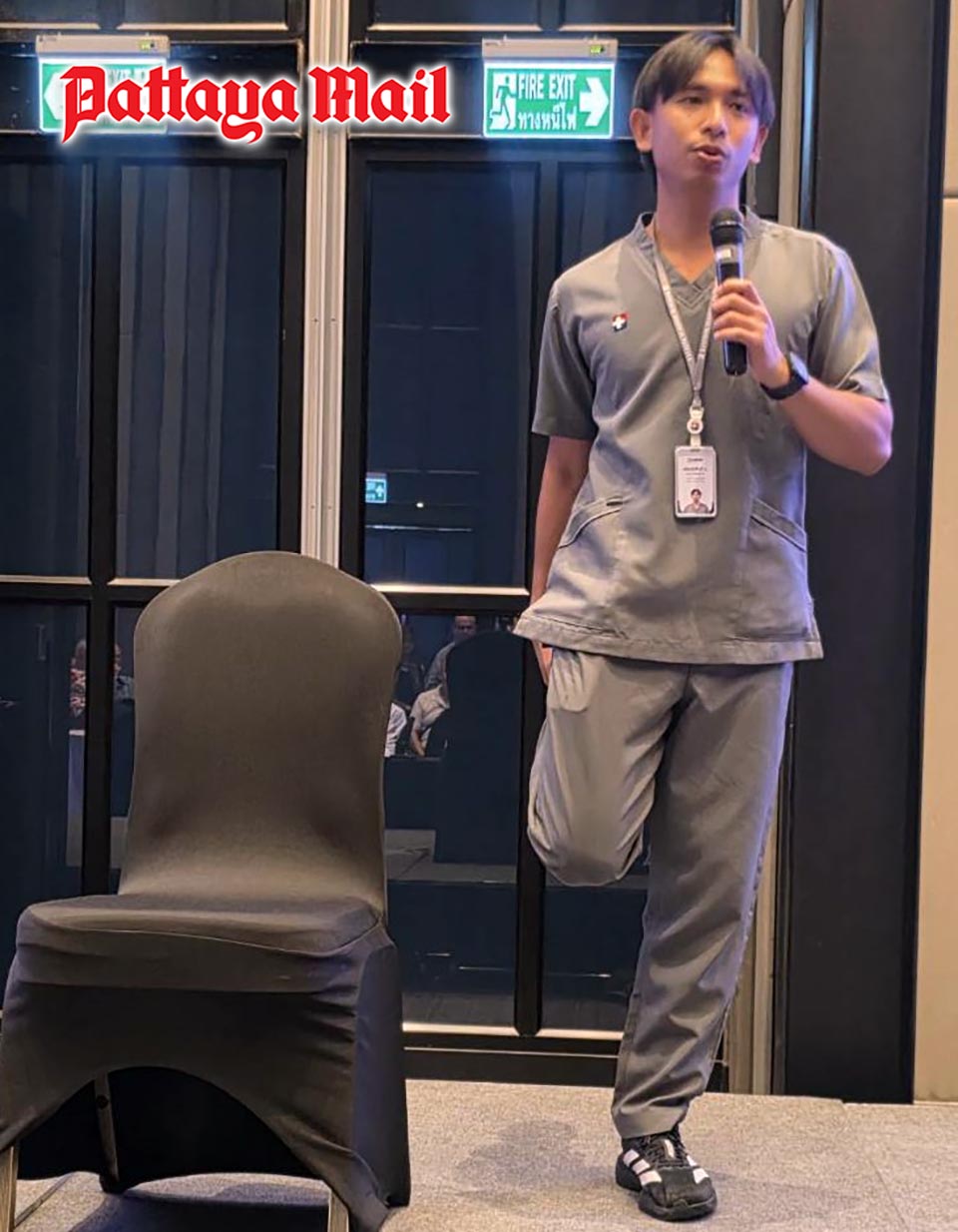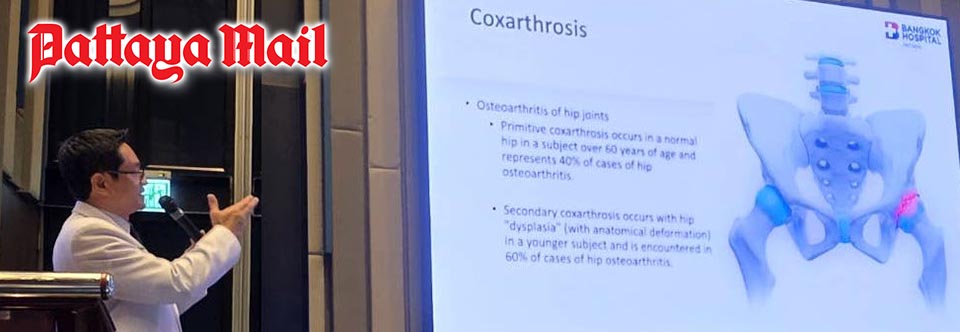
PATTAYA, Thailand – Members and guests of the Pattaya City Expats Club (PCEC) received an in‑depth look at modern orthopedic and rehabilitation care during a presentation by two specialists from Bangkok Hospital Pattaya. Orthopedic surgeon Dr. Nammon Yaikwavong and rehabilitation expert Dr. Chat Iamsirikij delivered a comprehensive program on the causes of hip and knee pain, treatment options, and the role of physiotherapy in recovery.
Dr. Nammon opened the session by explaining how hip pain can originate from a variety of sources, including muscle strain, tendon irritation, bursitis, spinal nerve compression, and structural problems within the joint itself. He highlighted common issues such as labrum tears, femoroacetabular impingement (FAI), osteoarthritis, and avascular necrosis, noting that each present distinct symptoms. For example, pain radiating below the knee with tingling often points to a spinal cause, while groin‑centered pain typically indicates a hip‑joint problem.
Using real patient cases, Dr. Nammon described how treatment is tailored to age, activity level, and severity. Conservative care, medication, injections, and physiotherapy, is often the first step. In one case, a 47‑year‑old patient with cam‑type FAI experienced an 80% improvement after guided cortisone and hyaluronic acid injections.
For advanced arthritis or severe deformity, total hip replacement remains the gold standard. Dr. Nammon also discussed the Direct Anterior Approach (DAA), a newer technique that allows faster recovery and less muscle damage, though only suitable for selected patients.
Addressing a major concern for older adults, Dr. Nammon emphasized that hip fractures require prompt treatment to avoid complications such as pneumonia, bedsores, and delirium. The aim is to return the patient to their previous level of ambulation as early as possible. Depending on bone quality and fracture type, treatment may involve fixation, partial replacement, or full joint replacement. Several case studies illustrated how decisions differ for patients with osteoporosis versus those who remain active.
Shifting to the knee, Dr. Nammon explained that pain can arise from strained muscles, inflamed bursae, ligament injuries, meniscus tears, fractures, or progressive cartilage loss. He stressed that conservative treatment is always preferred initially, with MRI scan which is used when symptoms persist. Surgical options include arthroscopy for ligament or meniscus repair and total knee replacement for severe osteoarthritis. Some patients undergo bilateral knee replacement in a single session, followed by structured rehabilitation.
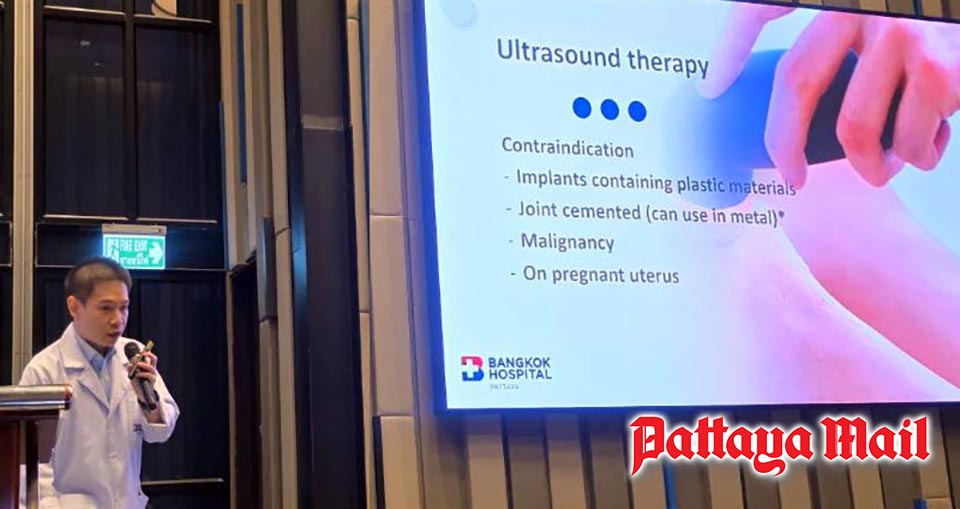
The second speaker, Dr. Chat, introduced the hospital’s rehabilitation services, which include physical therapists, occupational therapists, and sports scientists. He demonstrated several therapeutic technologies used to reduce pain and improve mobility: Ultrasound therapy for deep tissue heating ; Shortwave diathermy for electromagnetic heat treatment; Shockwave therapy for tendon and muscle conditions; High‑power laser therapy to reduce inflammation and stimulate healing; and Pulsed electromagnetic stimulation (PEMF) for nerve and muscle activation.
He emphasized the importance of safety, noting that some machines cannot be used on patients with metal implants, cancer, or pregnancy. If you have a cemented hip arthroplasty, we cannot use ultrasound at the hip, he explained.
To conclude the session, the hospital’s sports scientist led attendees through simple strengthening and stretching exercises designed to support hip and knee health—movements suitable for seniors and easily performed at home.
The presentation drew strong interest from the audience, many of whom asked questions about joint replacement, longevity, supplements, and pain management. The doctors emphasized that while injections and medications can help with inflammation, mechanical problems often require mechanical solutions.
After the presentation, MC Ren Lexander brought everyone up to date on upcoming Club events. This was followed by the Open Forum where questions are asked and comments made about Expat living in Thailand. To learn more about the PCEC, visit their website at https:/pcec.club. A video of the presentation will be uploaded to the PCEC’s YouTube Channel at https://www.youtube.com/@pcecclub6255/videos.
The article and photos are attached. Suggested captions for the photos are: