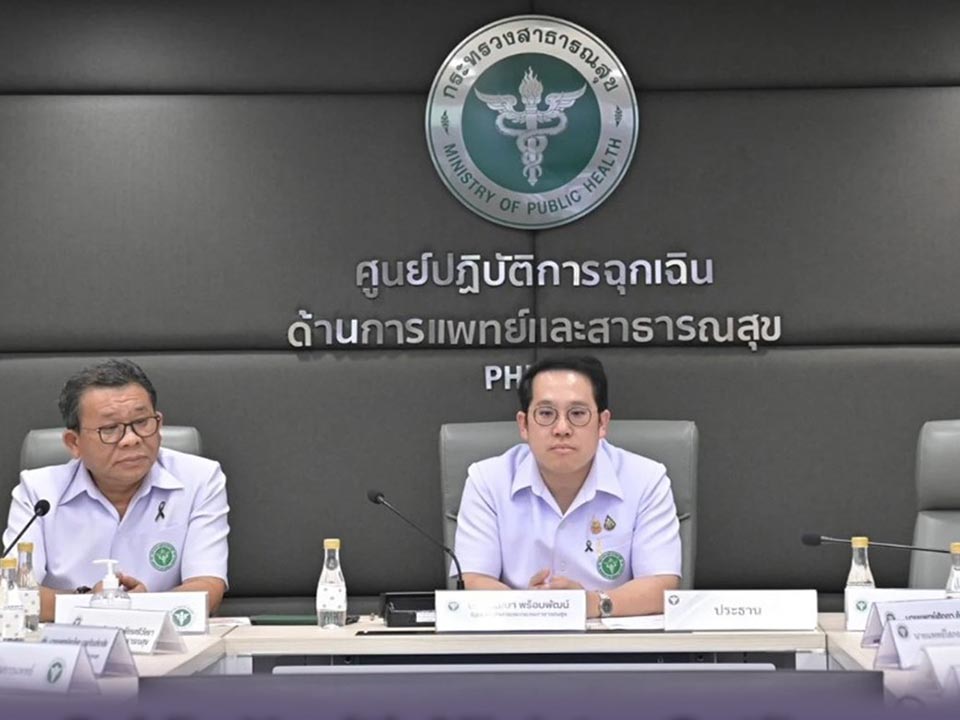
BANGKOK, Thailand – The Ministry of Public Health has introduced a comprehensive three-phase contingency plan to mitigate the impact of ongoing tensions in the Middle East on medical supplies and operational costs.
Minister of Public Health Pattana Promphat chaired a meeting on March 24, 2026, to address risks from rising fuel prices and potential global supply chain disruptions. Although most vital medicines are imported from Europe, the United States, China, and India, the Minister highlighted that higher shipping costs and domestic logistics delays are significant challenges. In addition, raw materials for medical packaging from the Middle East are currently at risk of shortage.

The ministry’s short-term strategy emphasizes energy conservation and digital integration. Measures include expanding telemedicine to cover 30% of consultations, especially for stable patients with non-communicable diseases (NCDs), and implementing a fully mail-order prescription refill system. To reduce fuel use, the ministry has authorized remote work and adopted e-Office systems for administrative tasks.
The Minister stated that the Food and Drug Administration (FDA) has created a “Watch List” of 63 essential items, including life-saving drugs, surgical supplies, saline, and vaccines. Current reserves are expected to last three to twelve months. To support the private sector, the FDA now allows manufacturers to expedite requests for alternative raw material sources to maintain production.
For the medium and long term, the ministry aims to strengthen health security through renewable energy and domestic innovation. Plans include expanding solar cell installations, which have already saved 687 million baht annually, and converting the ministry’s fleet to electric vehicles. The Government Pharmaceutical Organization (GPO) has also diversified raw material suppliers across Europe, the U.S., and Asia to reduce market volatility.
The Ministry has instructed Provincial Public Health Offices to closely monitor inventories of fuel, medicine, medical supplies, oxygen, and PPE. Although 25 provinces have reported moderate impacts from higher fuel costs, all public health services remain fully operational. (NNT)