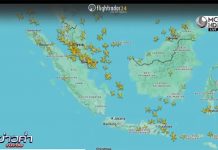
BANGKOK, Thailand – Prime Minister Anutin Charnvirakul convened an urgent high-level meeting at Government House on Thursday with key economic and security ministers to assess the potential impact of escalating fighting in the Middle East, particularly after the closure of the Strait of Hormuz disrupted global oil transportation routes.
The meeting brought together senior officials including Deputy Prime Minister and Finance Minister Ekniti Nitithanprapas, Deputy Prime Minister and Transport Minister Phiphat Ratchakitprakarn, Foreign Minister Sihasak Phuangketkeow, and Energy Minister Atthapol Rerkpiboon, along with senior officials from the National Security Council, the Office of the Council of State, and economic planning agencies.
Speaking at the start of the meeting, Anutin said the government was closely monitoring the Middle East conflict and its impact on energy supply chains. The closure of the Strait of Hormuz — a vital global oil shipping route — has already affected crude oil transportation, a key concern for Thailand as a major oil-importing country.
The prime minister noted that while earlier briefings indicated domestic oil supply for March would not be immediately affected, new figures show a reduction in the volume of crude oil shipments heading to Thailand.
“The situation has changed significantly since Saturday when the crisis began, and it has become more severe,” Anutin said. “We must now prepare measures to ensure confidence that Thailand’s crude oil imports will not be disrupted.”

He explained that roughly half of Thailand’s crude oil imports come from the Middle East, while the remaining half is sourced from other regions. The government has requested detailed clarification on these alternative supply sources to ensure the country can secure sufficient energy supplies if disruptions continue.
Anutin also instructed the Ministry of Foreign Affairs to begin diplomatic discussions with other oil-producing countries to explore alternative purchasing arrangements and safeguard Thailand’s fuel supply.
The prime minister stressed that the government’s priority is to minimize the impact on domestic consumers and maintain stability in the country’s energy supply during the unfolding international crisis. (TNA)