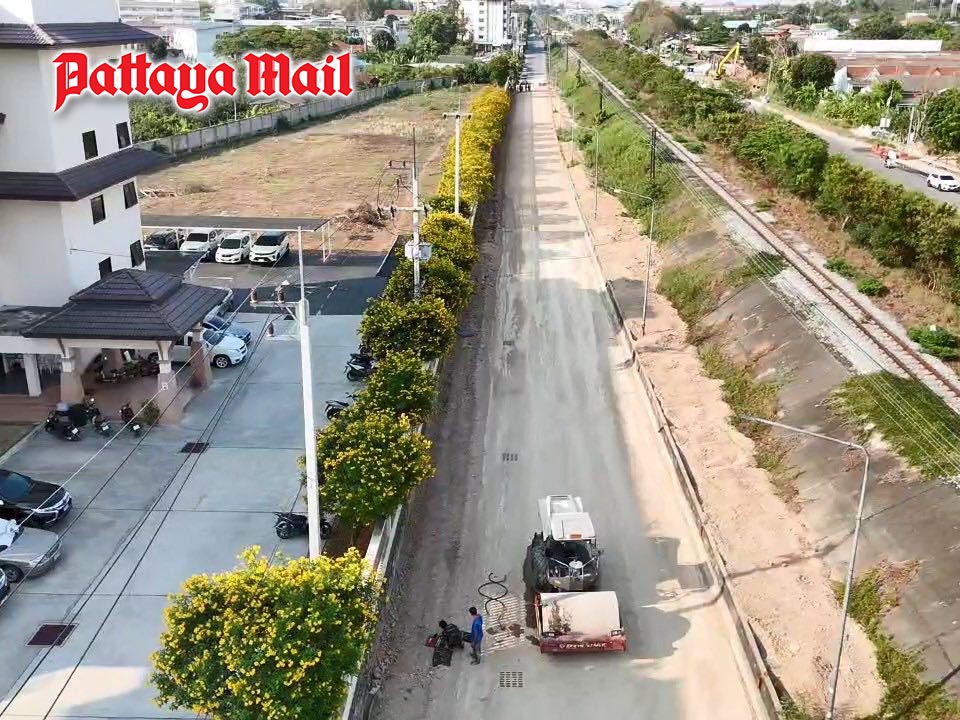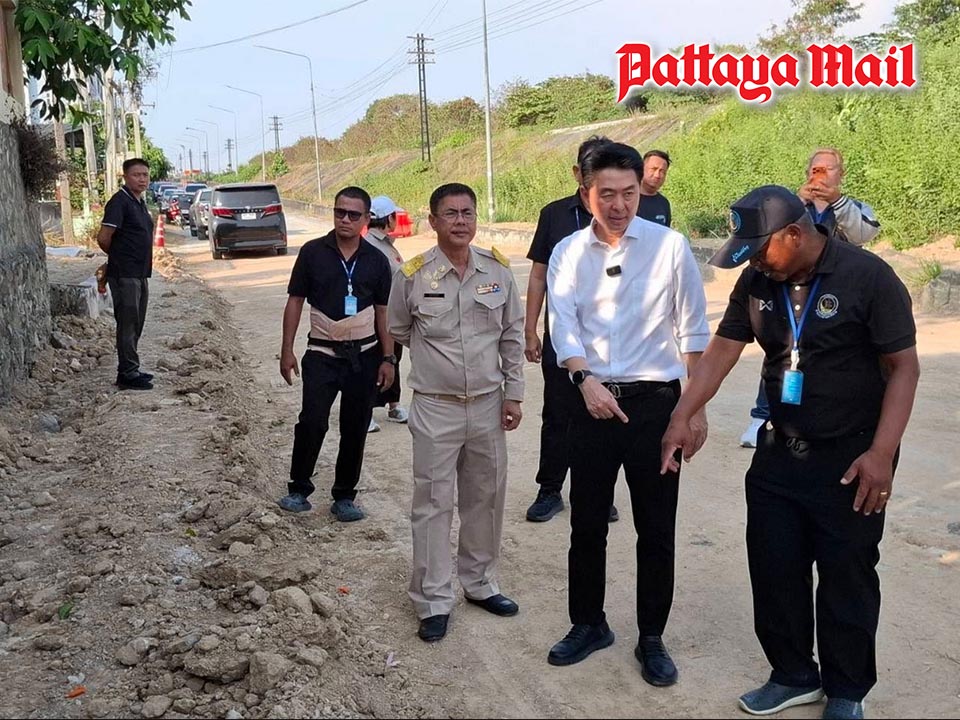
PATTAYA, Thailand — Mayor Poramet Ngampichet led a site inspection with city officials to monitor progress on a road-raising project along the western rail-side road at Khao Talo—one of Pattaya’s most flood-prone locations. The work forms part of a wider asphalt concrete improvement scheme covering a total of 16 kilometers along the western railway corridor.
City officials said the 16-kilometer project is being delivered in phases. The first kilometer near Huai Yai is being resurfaced using an overlay method, while subsequent sections will undergo full recycling. Work is currently underway near the Nong Ket Yai intersection.
The Khao Talo section has long been a problem area due to its bowl-shaped, low-lying terrain. During heavy rainfall, water regularly accumulates, making the road impassable. Despite warning signs advising motorists not to proceed, drivers have continued to enter flooded sections, resulting in stranded vehicles and negative images circulating online—damaging Pattaya’s reputation even though the water typically subsides once drainage catches up.
To address this, Pattaya City is raising the road surface from 30 centimeters to 60 centimeters over a 275-meter stretch, with a 7-meter roadway and 3-meter compacted shoulders. Construction began on February 17 and is expected to be completed by March 7, 2026. Once elevation work is finished, an overlay will connect this segment with adjacent sections, without recycling at this specific low point.
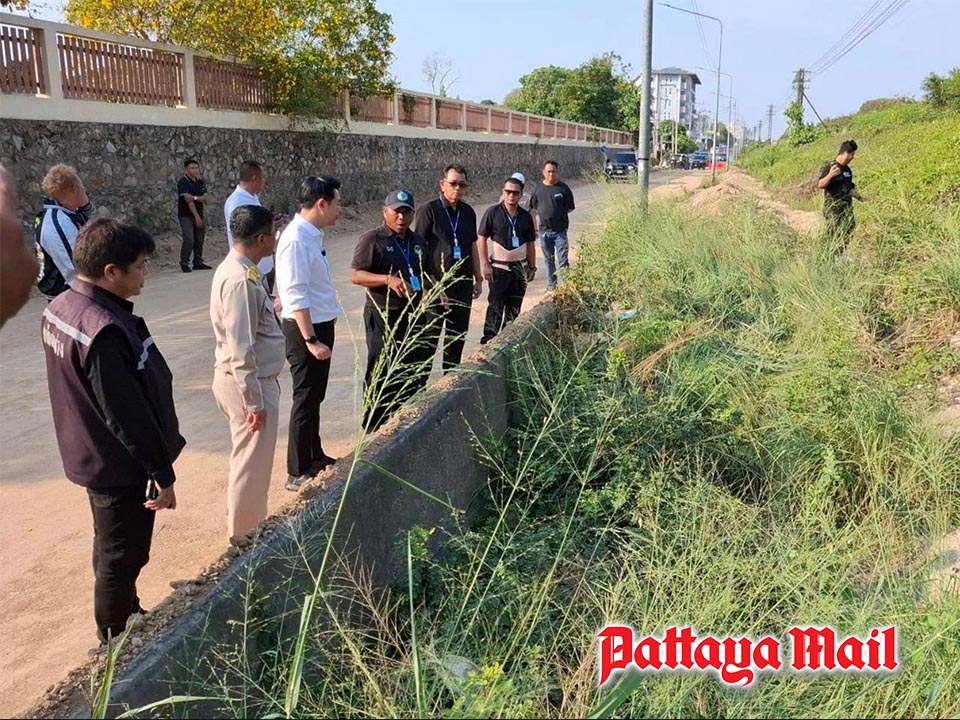
Mayor Poramet addressed public concerns about drainage capacity, noting that an existing 60-centimeter drainage pipe—though old—remains in place and has been clearly marked. After resurfacing, access points will be reopened to ensure normal water flow. He acknowledged that during intense rainfall, overflow from the eastern side may still move westward naturally, but stressed that prolonged flooding should no longer occur.
For a long-term solution, Pattaya City is advancing a broader drainage upgrade that includes new pipelines and pumping stations. The project is now in Phase 2 and is scheduled for completion by 2027. Once Phases 1 and 2 operate together, officials say they will significantly reduce runoff flowing into western Pattaya.
Looking ahead, the city also plans to extend flood-mitigation works toward Sukhumvit Road to address the system as a whole. While national-level plans would require budgets running into tens of billions of baht—beyond the city’s borrowing capacity—Pattaya has allocated municipal and subsidy funds to deliver the most effective improvements possible within its means.
“This project must be better than before,” Mayor Poramet said, expressing confidence that residents and motorists will see tangible improvements once the work is completed.