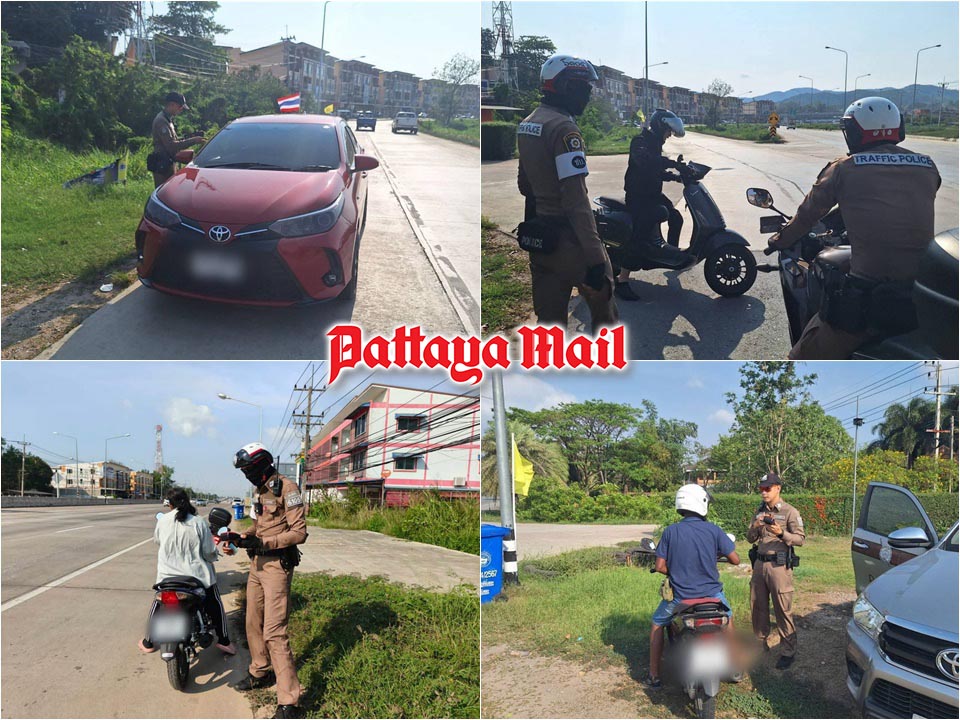
PATTAYA, Thailand – Police in Sattahip have stepped up strict enforcement against wrong-way driving, warning motorists that there will be no turning back once caught. Officers from the local police station conducted checks on February 25, stopping and fining drivers who violated traffic laws by driving against the flow of traffic, a behavior authorities say reflects a deeper issue of road discipline and poses serious accident risks.
Police stressed that wrong-way driving is not a minor inconvenience but a major safety hazard that can lead to severe injuries, fatalities, and complicated legal disputes over responsibility and damages. All offenders were fined on the spot in accordance with the law, with officers emphasizing that enforcement will be carried out seriously—not as a short-term show.
The operation quickly sparked widespread public reaction, with many residents voicing both support and frustration. Some welcomed the tougher stance, saying wrong-way driving has become so common that people start doubting whether they themselves are in the correct lane. Others urged police to expand enforcement to related issues, including helmet use, loud motorcycle exhausts, illegal street racing at night, and repeat offenders who show little fear of penalties.
Several residents pointed out that poor road design contributes to the problem. In some areas, U-turn points are one to two kilometers away, tempting drivers—especially motorcyclists—to take risks by going against traffic. Locals highlighted dangerous spots near markets, schools, bridges, highway service units, and convenience stores, where fast-moving vehicles and blind curves have already caused near misses and frequent accidents.
Others questioned whether enforcement would be sustained, warning that a single day of ticketing would not change behavior. Many called for daily, all-day checks, noting that consistent enforcement could not only save lives but also generate significant revenue for road improvements. Some even suggested allowing citizens to submit photos or video clips of violations for follow-up action.
Despite differing views on road design and enforcement methods, the dominant message from the public was clear: selective or short-lived action will not work. Residents want fair, citywide enforcement applied equally to all roads, all vehicles, and all times—especially as school holidays begin and traffic volumes rise.
Police said they welcome public feedback and reaffirmed their commitment to stricter, ongoing enforcement to improve road safety and restore discipline on Sattahip’s streets.