PATTAYA, Thailand – The Thai baht opened stronger at 30.98 per US dollar on February 24, supported by a continued surge in gold prices and mounting uncertainty over US trade policy, according to market analysts.
Poon Panichpibool, a strategist at Krungthai GLOBAL MARKETS, said the baht gained strength as global gold prices (XAUUSD) rose to test the 5,200-dollar-per-ounce level. Investors remain wary of US trade policy direction and ongoing geopolitical tensions, particularly between the United States and Iran. He expects the baht to move within a 30.85–31.05 range over the next 24 hours.
While concerns over US trade uncertainty could eventually weaken the dollar, Mr. Poon noted that such pressure may not materialize immediately. US authorities may take up to 150 days under Section 122 to impose temporary import tariffs while exploring additional measures under Sections 232 and 301, raising the risk of renewed trade turbulence later this year.
Krungthai assesses that any further baht appreciation is likely to be limited. Should the currency strengthen into the 30.50–30.75 range, it would be considered overvalued relative to fundamentals, with fair value estimated around 33–34 baht per dollar. Such levels could present an opportunity to gradually accumulate US dollars and other foreign currencies.
Meanwhile, SCB Financial Markets expects the baht to trade between 30.90 and 31.20 today. The baht remains firm but has failed to break key support levels, while the US dollar index has stabilized after recent weakness tied to tariff concerns. Thailand’s January exports, which grew 24.4% year-on-year — the strongest pace in four years — have also supported the currency. Separately, the European Union has delayed approval of a proposed 15% US tariff, citing inconsistencies with prior negotiations.
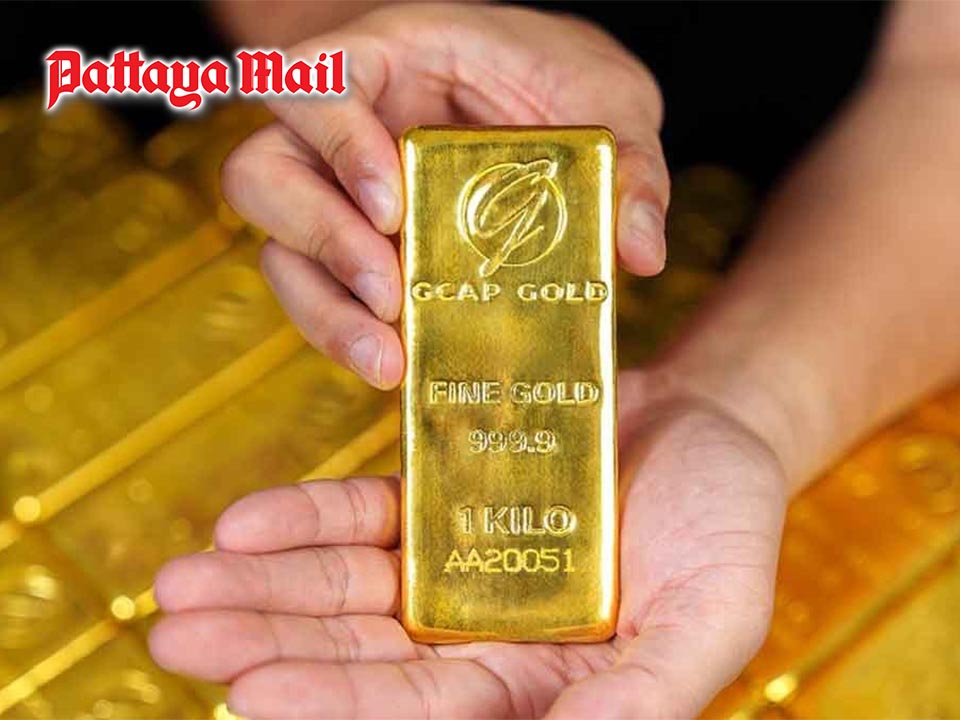
Gold prices continued to climb. The Gold Traders Association reported that domestic gold prices rose 650 baht on the day, with bullion selling at 76,150 baht per baht-weight and gold ornaments at 76,950 baht.
Analysts at Hua Seng Heng Gold Futures said gold prices were buoyed by investor demand for safe-haven assets amid uncertainty over US tariff policy. Although the US Supreme Court blocked tariff measures imposed under the IEEPA framework, President Donald Trump has moved to levy a blanket 15% global tariff using Section 122, while other legal avenues remain available, according to Goldman Sachs. SPDR Gold Trust added 7.72 tons of gold, bringing total holdings to 1,086.47 tons.
Gold prices are testing support near 5,145 dollars and are expected to rebound toward resistance at 5,200–5,250 dollars, though a break below 5,100 could trigger a deeper correction. On February 23, April gold futures on COMEX jumped 144.70 dollars, or 2.85%, to close at 5,225.60 dollars an ounce, marking a second consecutive daily gain as investors sought safety.
Looking ahead, Krungthai Chief Investment Office said global markets are entering a potential turning point. Policy uncertainty in the US could undermine business confidence and increase the risk of a sharper-than-expected economic slowdown, leading to heightened market volatility and stronger demand for safe-haven assets.
In Thailand, the Monetary Policy Committee is expected to hold its policy rate at 1.25% at its February 25 meeting, as policymakers assess economic conditions amid low inflation and external uncertainties. The post-meeting statement is likely to shape short-term market and currency sentiment.
Krungthai CIO recommends a “barbell strategy” to navigate volatility, balancing growth assets such as fundamentally strong technology and semiconductor stocks — supported by long-term AI investment trends — with defensive assets like gold. Diversification into high-growth markets such as India and Vietnam is also advised to enhance portfolio resilience.