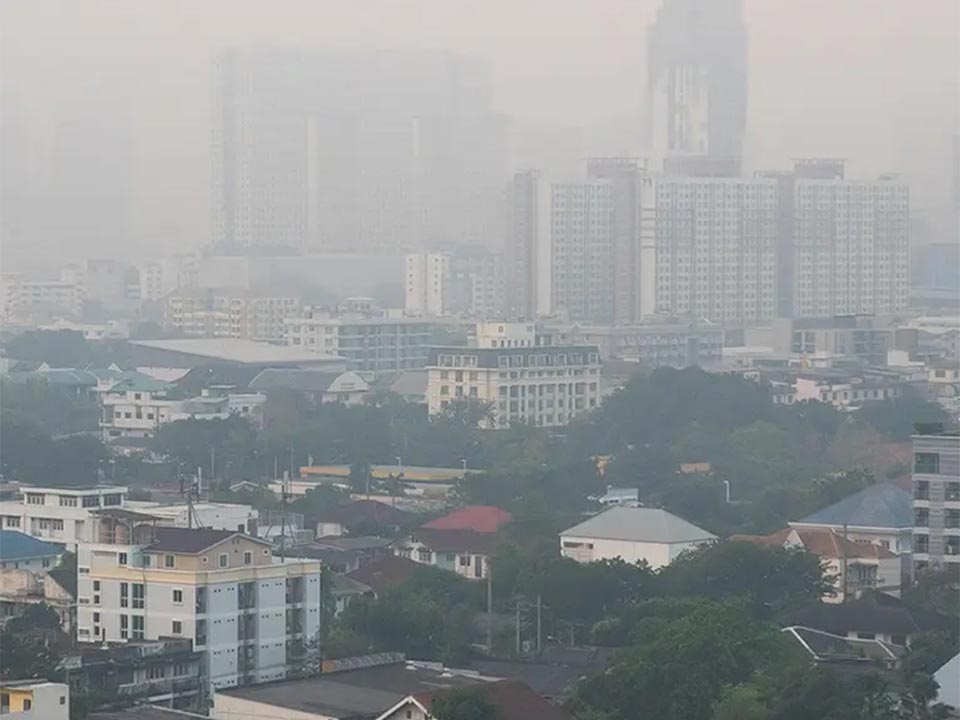
BANGKOK, Thailand – Bangkok is intensifying efforts to curb PM2.5 pollution as weak air circulation this week raises the risk of dust accumulation, especially in the mornings. Ventilation is forecast to improve between February 18 and 21, then weaken again around Feb. 22 and 25, increasing the likelihood of renewed particle buildup.
The Bangkok Metropolitan Administration (BMA) has rolled out 10 stricter measures targeting both emission sources and public health protection. Vehicle controls include lowering the allowable black smoke threshold from 30 percent to 15–20 percent and tightening roadside inspections. Industrial facilities face closer oversight, including requirements for Continuous Emission Monitoring Systems or stack filters. Authorities may expand pollution control zones when dust levels exceed standards, encourage regular engine oil changes for larger vehicles, and coordinate with neighboring provinces to curb open burning and cross-border pollution.
While overall dust readings this year are below last year’s levels, continued cooperation is considered essential. Residents are encouraged to report black smoke and burning incidents through the Traffy Fondue platform to support enforcement.
To reduce public exposure, the city has upgraded its AirBKK system to provide seven-day forecasts, allowing residents to plan ahead. Air purifiers have been installed in all classrooms at city-run schools, and work-from-home arrangements may be implemented when pollution worsens. Urban greening under the “One Million Trees” project and the installation of dust barriers in eastern Bangkok are also being expanded to help improve air quality. (NNT)