PATTAYA, Thailand – Pattaya’s renewed push to end what many describe as a long-running “parking free-for-all” has drawn strong reactions from foreign tourists and long-term visitors, with growing calls for vehicle towing and wheel clamping to be expanded citywide.
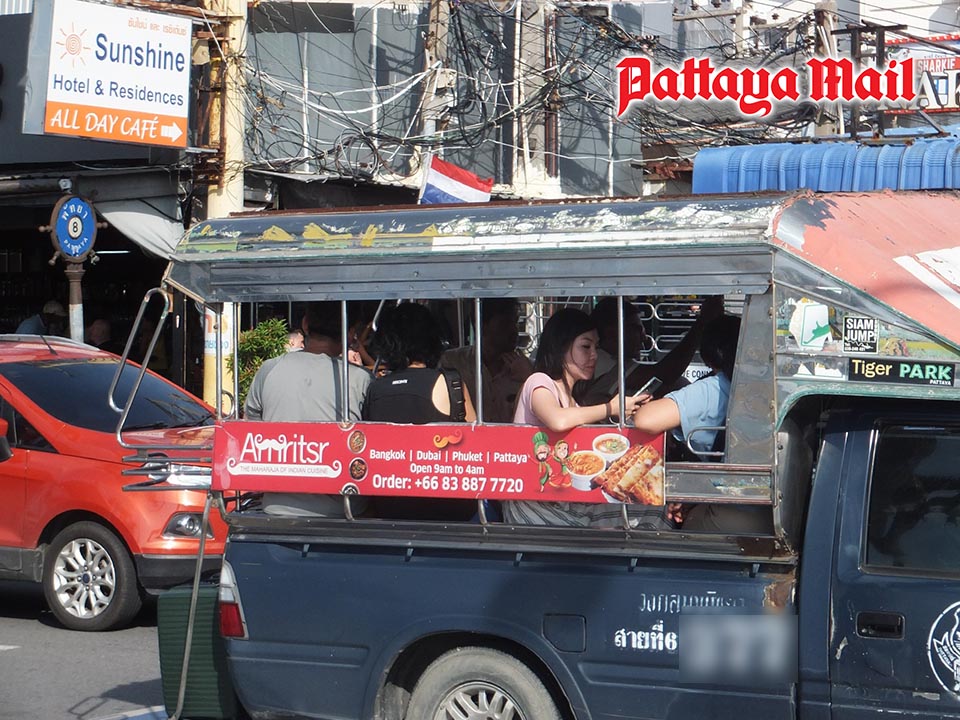
City officials recently urged drivers to pay closer attention to roadside parking signs, warning that enforcement will be stepped up in key areas. Baht buses have been confirmed as exempt from certain restrictions due to their role in public transport, but for many residents and visitors, that clarification has done little to ease frustration.
Comments from Pattaya Mail readers reflect deep skepticism about selective enforcement. One reader remarked, “I’ll bet you a million baht I can go down to Second Road, Soi VC, or the Soi Marine area right now and find at least 15 taxis parked illegally.” Others echoed similar experiences, pointing to taxis, private cars, and delivery vehicles routinely blocking lanes, footpaths, and junctions with little consequence.
Foreign tourists and long-term visitors say illegal parking worsens traffic congestion, creates safety risks for pedestrians, and undermines Pattaya’s image as a well-managed international destination. Many argue that warning signs alone are ineffective without visible, consistent penalties.
“There’s no deterrent,” one long-term visitor commented. “If cars and taxis know they won’t be towed or clamped, nothing will change. Enforce it everywhere, not just a few streets.”
Several readers called for a clear, citywide policy applying equally to private vehicles, taxis, and commercial operators, with towing and wheel clamping used as standard measures rather than last resorts. Others suggested stricter action in chronic trouble spots such as Second Road, South Pattaya, and nightlife zones, where illegal parking is seen as routine rather than exceptional.
While Pattaya officials say improved signage and public awareness are part of a broader effort to restore order, many residents and visitors insist that real change will only come with visible enforcement — including fines, towing, and wheel clamping — applied consistently across all areas.
For now, the debate highlights a familiar tension in Pattaya: balancing convenience, tourism, and enforcement, while convincing road users that traffic rules apply to everyone.