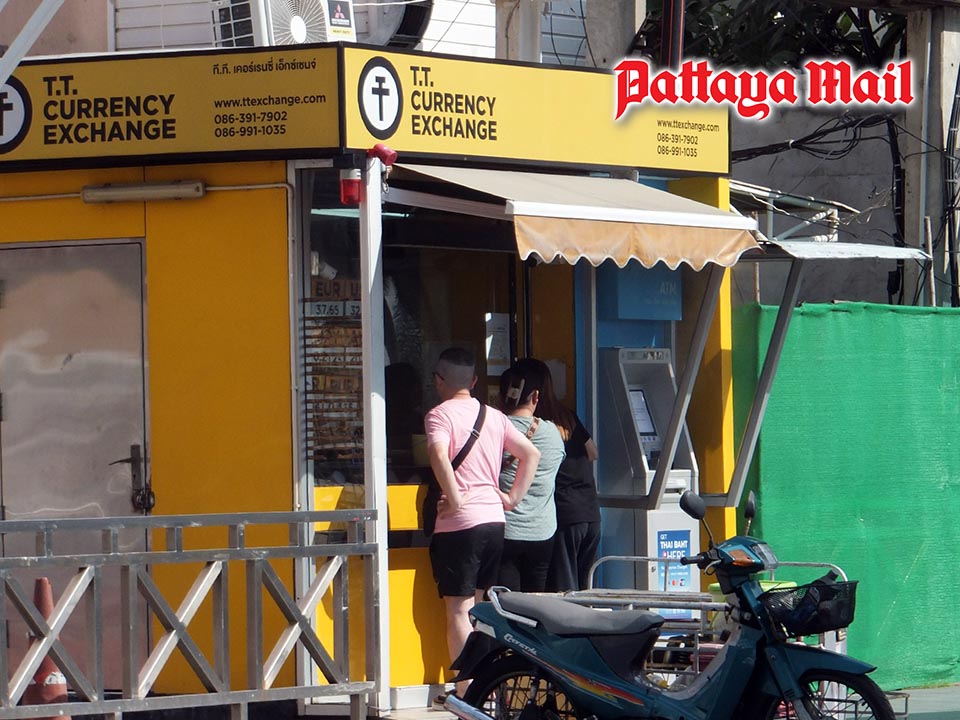
PATTAYA, Thailand – What began as yet another debate over Thailand’s strong baht has spiraled into something far more revealing — a raw, sometimes hostile clash between tourists, long-term visitors, retirees, and those pointing to deeper economic damage beyond beer prices and bar bills.
Pattaya Mail readers reacting to concerns about the baht showed little consensus, but plenty of emotion.
On one side are voices dismissing complaints outright. For them, Thailand remains “good value,” and those struggling with exchange rates are simply being cheap, entitled, or unrealistic.
“If you can’t afford Thailand, don’t blame the baht. Get a better job or stay home,” one reader wrote, echoing a recurring theme that Thailand should not be expected to remain inexpensive for foreign visitors’ comfort. Others mocked so-called “penny pinchers,” insisting prices are still lower than in Europe, the US, or Australia — especially outside tourist hotspots.
Some went further, framing complaints as moral failure. “Grow up, bring more money, don’t be a bad and cheap tourist,” wrote another, while others sneered that anyone skipping a ladydrink to save for a 7-Eleven sandwich simply doesn’t belong here.
Yet beneath the bravado lies a sharply different reality — and it’s one many commenters say is being ignored.
Several long-term visitors, pensioners, and regional travelers pointed out that the issue isn’t nightlife spending at all. For Japanese retirees, the collapsing yen means one week in Thailand can now equal an entire month of pension income. Europeans highlighted cancelled multi-week family holidays, golf trips, and island stays that were once annual traditions but are now financially unjustifiable.
One reader summed it up bluntly: “We plan a year ahead. It’s already too late — even if the exchange rate improves.”
Others noted that simply “spending less” or staying in more often may work for individuals, but does nothing for Thailand’s tourism-dependent businesses. Hotels, restaurants, tour operators, and entertainment venues feel the impact when longer stays are cut short or cancelled entirely.
More strikingly, several commenters shifted the focus away from tourists altogether — toward Thai households and the broader economy.
With household debt estimated at over 16 trillion baht, approaching 90% of GDP, and reports that more than 100 factories are closing each month, some readers argued that currency strength is hurting export competitiveness, domestic manufacturing, and Thai workers far more than it inconveniences short-term visitors.
“This isn’t about the price of Chang or a cheese toastie,” one reader wrote. “It’s about reduced overseas income, factory closures, and Thai people getting hit from all directions.”
The comments expose a widening disconnect: between short-stay visitors who still see Thailand as affordable, and those who once stayed longer, spent more broadly, and are now quietly redirecting their money to Vietnam, Malaysia, or elsewhere in Southeast Asia.
Perhaps most telling is the fatigue evident on all sides. The dismissive tone — “don’t bother, stay home” — may win online arguments, but it does little to address whether Thailand’s tourism model can thrive if longer-term, repeat visitors slowly drift away.
The baht may strengthen and weaken in cycles. But the deeper question raised by Pattaya Mail readers is whether Thailand is prepared for the long-term consequences if “just bring more money” becomes its only answer.