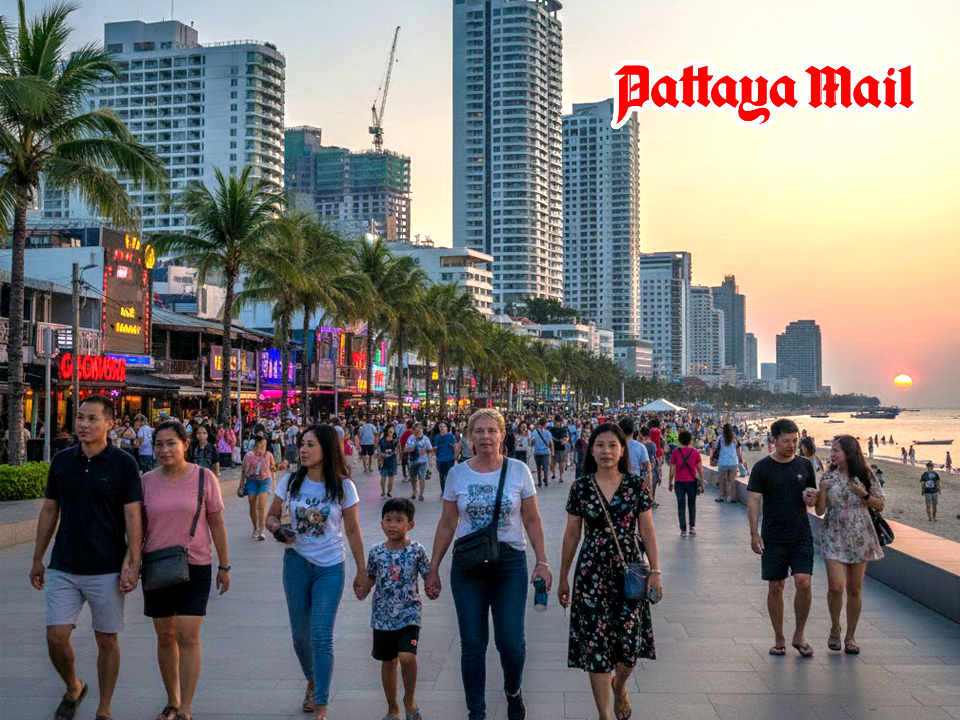
PATTAYA, Thailand – Yesterday I ended with a familiar observation: this is Pattaya, a city that reinvents itself faster than anyone predicts. One way or another, it always finds a method to keep its rooms and its future filled, even if it takes a little time. This year’s high season has offered yet another reminder that nothing in Pattaya stands still. The mix of international visitors is changing in ways that even the most seasoned expat bar philosophers didn’t foresee. Europeans, once the backbone of the city’s winter influx, are visibly fewer.
Meanwhile, arrivals from China, Korea, India, and neighbouring Myanmar continue to rise, reshaping the atmosphere of the city’s streets, restaurants, and beaches. Depending on whom you ask, this shift is either cultural evolution, an economic inevitability, or simply the latest chapter in Pattaya’s long tradition of adapting to whoever shows up. Yet amid all this demographic reshuffling, one sector remains remarkably steady and occasionally defiant in its optimism: the condominium market.
Foreign buyers still favour Chonburi
For all the concern about “oversupply,” the broader numbers tell a more balanced story. Chonburi remains Thailand’s second-largest market for foreign property transfers, surpassed only by Bangkok. Even though year-on-year figures may show a softening, combined transfers in Chonburi and the capital still account for more than 80% of the nationwide foreign-buyer value. In other words, Pattaya hasn’t been quietly replaced or overlooked. It remains a core hub for foreigners who want a piece or a view of Thailand’s eastern seaboard.
A market driven by upper-tier demand
One trend stands out: demand is concentrating at the top. Luxury beachfront projects in Wongamat and Jomtien continue to sell briskly, largely because there simply aren’t many of them. Limited supply tends to make decisions easier for affluent buyers even when everyone else is arguing about exchange rates. Developers, especially the major players, have not retreated. They’re still breaking ground on new projects and, increasingly, large-scale mixed-use developments that reflect confidence in Pattaya’s longer-term direction rather than its week to week tourist mood.

A city expanding outward and upward less often
While central Pattaya becomes more saturated, the city’s shape is stretching southward and outward: Jomtien to Na Jomtien, Huay Yai, and even Bang Saray. Interestingly, the silhouette of new buildings is getting lower. Low-rise developments now dominate many of these expanding neighborhoods, appealing to buyers who prefer quieter communities but still want to be ten minutes from civilization or what passes for it on the Eastern Seaboard.
A new challenge: The transfer-limit speed bump
Of course, it wouldn’t be Thailand without at least one bureaucratic surprise. The daily inbound transfer limit of 500,000 baht has created unexpected friction for foreign buyers who prefer swift international payments. Developers and agents are now mastering the art of staggered transfers a skill no one asked for but everyone must learn. It’s a hurdle, yes, but not a wall. Once the industry and buyers adjust and they always do momentum tends to return.
A final thought
As the tourist demographics evolve, so too will the face of Pattaya. A city once dominated by Europeans is now a far more Asian crossroads. This shift will undoubtedly change the atmosphere of the high season, the soundtrack of beach promenades, and perhaps even the definition of what “peak season” means. But the property market? It remains firmly in place and, in many respects, still growing. Pattaya has weathered bigger transformations than a change in nationalities. And if history is any guide, it will do what it always does: adapt, adjust, and continue to attract those who believe the city still has room for a new chapter.
After all, this is Pattaya. Reinvention is not a survival tactic here. It is a tradition.
 Victor Wong (Peerasan Wongsri)
Victor Law Pattaya/Finance & Tax Expert
Email: <[email protected]> Tel. 062-8795414