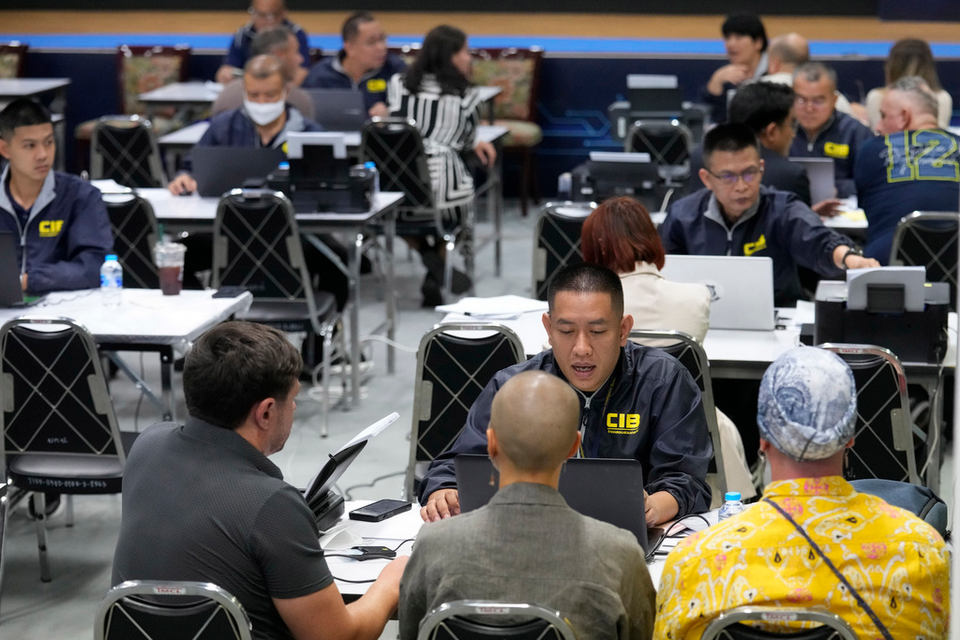
At least 20,000 foreigners have been arrested in Thailand over the past 12 months for not having correct work authorization. However, the majority are economic migrants from neighboring countries who failed to register with the Department of Employment under the memoranda of understanding with Myanmar, Cambodia and Laos. Low skilled for the most part, they are either ignored or returned to the nearest land border of their native land.
But an increasing number of foreign tourists from the UK, mainland Europe, China, Russia and India have also been fined and deported. Without a work permit processed by either the Department of Employment or the Board of Investment, their offences have included teaching, taxi driving, beauty treatment, tour operating, selling accommodation, people trafficking and running clubs amongst others. Perhaps the most bizarre case was the British guy whose parrot had been taught commercially to say to passersby, “Please be generous thank you”.
Of course, there are exceptions. Foreigners attached to embassies or the United Nations are exempt from the comprehensive alien labour act 2008, whilst cooperative work for the authorities – for example volunteer policing or court translating – has not been problematical. However, all exempted personnel should carry a signed ID just to be sure. Foreign investors, Smart visa holders in start-up businesses and even “individuals engaged in duties for the benefit of the kingdom” could be exempt but are advised to check with an immigration lawyer.
A royal decree in 2018 allowed more discretion. Work was defined less strictly as “performing any professional activity regardless of whether there is an employer or not.” In particular, attending conferences, business meetings, sports or cultural activities were all excused work visas. When the 60 days visa exempt visa was introduced in July 2024, it was announced that short-term specific “emergency” work such as installing or repairing machinery or even recruiting workers from overseas did not require permit permission.

However, notification to the Department of Employment or approval by the Cabinet is theoretically required to identify that claimed “emergency”. Discretion was also introduced with the introduction of the Destination Thailand Visa in July 2024. With or without such a visa, remote workers or digital nomads were excused from possible arrest provided that their activities did not impinge on the Thai economy in any way. There have not been test cases, but these foreigners are likely to be in the clear provided their employer, earnings and customers are wholly non-Thai.
Premier Anutin Charnvirakul recently announced that the priorities of his four-months administration will be economic revival and domestic deprivation, together with the need to prepare for a constitutional referendum agreed with the opposition People’s Party. Thus major changes are not expected for now in foreign employment laws. However, after next year’s election, there are likely to be substantial updates including a wholesale rewriting of the 1979 immigration act. That act reflected a Thailand preoccupied with the after-effects of the collapse of the pro-American regimes in Vietnam, Cambodia and Laos. A new immigration act reflecting today’s technologies and a totally changed political world is likely next year.