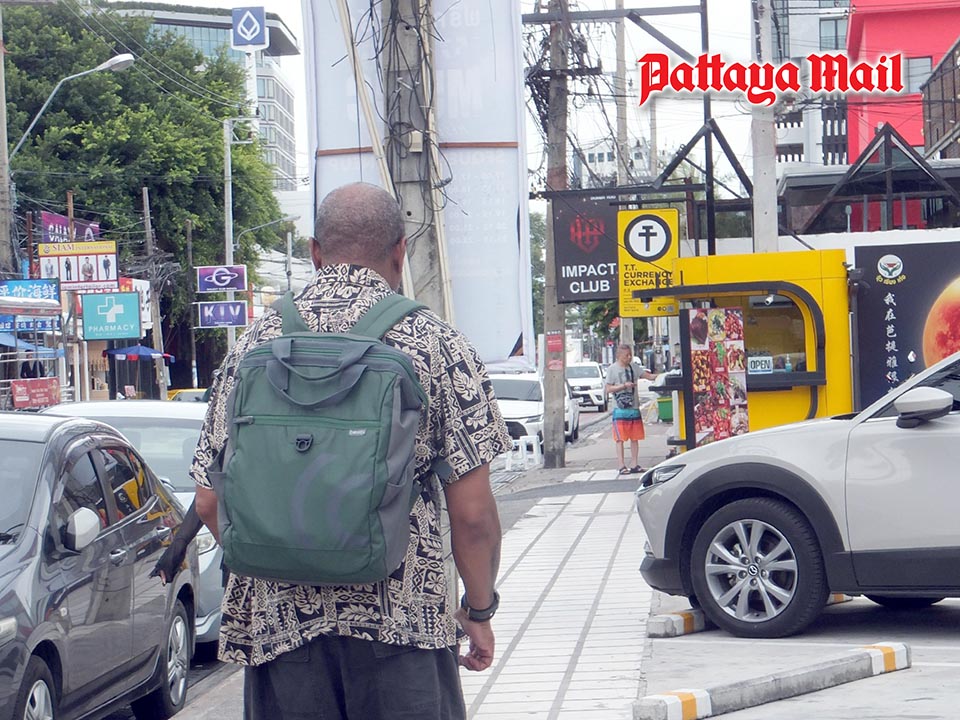
PATTAYA, Thailand – For decades, the allure of Pattaya for foreign tourists and long-term visitors has rested not only on sun, sand, and nightlife, but on affordability. Yet as the baht pushes below the symbolic 32-to-the-dollar level, the city’s tourism economy is beginning to feel the squeeze of a stronger Thai currency.
Krungthai Global Markets this week projected the baht to trade in a 31.65–32.45 per dollar range, with a 24-hour band of 32.00–32.20 after opening Monday (8 Sept) at 32.10, slightly firmer than last week’s close at 32.18. The move reflects a weakening U.S. dollar, after poor American jobs data fueled expectations of Federal Reserve rate cuts.
On paper, a stronger baht may signal resilience. But in Pattaya, every notch stronger translates into weaker wallets. Bars, restaurants, guesthouses, and street vendors thrive on foreign spending power — and when the dollar loses ground, so does the city’s nightlife economy.
“Five years ago, my pension gave me nearly 40 baht to the dollar,” says a 68-year-old long-term visitor from the U.K. “Now I’m getting barely 32. The cost of beer, rent, and food hasn’t gone down – only my lifestyle has.”
Short-stay tourists are feeling it, too. A family from Australia may still book a beach hotel, but their discretionary spend on extras — jet skis, seafood dinners, cabaret shows — shrinks when the exchange rate no longer offers a bargain. Younger travelers compare Thailand against Vietnam or the Philippines, where weaker currencies make their money go further.
Local operators admit that the nightlife economy, once fueled by cheap thrills for foreign men, is visibly under strain. Rising rents, higher food prices, and dual pricing policies already irritate visitors. A baht under 32 per dollar removes what little cushion was left. “It’s not the women or their smiles anymore,” one long-term resident quipped. “It’s the exchange rate that decides whether I stay or go.”
Authorities in Bangkok may trumpet record arrival numbers, but raw arrivals don’t equal prosperity if per-capita spending collapses. Pattaya may fill its hotels this high season, but a strong baht risks hollowing out the city’s cash economy.
Krungthai has noted the baht still faces Two-Way risk, with U.S. inflation data and political uncertainties in France, Japan, and Thailand all in play. Yet for Pattaya, the damage is already visible: a city where the exchange rate, not the neon lights, determines the nightlife.
The question is whether policymakers understand the local reality: tourism thrives not just on arrivals, but on value. If Thailand becomes the “expensive option” in Southeast Asia, Pattaya’s once-magnetic pull could fade into nostalgia — another casualty of an overvalued currency and a government unwilling to confront it.