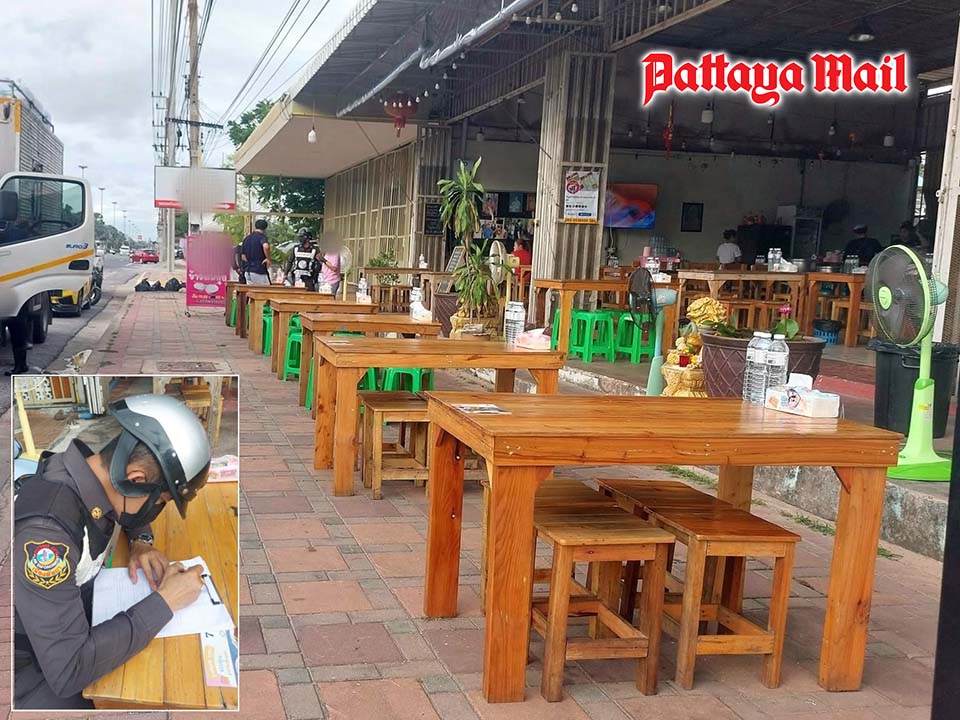
PATTAYA, Thailand – What should be a safe walkway has turned into a battlefield between pedestrians, street vendors, and city officials. In Naklua and across Pattaya, residents are furious that footpaths have been transformed into extensions of restaurants and shops, forcing people into the road and into danger.
“The sidewalk belongs to everyone,” one resident said. “It’s for walking, not for private businesses to take over.”
Anger spilled onto social media as residents shared stories of being pushed into traffic. “Many times I’ve had to step into the road, and I was almost hit by cars. This is not just inconvenient — it’s life-threatening.”
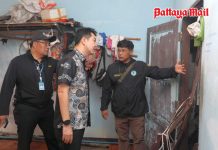
City enforcement officers in Naklua recently began confiscating tables and chairs, issuing fines, and warning shop owners. Many residents welcomed the move. “Fine them all. This is the right thing to do. It makes the city safer and more orderly,” one supporter commented.
But others say fines should be much tougher. “If they put their tables back tomorrow, fine them again. Seize the furniture, and add the labor cost for the officers into the penalty,” one man suggested. Another went further: “All fines should become special allowances for the officers. That way they will enforce the law more seriously.”
Residents also demanded action beyond Naklua, pointing to South Pattaya, Soi Buakhao, North Pattaya Road, and around Wat Chai. “Do it across the whole city,” one urged. “Don’t just clean up one street. Pattaya is a tourist city — it needs to be clean and safe everywhere.”
Many comments were blunt and unforgiving. “If people want to eat, they’ll follow the food into the forest. There’s no need to block the sidewalk,” one person wrote. Another called the practice “selfish, ugly, and disgusting.”
The anger often shifted toward Thailand’s weak enforcement culture. “Thai law is too soft, and people take advantage. In Japan this would never be allowed. In China they wouldn’t waste time — they’d just tear it down immediately,” one commenter fumed.
Still, a minority argued for compromise. Some suggested allowing small stalls in the evenings but not during the day. “At night it’s okay, but in the daytime it’s unacceptable,” one resident said.
The complaints go far beyond tables. Residents called for action against motorcycles riding on sidewalks, rental cars blocking alleyways, and motorbike taxis filling pedestrian space. Others accused city hall of selective enforcement, saying some well-connected businesses never get touched.
Underlying it all is a sense of injustice: sidewalks are built with taxpayer money, yet pedestrians are the ones pushed aside. “The sidewalk is public property, not your private land,” one resident wrote. “Why should ordinary people be forced into the street to risk their lives?”
While City Hall insists it will keep enforcing, locals are skeptical. “They clear it today, but within a week it’s back again,” one man said. Yet many still cheered on the officers: “Keep going. If you do more, Pattaya will become a much better place to live.”
The battle over Pattaya’s sidewalks is far from over. But one thing is clear: residents are no longer willing to stay silent as their walkways disappear under plastic chairs and beer tables.