PATTAYA, Thailand – Cambodia’s ongoing border dispute with Thailand is beginning to exact a heavy toll on its economy, and the effects are rippling into Thailand’s tourism hubs, particularly Pattaya. Cambodian media, including Khmer Times, warn that the country could face multiple economic storms stemming from the border confrontations, which are impacting tourism, labor flows, trade, and household finances.
The confrontation took place on May 28 at the tri-border area known as the Emerald Triangle between Cambodia, Thailand, and Laos. A Cambodian soldier was killed, intensifying tensions and prompting border restrictions. Cambodia imposed bans on imports of Thai vegetables, fruits, energy products, and telecommunications services. Though the measures are aimed at Thailand, the economic fallout extends beyond Cambodia’s borders. Pattaya, a popular destination for Cambodian visitors, may experience secondary effects as cross-border travel declines.
Cambodia’s tourism sector is bearing the brunt of the impact. Thailand was Cambodia’s top source of tourists in 2024, with over 2.15 million Thai travelers, representing nearly a third of all arrivals. Ticket sales for ancient temples to Thai tourists in July 2025 fell by over 92% compared to the same month in 2024. The downturn threatens jobs for Cambodian hotel staff, restaurant operators, tour guides, and small merchants. Pattaya, which relies heavily on regional tourism flows, may also see indirect pressure as cross-border travel slows. Tourists from other countries, wary of escalating tensions, could cancel or postpone trips, compounding the stress on the tourism industry.
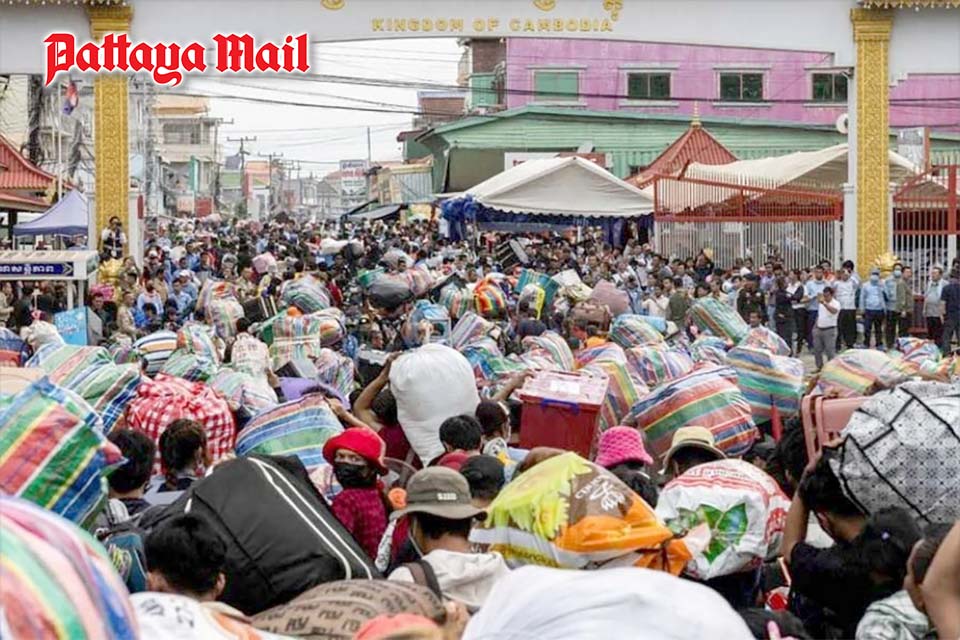
Approximately 1.2 million Cambodian workers were employed in Thailand as of May 2025, sending home at least $1 billion (32 billion baht) in remittances in 2024. A worsening diplomatic situation may force additional Cambodian laborers to return home, reducing remittances that families rely on for daily consumption and debt repayment. This exodus could worsen household financial strain and generate unemployment in Cambodia, while Pattaya businesses dependent on Cambodian labor in tourism, construction, and services may experience temporary shortages.
Cambodia’s trade disruption remains largely land-based. While alternative suppliers from Vietnam and Singapore may offset energy and some agricultural gaps, critical products like cassava and certain fertilizers remain vulnerable. Cambodia exported about $130 million worth of cassava to Thailand in the first seven months of 2025; border closures could dramatically reduce these exports, creating pressure on domestic processing and export strategies. Pattaya’s local supply chains could experience minor disruptions if the border situation persists, especially in food, hospitality, and agricultural imports.
Around 120,000 Cambodians have been displaced from border areas, disrupting farming and business activities, damaging crops and livestock, and creating cash-flow problems. Repeated income losses increase the risk of default on household debts. Cambodia’s central bank and 12 commercial banks have launched temporary debt relief programs for displaced families, military personnel, and vulnerable populations. However, prolonged conflict could overwhelm these short-term measures.
Khmer Times recommends that Cambodia develop alternative logistics for domestic agricultural distribution, invest in cassava processing plants for export to China, and support SMEs to mitigate losses. Tourism promotion should target destinations such as Sihanoukville, Kampot, and eco-tourism locations, alongside key markets in China, Vietnam, and South Korea. Training programs and public works projects could help absorb returning labor into construction, manufacturing, and agriculture.
The report stresses that both countries must prioritize diplomacy, adhere to ceasefire agreements, and reopen trade channels. Armed conflict harms civilians, strains economies, and disrupts labor flows on both sides. For Pattaya, tourism and labor markets may experience indirect effects from returning Cambodian workers and regional travel hesitations. While tourists and expats should monitor developments, there is no immediate cause for alarm in Thailand’s resort cities.