PATTAYA, Thailand – As the Songkran festival approaches (April 13-19), Thailand braces for an increase in road accidents, with the long holiday often marked by a surge in fatalities and injuries. The country’s roads have become notoriously dangerous during this time, as celebrations lead to an uptick in travel, alcohol consumption, and risky driving behaviors. The National Road Safety Center’s statistics show an alarming rise in the number of deaths and accidents, with each year seeing significant casualties.
In recent years, the death toll during Songkran has become a major public health and safety concern. According to the Department of Disaster Prevention and Mitigation, in the first four days of Songkran last year, nearly 400 people were killed on the roads, with thousands more injured. This sharp increase in fatalities is often attributed to high-speed driving, fatigue from long-distance travel, and driving under the influence. The combination of these factors creates a perfect storm for disaster, as roads become more congested and traffic conditions deteriorate.
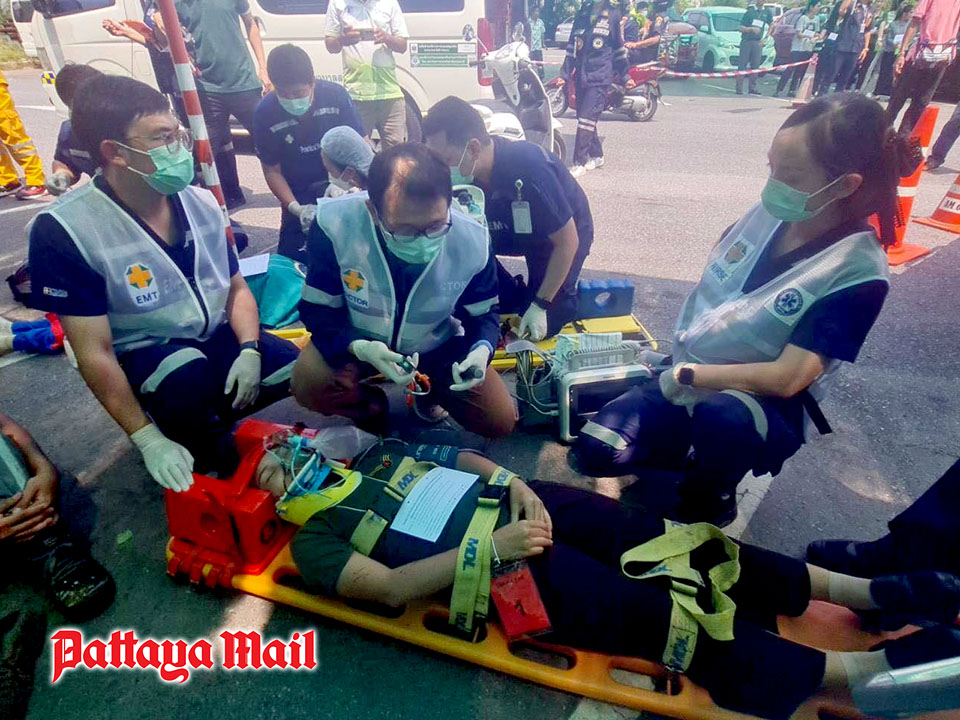
In light of these concerns, medical teams, nurses, and local rescue units are preparing for the worst with drills and simulations designed to test the readiness of emergency services. For example, Samitivej Sriracha Hospital has recently conducted a mass casualty drill aimed at ensuring that medical teams and emergency responders are well-prepared to handle the aftermath of such incidents. This drill simulated a multi-vehicle collision that resulted in numerous casualties, and it involved close coordination between hospital staff, local rescue teams, and emergency services.
The drill, while crucial in improving response times and teamwork, raises the question: Are these exercises enough to mitigate the overwhelming challenges posed by the holiday’s road accidents? Although these drills help enhance preparedness, the reality is that the sheer number of accidents during Songkran can overwhelm the system. Hospitals, rescue teams, and law enforcement are stretched to their limits as the number of casualties climbs. The drills, while effective in fostering coordination and readiness, do not entirely solve the underlying problem of road safety during such a high-risk time.
Experts argue that drills alone are not enough to prevent accidents or reduce the rising death toll. Stronger enforcement of traffic laws, public awareness campaigns, and initiatives to curb reckless driving, such as breathalyzer checkpoints and road safety programs, are essential. Additionally, the government must focus on long-term solutions, such as improving road infrastructure, increasing the number of emergency response teams, and ensuring that citizens adhere to safe driving practices.
The annual Songkran death toll serves as a stark reminder of the risks that come with this festive season. While drills are an important part of preparing for emergencies, they should not overshadow the need for greater road safety measures. By combining emergency preparedness with effective traffic regulations and public education, Thailand can work toward reducing the tragic loss of life on the roads during the Songkran festival and beyond.