BANGKOK, Thailand – The global economy faces renewed turbulence as former U.S. President Donald Trump’s plan to impose a 100% tariff on Chinese imports in retaliation for Beijing’s rare earth export restrictions rattles financial markets, driving gold prices sharply higher. Analysts warn that Thai exports could also be affected by the deepening U.S.–China trade conflict.
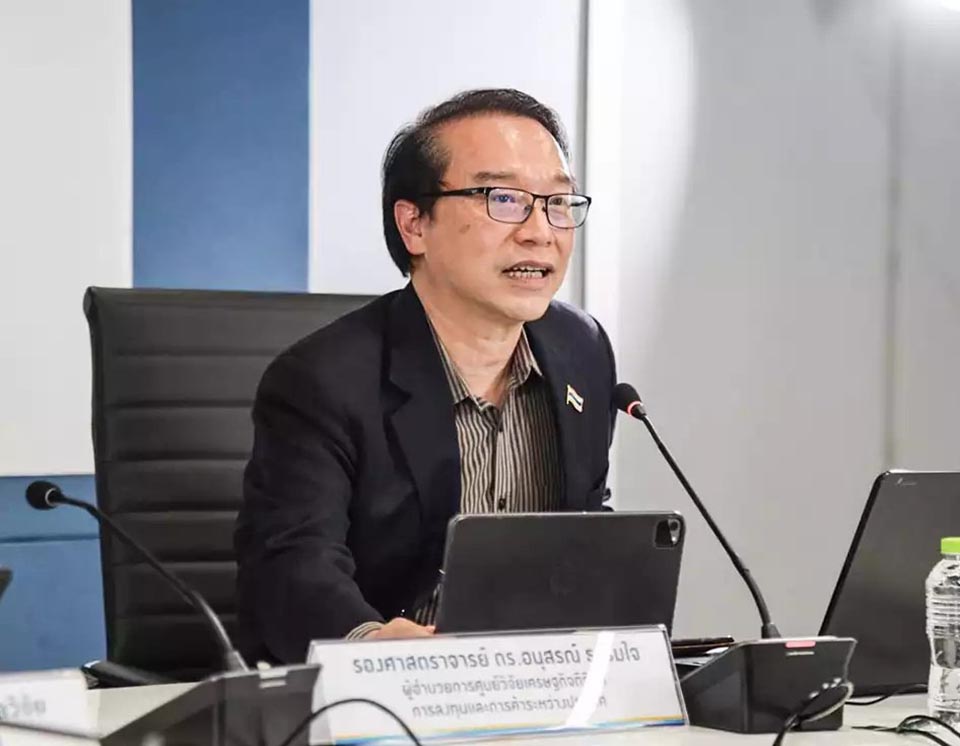
Associate Professor Dr. Anusorn Tamajai, Dean of the Faculty of Economics and Director of the Center for Digital Economy, Investment, and International Trade Research at the University of the Thai Chamber of Commerce, said China’s move to tighten control over rare earth exports—materials that make up about 70% of global supply and are essential for high-tech and defense industries—has reignited tensions between the world’s two largest economies.
The Trump administration’s proposed tariff escalation, which caught markets off guard, comes just weeks before a planned APEC leaders’ summit. U.S. stock markets lost more than USD 2 trillion in value in a single day, marking the steepest decline in six months. Analysts now expect heightened volatility in global equities and commodities in the coming week.
For Thailand, the renewed trade war could further dampen exports due to slower global demand. However, some Thai industries may benefit from U.S. import substitution of Chinese goods. Dr. Anusorn noted that the overall impact remains uncertain as the situation continues to evolve, though Thai manufacturers may face an influx of cheaper Chinese products.
The renewed trade tensions have fueled investor flight to safe-haven assets, sending gold prices above USD 4,000 per ounce and pushing Thailand’s retail gold prices to 62,100 baht per baht weight, with potential to test 65,000 baht by year-end.
Dr. Anusorn urged the Thai government to further ease monetary policy to offset the impact of global headwinds. Lower interest rates would help prevent excessive baht appreciation, support exports and tourism, and sustain economic growth. Fiscal policy, he added, should focus on stimulating investment, boosting employment, and laying long-term foundations for competitiveness through innovation, industrial restructuring, and SME development.
He concluded that Thailand must adopt a proactive policy mix, including soft loans, non-tariff measures, and targeted tax reforms, to strengthen productivity and resilience amid mounting global uncertainties. (TNA)