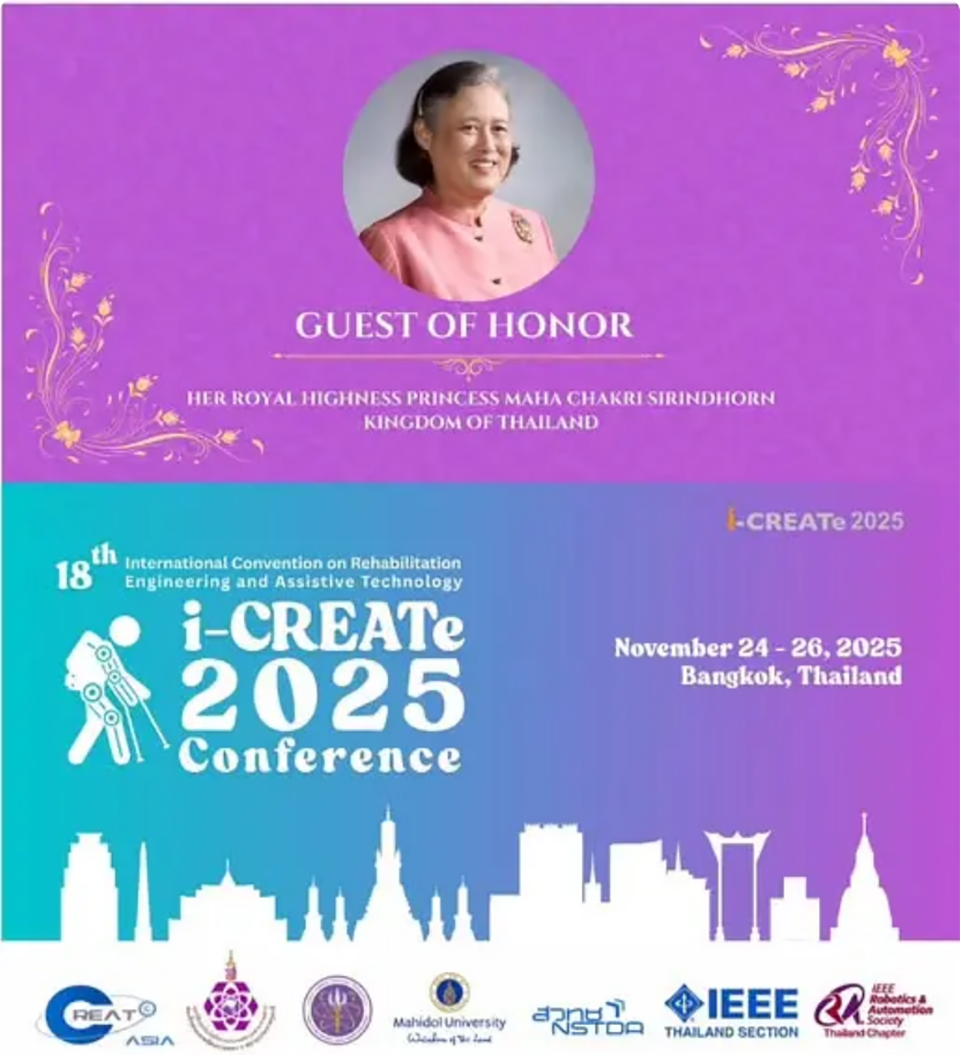
BANGKOK, Thailand – Thailand is set to host the 18th International Convention on Rehabilitation Engineering and Assistive Technology (i-CREATe 2025), a global forum dedicated to advancing innovation in rehabilitation and assistive technologies. The announcement was made by the Information Technology Foundation under the royal initiative of Her Royal Highness Princess Maha Chakri Sirindhorn during a recent press conference. The event will be held from November 24 to 26 at The Athenee Hotel, Bangkok.
Founded in 2007 under the Princess’s royal initiative, i-CREATe promotes science and technology that improve the quality of life for people with disabilities, the elderly, and individuals requiring care. This year’s convention, themed “Empowering Lives: Human-Centered Innovation in Health, Wellness, Aging, and Abilities,” will feature research presentations, innovation contests, and technology exhibitions that bridge medicine, engineering, and design. Experts, entrepreneurs, and students from around the world are expected to take part.
The conference will feature a keynote address by Professor Oussama Khatib of Stanford University, a leading expert in robotics and artificial intelligence, along with panel discussions featuring specialists from Japan, Portugal, Singapore, and other countries. Topics will include rehabilitation engineering, assistive technology, medical AI, care robotics, and digital health innovation, supporting collaboration and applied research for accessibility and social development.
The press event also showcased Thai innovations recognized at i-CREATe 2024, including the Happy CP Gloves for children with cerebral palsy, the ALL Wheelchair with AI motion tracking from Thammasat University, and Mahidol University’s robotic stair-climbing wheelchair. These projects demonstrate Thailand’s growing capability in developing technology that enhances independence and inclusivity.
In addition, the National Science and Technology Development Agency (NSTDA) is organizing the Student Innovation Challenge Thailand 2025, featuring nearly 300 teams creating technologies to assist people with disabilities and the elderly. Ten finalist teams will represent Thailand at the global competition. Hosting i-CREATe 2025 represents Thailand’s growing leadership in medical technology and its ongoing progress in advancing a sustainable, inclusive innovation ecosystem guided by Her Royal Highness’s royal vision. (NNT)