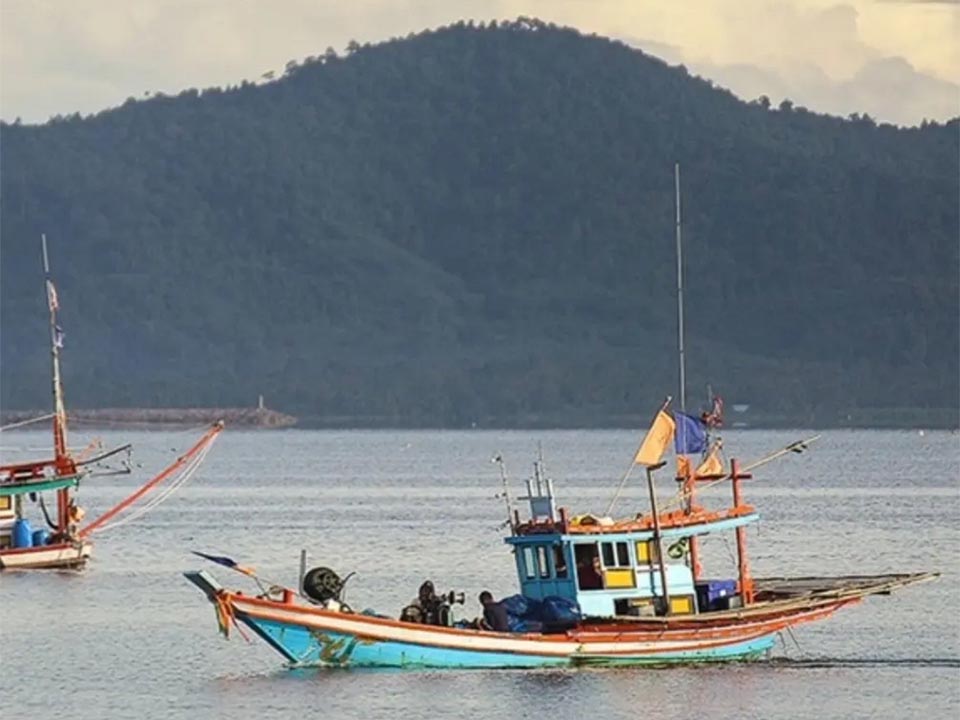
BANGKOK, Thailand – The Department of Fisheries is set to announce the annual seasonal closure of fishing grounds in the central Gulf of Thailand for 2026, covering areas of Prachuap Khiri Khan, Chumphon, and Surat Thani provinces. The closure will be enforced in two phases, from February 15 to May 15 and from May 16 to June 14, to protect spawning fish, eggs, and juvenile marine life.
Officials said the central Gulf remains one of Thailand’s most important breeding areas for commercially valuable species, making seasonal closures a key fisheries management measure. The approach supports balanced resource use and long-term sustainability, supported by continuous scientific monitoring to ensure that closure areas, timeframes, and permitted fishing gear remain appropriate.
The 2026 measures will follow the same structure as in recent years, dividing the closure into three management zones. The first zone, active during the initial phase, extends from Laem Khao Mong Lai in Prachuap Khiri Khan to Don Sak district in Surat Thani and is intended to protect broodstock during mating and spawning. The second and third zones, enforced during the later phase, cover additional coastal areas of the central and western Gulf to safeguard juvenile fish, including short mackerel, as they grow and migrate toward the inner Gulf.
Data from previous closures show clear biological gains. Surveys found that most short mackerel in the main spawning zone exceeded the size at first maturity, with more than 80 percent showing reproductive readiness. Juvenile fish were more widely distributed during closure periods, and catch rates increased after reopening, with some fishing methods recording substantial gains.
Post-closure monitoring in juvenile protection zones recorded short mackerel measuring about 10 to 17 centimeters, along with strong catch levels across several permitted gear types. The department said these findings confirm that the current closure system matches spawning and nursery cycles and plays a key role in restoring fish stocks and maintaining the health of the Gulf of Thailand’s marine ecosystem. (NNT)