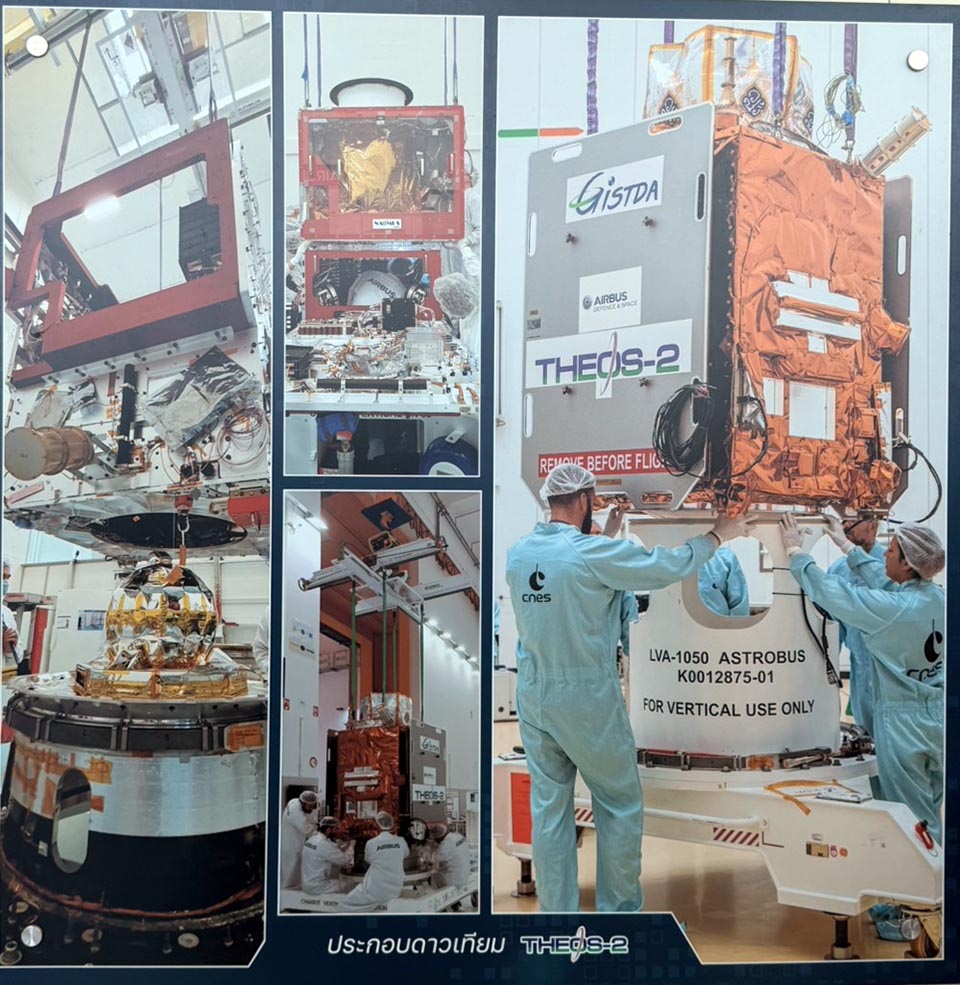
BANGKOK, Thailand – Thailand is advancing its space technology capabilities through the development of THEOS-3, a new earth observation satellite designed and built by Thai engineers, marking a significant milestone in international knowledge transfer toward sustainable self-reliance. The THEOS-3 project builds upon the core architecture and blueprints of the THEOS-2A satellite, a collaboration between Thailand’s Geo-Informatics and Space Technology Development Agency (GISTDA) and Britain’s Surrey Satellite Technology Ltd (SSTL).
Thai satellite engineers utilized the initial flight software structure and core control systems to independently modify and develop the new platform. Designed for system flexibility, the satellite’s core structure allows its main payload or camera systems to be adapted for future mission requirements. Additionally, the power system has been upgraded with bilateral solar arrays that deploy on both sides, unlike the single-sided array on the THEOS-2A, to increase charging efficiency, support internal circuitry, and extend the satellite’s operational lifespan in orbit.
For practical application, THEOS-3 has been reconfigured with four medium-resolution cameras instead of an ultra-high-resolution system. This engineering adjustment expands the swath width, or ground coverage area, to approximately 20 kilometers, optimizing the satellite for broad nation-wide monitoring. The primary focus will be on agricultural tracking, flood management, and large-scale disaster surveillance, such as wildfires. THEOS-3 will reduce the revisit time over the same geographic area from every two days to a daily cycle, enabling relevant agencies to monitor disasters on a day-to-day basis. A central objective of the THEOS-3 program is driving a “local content” policy to elevate Thailand’s aerospace supply chain. While the initial target for domestic component manufacturing was set at 10%, Thai engineers have increased domestic production past 20%.
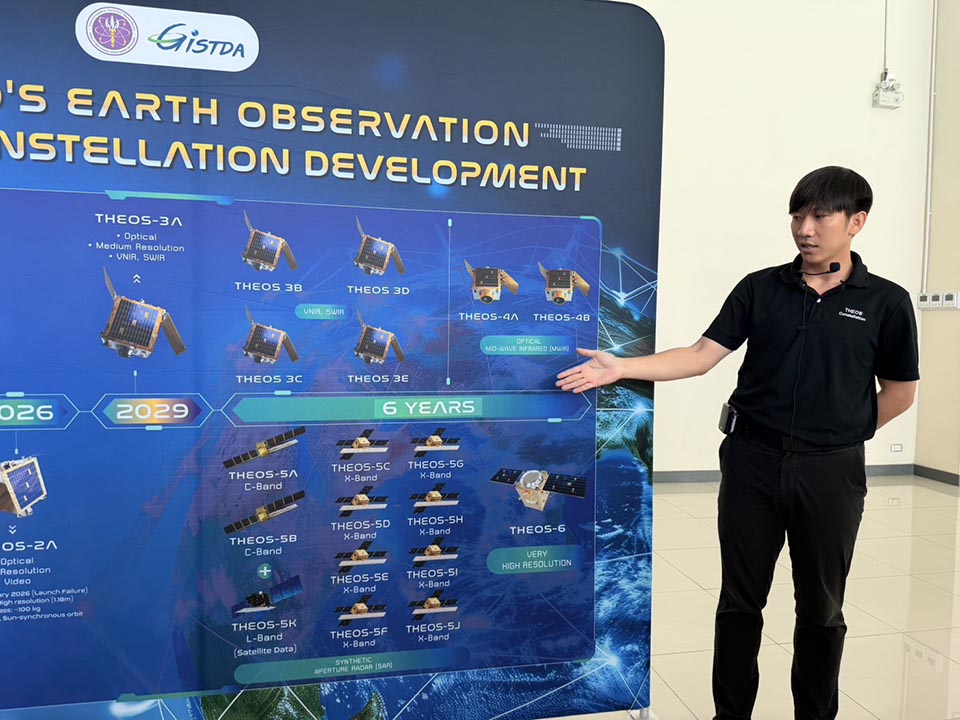
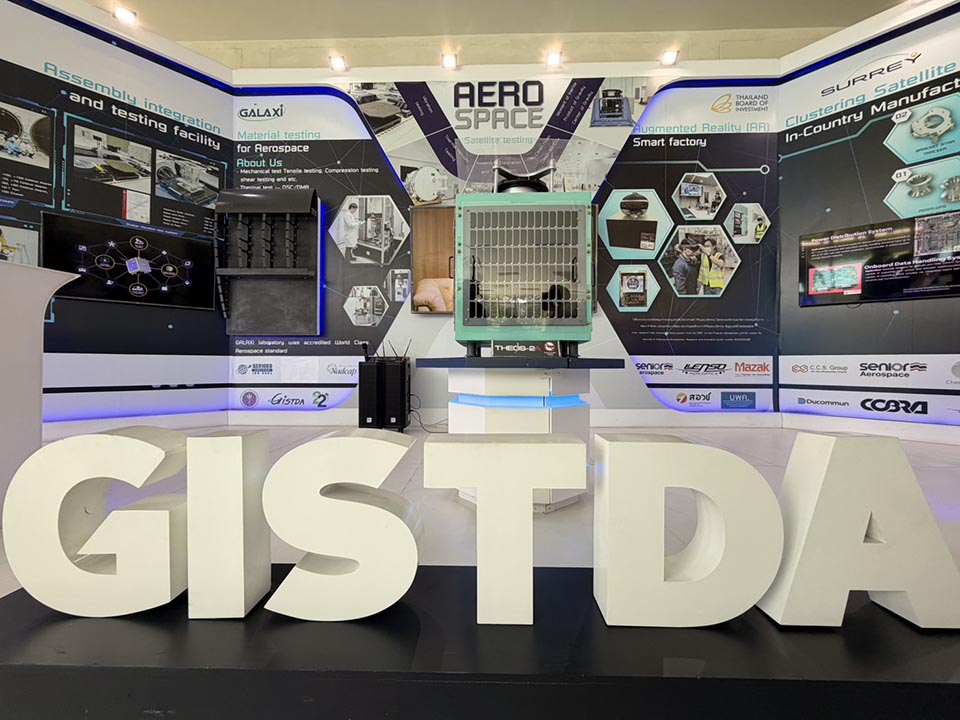
Key components, including the aluminum structure, solar panels, electronic circuit boards, and electrical systems, are manufactured by Thai suppliers. These parts undergo quality controls and precision testing by GISTDA engineers to ensure durability against extreme space environments, including vacuum conditions, temperature fluctuations, and radiation. The project operates on an average budget of 300 million to 400 million baht ($8.9 million to $11 million) spent on research, development, and system localization, which officials expect will lower manufacturing costs for subsequent iterations, such as THEOS-3B, 3C, and 3D. The THEOS-3 project has currently reached its mid-stage phase. Engineering models for terrestrial functional testing have arrived, and the project will enter a major review and hardware acceptance phase within the next one to two months. This will precede system integration and testing, ahead of the assembly of the flight model scheduled for next year. (TNA)