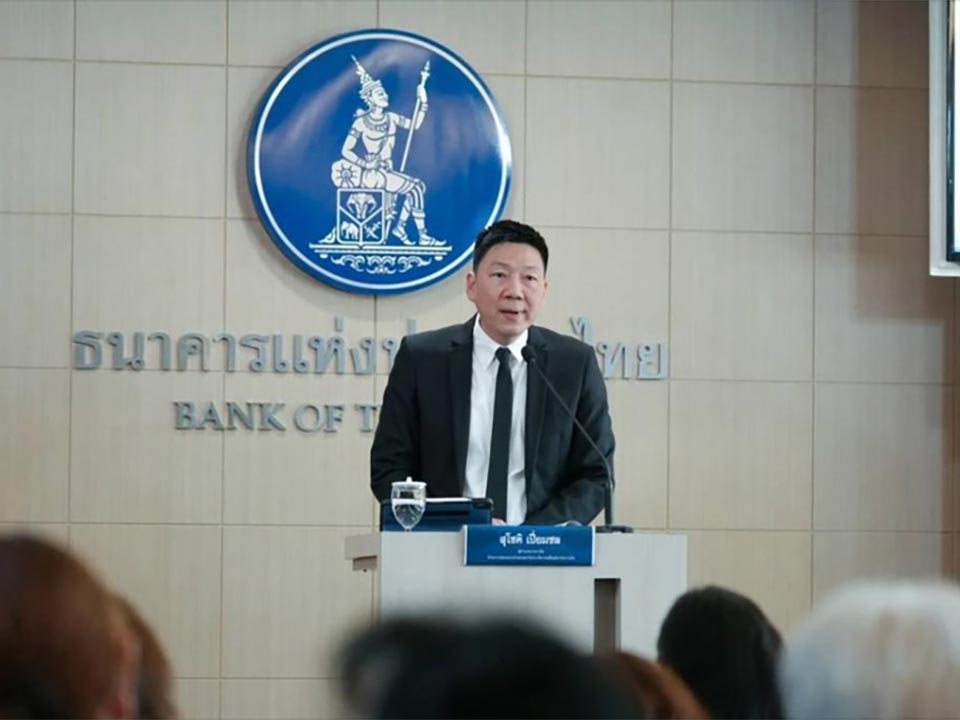
BANGKOK, Thailand – Commercial bank lending in Thailand grew 2% year-on-year in the second quarter of 2026, driven mainly by stronger demand from large businesses, while SME lending continued its contraction for a 16th consecutive quarter. Suchot Piemchon, senior director at the Bank of Thailand’s Financial Institution Risk Analysis and Model Validation Department, said large-business loans expanded 6.6%, reflecting higher demand for working capital amid rising energy and raw material costs.
SME loans, however, fell 4.6%, marking four consecutive years of contraction, while consumer lending also continued to decline. The banking system remained stable, with strong capital buffers, provisions and liquidity. Non-performing loans (NPLs) fell to 534.8 billion baht in the second quarter, leaving the NPL ratio broadly unchanged at 2.82%.
Net profit across the banking system reached 83 billion baht, up 6.8% from the same period last year. The increase was driven mainly by gains from fair-value adjustments on financial instruments and higher securities brokerage fees, along with lower provisioning expenses and improved cost management. The gains helped offset weaker net interest income following interest-rate cuts and continued debt-relief measures for borrowers.
The Bank of Thailand warned that uncertainty surrounding the Middle East conflict and Thailand’s uneven economic recovery could continue to pressure borrowers’ repayment capacity, particularly vulnerable SMEs and households facing volatile incomes and high living costs. The central bank is closely monitoring the flow of loans into NPL status, especially among vulnerable borrowers affected by higher energy and raw-material costs. Construction, real estate, hotels and the broader trade sector remain areas requiring close attention.
Household debt edged down to 85.9% of GDP, partly reflecting stronger nominal GDP and slower growth in retail lending. The Bank of Thailand is also preparing additional debt-relief measures, including more flexible restructuring rules that could allow banks to reduce borrowers’ monthly payments. Options could include lower interest rates, principal-payment holidays, longer repayment periods or, in severe cases, negotiated debt reductions. The central bank is also developing an SME Portal and exploring alternative data sources to improve small businesses’ access to credit and help banks assess SME risks more accurately.