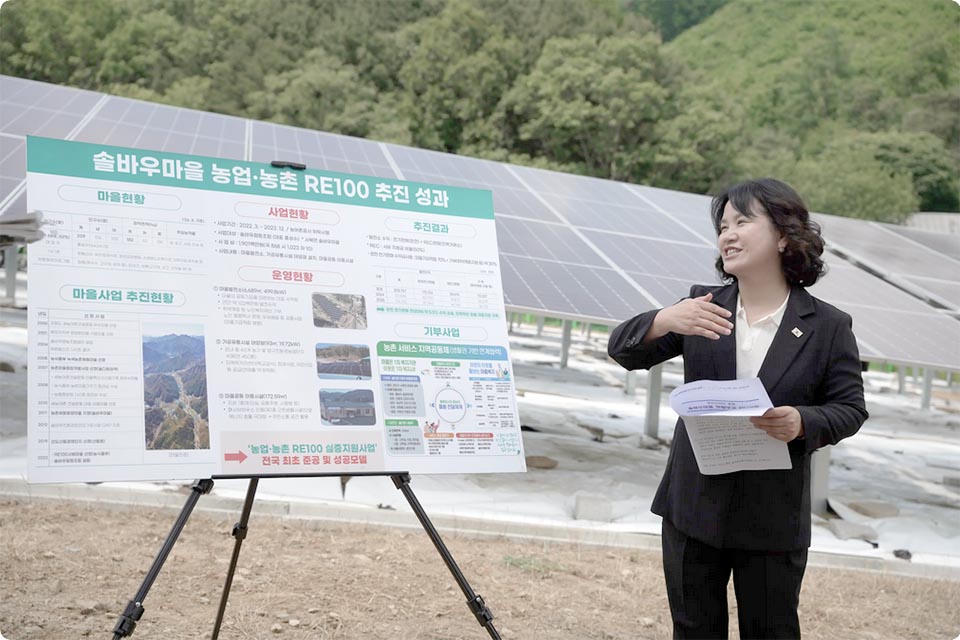
SOUTH KOREA – South Korea is expanding the use of renewable energy in rural areas through its RE100 Village program, encouraging communities to generate and consume their own clean electricity. The concept is based on the global RE100 movement, which promotes meeting electricity demand entirely with renewable energy. One of the leading examples is Songam-ri Solbau Sunlight Income Village, where renewable energy production now supplies about 96% of the community’s combined residential and agricultural electricity needs. The campaign has become a model for improving local energy self-sufficiency while reducing reliance on conventional energy sources. The village’s solar power facility is operated by the local agricultural cooperative, allowing residents to participate directly in electricity generation. The system produces roughly 102 million won, or about 74,000 US dollars, in annual revenue.
Income from the project supports community programs, including assistance for vulnerable residents, senior welfare services, transportation programs, and other local activities. The revenue provides an additional source of funding for village development while helping residents benefit directly from renewable energy production. South Korea’s Ministry of Agriculture, Food and Rural Affairs said the RE100 Village approach supports both rural development and the country’s carbon neutrality goals. The model is being viewed as a practical example of how renewable energy can improve energy security, lower emissions, and support more resilient rural communities. (NNT)