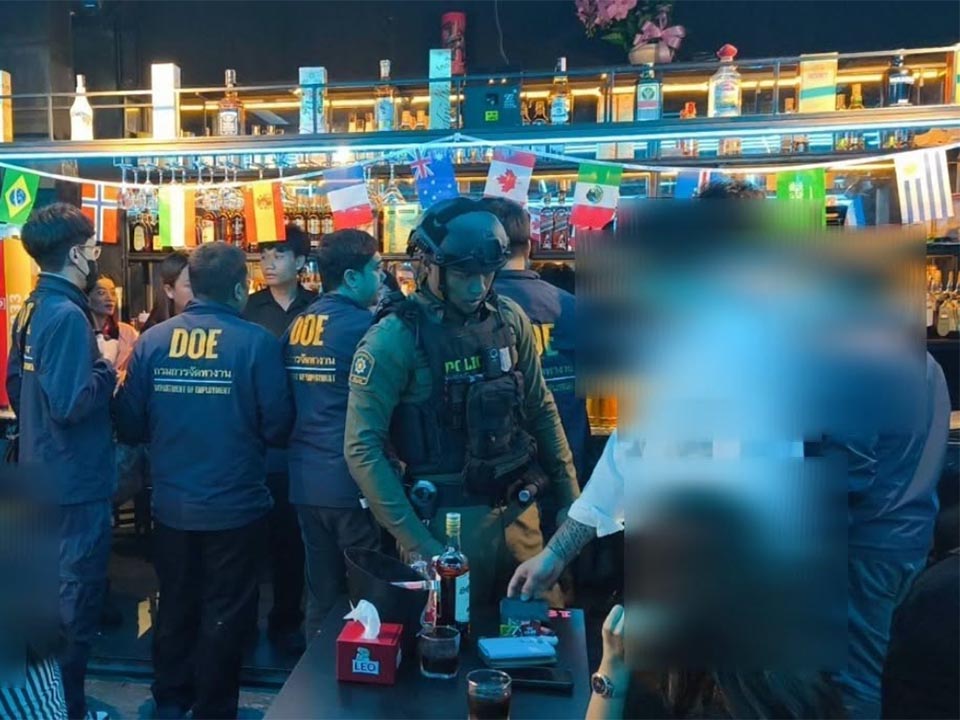
BANGKOK, Thailand – A multi-agency operation involving police, military intelligence, narcotics control officials, immigration, and labor authorities recently raided two unlicensed entertainment venues in Soi Ratchadamri 1, detaining 15 staff members and one patron suspected of drug use.
The coordinated enforcement action reflects Thailand’s renewed focus on cracking down on illegal nightlife operations, with authorities emphasizing inter-agency cooperation and stricter regulatory oversight. However, the incident also highlights persistent structural challenges in nightlife governance, particularly in high-density entertainment zones in Bangkok where illegal venues continue to emerge despite repeated enforcement campaigns.
While authorities have repeatedly stated that such operations are part of a broader national effort to strengthen the rule of law, critics note that enforcement alone may not fully address underlying issues, including inconsistent licensing controls, rapid venue turnover, and the difficulty of sustained monitoring in nightlife districts. Thailand’s regulatory framework for entertainment venues is extensive on paper, but practical enforcement often relies on periodic raids rather than continuous compliance systems. This gap has long been identified as a key challenge in ensuring long-term regulatory effectiveness.
Observers also point out that while high-profile crackdowns send a strong signal, sustainable improvement may require deeper reforms in licensing transparency, zoning enforcement, and real-time monitoring mechanisms. At the same time, officials maintain that intensified enforcement is necessary to deter illegal operators, reduce drug-related risks, and maintain public order in nightlife areas. The recent raid underscores a continuing tension between regulatory ambition and on-the-ground enforcement capacity in Thailand’s urban entertainment economy.