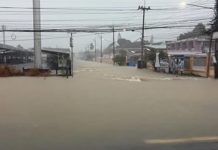
CHIANG MAI, Thailand – Chiang Mai province has launched its Command Center in anticipation of Tropical Storm Wipha, placing all relevant agencies on high alert. Governor Nirat Pongsitthithaworn, hosting the center’s first meeting today (July 22), signaled full preparedness as the province braces for widespread rain and possible flooding. Key officials from disaster prevention, irrigation, meteorology, social development, transport, public health, and local government attended the opening to coordinate cross-sector efforts.
According to the Northern Meteorological Center, Tropical Storm Wipha remains strong, located approximately 50 kilometers east of Thaibin, Vietnam, with sustained winds of 100 kilometers per hour and moving west-southwest at 15 km/h. The storm is expected to weaken after landfall but still deliver heavy rain to northern Thailand, particularly in Chiang Mai’s districts of Mae Ai, Fang, Chai Prakan, Wiang Haeng, and Chiang Dao. The peak impact is forecast for July 23, with continued rainfall through July 29 due to a strengthening southwest monsoon.
A major part of Chiang Mai’s storm strategy involves water management. The Royal Irrigation Department reported that Mae Ngat Somboon Chon and Mae Kuang Udomthara dams are at 63% and 51% capacity, leaving room to absorb runoff. Medium and small reservoirs are also operating below critical levels. Water in the Mae Rim, Mae Tang, and Ping rivers is currently low, and all sluice gates along the Ping River have been opened to support maximum flow. Recent dredging and structural adjustments have improved the river’s capacity through urban areas.
Chiang Mai Municipality has cleared canals and drains, reinforced riverbanks, and lowered the water levels in the moat. Emergency equipment has been deployed, including 40,000 sandbags and numerous pumps across the city. Crews will continue clearing debris from drainage routes before and after rain to prevent blockages.
To manage the situation, a tiered command structure has been established. The main center at the Royal Irrigation Department serves as a 24-hour War Room and Joint Information Center (JIC), operating around the clock. A field center at Nawarat Bridge provides updates to the public, while a forward command in Fang district coordinates northern operations. Additional centers led by deputy governors are handling resource deployment, evacuation, and relief.
The province has prepared 40 shelters capable of accommodating over 20,000 evacuees. More than 10,000 free parking spaces have been arranged in safe zones to prevent vehicle damage. The 1567 hotline is available 24 hours a day for assistance and updates. The public health office is monitoring medical needs, while transport officials manage traffic and coordinate emergency transit services.
All 25 districts and local administrative bodies are now operating under this emergency framework. The JIC is actively disseminating accurate information to prevent the spread of misinformation. Authorities have also been instructed to remove unstable structures, such as unauthorized billboards, ahead of strong winds. (NNT)