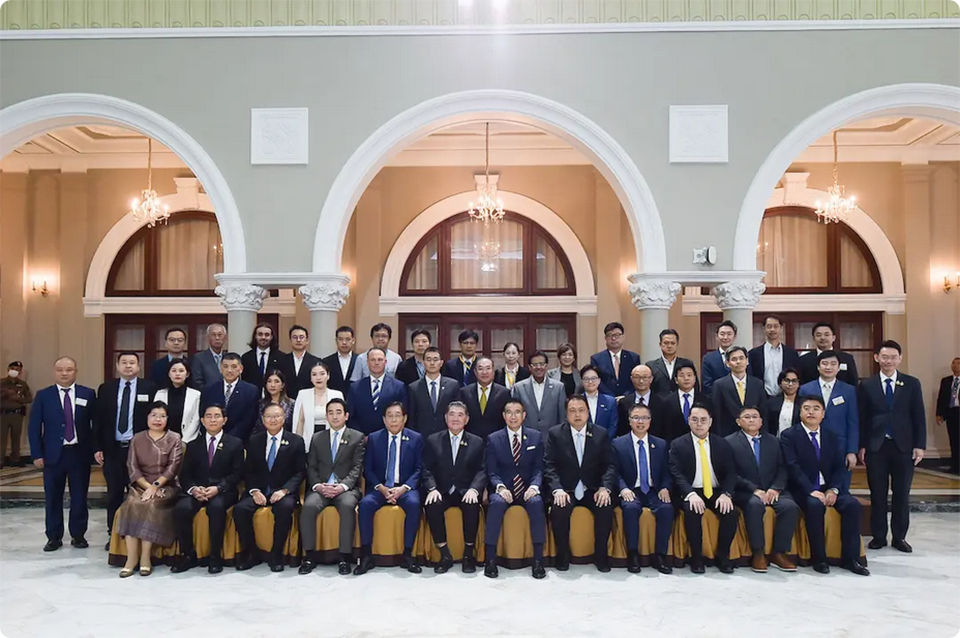
BANGKOK, Thailand – Deputy Prime Minister and Minister of Interior, Mr. Phumtham Wechayachai, who is currently acting as Prime Minister, addressed the press following a high-level meeting with executives from leading international companies. The event, titled “Prime Minister Meets Investors: Confidence in Thailand’s Future – A Dialogue with Global Investors,” was summarized by Mr. Anukool Pruksanusak, Deputy Government Spokesperson.
Mr. Anukool reported that the government hosted discussions with executives from 30 global companies operating in Thailand’s priority sectors, including semiconductors, advanced electronics (such as printed circuit boards), electric vehicles and batteries, digital technology, food processing, and biotechnology. These companies have collectively invested over 550 billion baht in the country over the past two years, creating more than 53,000 jobs. The meeting’s purpose was to reaffirm investor confidence in Thailand, especially after the recent 19% U.S. tariff increase on Thai imports.
The government remains steadfast in its commitment to fostering economic and social progress by attracting investments and promoting collaboration between the private sector and educational institutions. One of the key goals is to develop a skilled workforce that meets the needs of strategic industries, while also providing knowledge transfer to farmers, improving agricultural yields, and aligning practices with international standards to boost Thailand’s agricultural export potential.
Mr. Anukool further highlighted that, following the discussions, Deputy Prime Minister Phumtham would oversee the signing of a Memorandum of Understanding (MoU) between the Office of the Vocational Education Commission, the Board of Investment (BOI), and six global PCB manufacturers. This new partnership, worth more than 51 billion baht, aims to create a skilled vocational workforce that aligns with industrial needs. The collaboration is expected to generate 1,880 new jobs immediately, with plans for more than 3,000 jobs over the next five years. Additionally, vocational curricula will be developed in partnership with industry leaders to meet the demands of the evolving job market.
This cooperation demonstrates how large-scale investments not only bring capital into the country but also contribute to the development of Thailand’s workforce, particularly vocational students, by equipping them with the advanced skills required by global industries. These efforts will strengthen Thailand’s long-term competitiveness on the international stage.
Mr. Anukool concluded that investments from these global corporations will significantly boost Thailand’s economic growth, generating billions of baht in revenue annually. The impact will be felt across agriculture, education, and local businesses, fostering long-term sustainable development. (NNT)