Yesterday, while pottering around in the kitchen, making food for the dogs, I tried to recall the first time I heard Bach’s music. It must have been a good many years ago. One day, when I was a child, my father replaced our ancient and elephantine wind-up clockwork gramophone with a radiogram (as combined radios and record players were called in those days). It took the form of a gleaming wooden box, large enough to be considered a piece of furniture.
It inspired my father to buy many of the newly introduced LP (long-playing) records, which were rapidly replacing the older 78rpm disks. Apart from a much longer running time, the audio quality of LP records was vastly superior. I have vague recollections of hearing popular Bach pieces such as Jesu, Joy of Man’s Desiring and Sheep May Safely Graze. On one memorable occasion, my father bought the complete Brandenburg Concertos, which came on two separate LP records. But it was my first real taste of J. S. Bach, and over the years that followed, I played these two records countless times.
Ask any professional musician to name a few of the greatest composers, and among the names is sure to be that of Johann Sebastian Bach. His surname is somewhat ironic. In the Welsh language, spoken on the island where I was brought up, the word bach means “small”. The German Bach family was anything but small. It was enormous. The family produced at least fifty musicians over six generations. As Tyler Alderson writes, “It’s hard to listen to classical music… and not come across the name Bach at some point. It would have been even harder if you lived in 17th and 18th-century Germany. The Bach family was full of musicians, and you wouldn’t have had to look hard to find a Bach sitting at a church organ or a Bach playing in a royal court.” Most of them were competent musicians well regarded in their lifetimes, but they eventually faded into obscurity. A handful wrote music that is still played today.
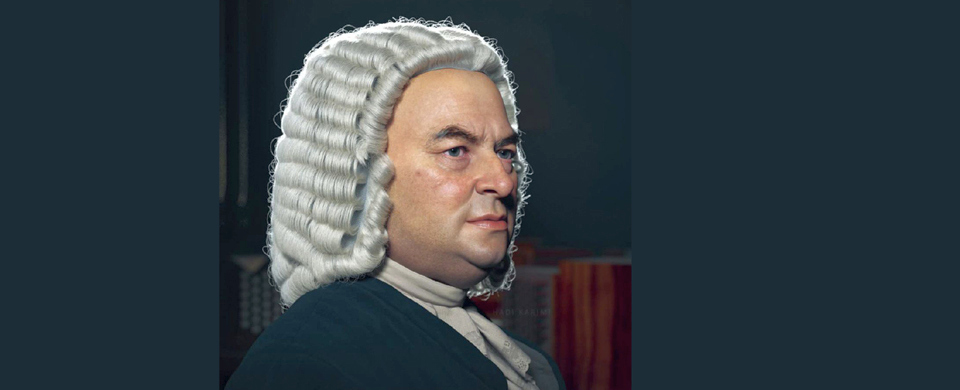
Johann Sebastian Bach was married twice and had twenty children, but only ten of them survived to adulthood, which was common in eighteenth-century Europe. His three most illustrious sons were Johann Christian Bach, Carl Philip Emmanuel Bach and Wilhelm Friedemann Bach. Their music is still sometimes heard, but was never held in the awe reserved for their father’s work.
J. S. Bach is considered one of the “greatest” musicians because of his incomparable skill in composing, his long, complex melodies and his sophisticated, innovative harmonies that allowed for seamless transitions between keys. But his genius lies mostly in his extraordinary skills in counterpoint: the technique of interweaving several independent melodies played or sung simultaneously to create a satisfying, harmonious texture. In contrast, each melody retains its distinct character. Few composers, before or since, have mastered this skill as thoroughly as J. S. Bach. This skill culminates in a style of composition called a “fugue”, which is an extended instrumental work using the most complex forms of counterpoint. Bach’s fugues are considered some of the finest and most sophisticated examples of the form and reveal his amazing ability to balance complexity with clarity.
To me, the extraordinary thing is that the casual listener is rarely aware of its detailed and complex structure. It’s a bit like gazing at a beautiful plant yet being unaware of its microscopic biological structure and complex internal chemical processes. Bach produced over a thousand works, which laid the groundwork for future developments in music. To this day, every student aspiring to be a composer or instrumental player studies the music of J. S. Bach. He is considered by many to be one of the most influential composers in Western music history, who shaped the course of classical music.
J. S. Bach (1685-1750): Violin Concerto in E major, BWV 1042. Noa Wildschut (vln) Concertgebouw Chamber Orchestra (Duration: 17:24; Video: 1080p HD)
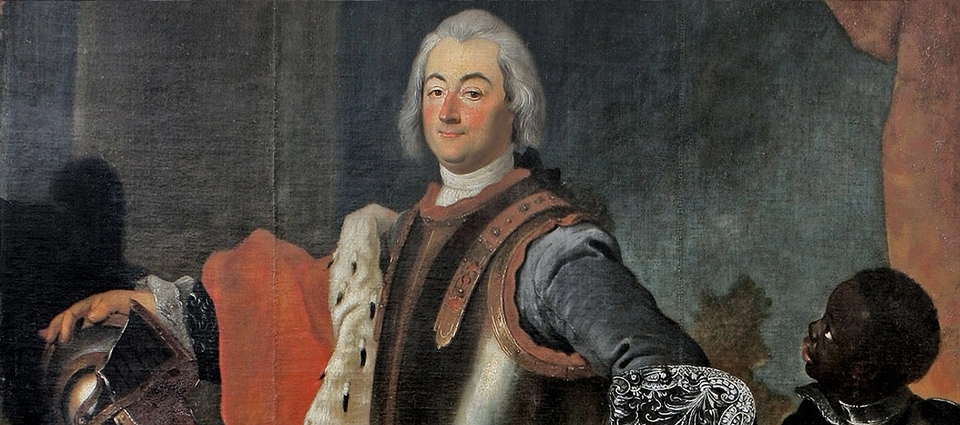
In case you are wondering, the letters BWV (not to be confused with BMW) stand for Bach-Werke-Verzeichnis (“Bach Works Catalogue”), first compiled in 1950. Although we tend to think of Bach primarily as an organist, he was also a skilled violinist who wrote three concertos for solo violin. Historians have long argued there might be more of them, as yet undiscovered. The three concertos date from Bach’s time in the German city of Köthen between 1717 and 1723. During those years, he was employed as the Kapellmeister (Director of Music) at the court of Prince Leopold of Anhalt-Köthen. The prince was also a musician and appreciated Bach’s talents, giving him plenty of latitude in composing. More importantly for Bach, the prince paid a generous salary.
The bustling first movement of the concerto begins simply, with the three notes of the chord of E major, but then scurries away into a wealth of variations and answering phrases thrown between other instruments in the ensemble. The constant driving of invention is captivating. The lyrical second movement opens with a bass line that repeats throughout, while the solo violin weaves a delicate melody above. Bach uses rondo form for his infectious finale. This format was popular among Baroque composers and has a repeating main theme separated by contrasting passages, which often feature technical challenges for the soloist. This is joyful music, and the small orchestra in this performance is entirely appropriate because it’s about the same size as Bach’s own court chamber orchestra at Köthen.
J. S. Bach: Brandenburg Concerto No. 5 in D major, BWV 1050. Members of the Frankfurt Radio Symphony cond. Maurice Steger (Duration: 21:32; Video: 2160 HD 4K)
As a teenager and before traipsing off to school, I invariably listened to some Bach first thing in the morning. A fix of J. S. B. would give me enough firmness of spirit to deal with the dramas of school life, which would inevitably unfold during the day. I suppose nowadays, this kind of morning activity would be considered a bit nerdish, if not downright peculiar. But at the time, almost any music by Bach seemed an ideal way to kick off the day.
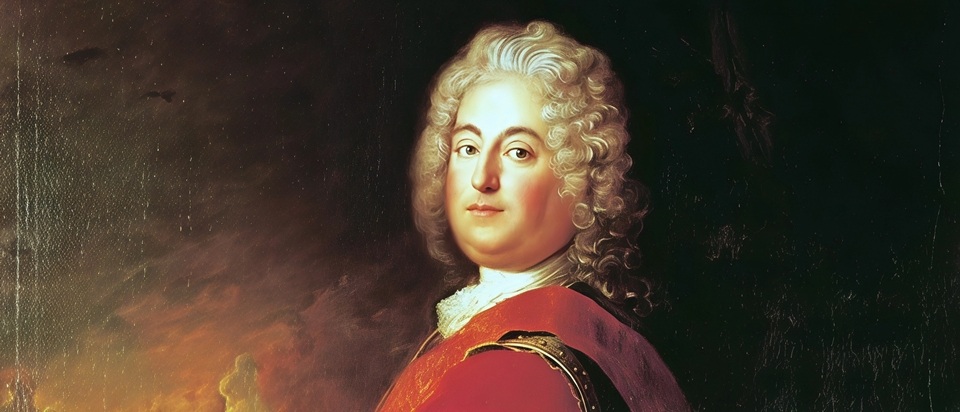
In 1721, Bach presented six concertos in his own handwriting to the grandly-named Christian Ludwig, Margrave of Brandenburg-Schwedt. They were entitled Six Concerts à Plusieurs Instruments and were accompanied by a grovelling and long-winded dedication of toe-curling obsequiousness. Although the works were presented as a complete set, the music had been cobbled together from earlier works that Bach had written during the previous eight years. Perhaps Christian Ludwig had been tipped off that he’d received a recycled offering. He was evidently a bit miffed because, as far as we know, he didn’t bother to thank Bach for the music. The collection eventually became known as The Brandenburg Concertos. Although we think of a concerto as a work for a solo instrument and orchestra, these six works are for several solo instruments rather than a single one. This form, known as the concerto grosso, was common during the 18th century, and most composers of the day used the form, including Vivaldi, Corelli and Handel.
Brandenburg Concerto No 5 was composed around 1717, and it’s scored for harpsichord, flute and violin as soloists. Throughout the concerto, the harpsichord takes the leading role, and there’s even a long solo cadenza-like passage for the instrument near the end of the first movement. It’s almost a harpsichord concerto in all but name. The sprightly first movement launches with an extended melody typical of Bach’s instrumental works. We hear just the four upward notes of the chord of D major before the melody develops, and in which musical phrases are effortlessly passed between the soloists. One of Bach’s master strokes in this movement is how he gradually reduces the instrumental texture before the harpsichord cadenza begins. The cadenza sounds improvised, but is written out in full. It gradually builds up in tension before the other instruments enter for the final section.
The second movement is a soulful melody, almost a trio for violin, flute and harpsichord. The finale skips into action, with scintillating phrases exchanged between the solo instruments and virtuosic playing from the harpsichord. It’s a splendid performance too. If you enjoy this music, don’t forget that five other concertos make up The Brandenburgs. Each work has a musical character of its own and different instrumentation, though the harpsichord appears in all of them.
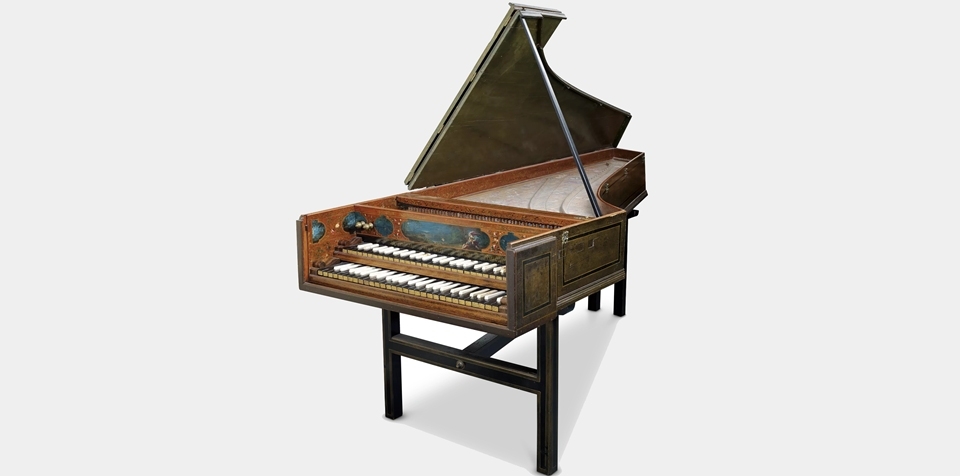
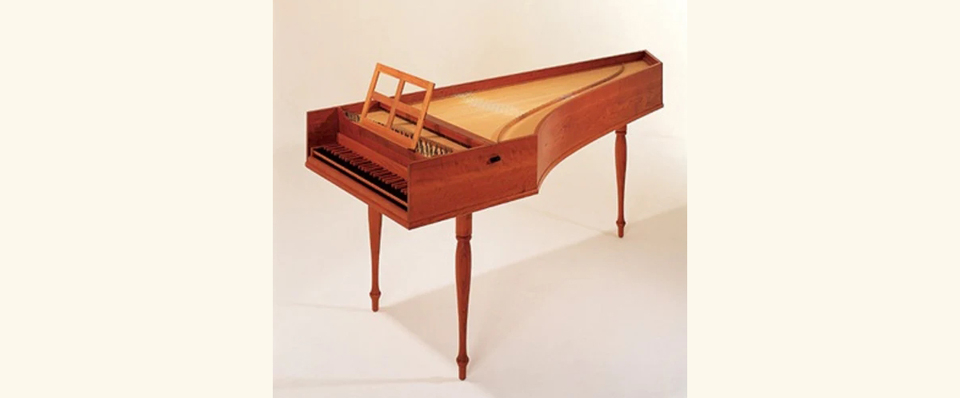
If any musical instrument represents the epitome of the Baroque “sound”, it’s probably the harpsichord. Unlike the piano, which creates sounds by felt-covered hammers hitting the strings, the harpsichord produces sounds by plucking the strings with small quill plectrums (or “plectra” if you prefer the correct plural).
This is what gives the instrument its characteristic “tinkly” quality. Although the instrument has its roots in the 14th century, it wasn’t until the 16th century that larger harpsichords began to appear. By the 18th century, harpsichords with two or even three keyboards were being built. Keyboards could be combined using a mechanical device called a “coupler”, which changed the tonal quality or apparent volume. By the late 18th century, with the increasing popularity of the piano, the harpsichord began its inevitable decline. Thankfully, the instrument reappeared in the mid-20th century with the rise of enthusiasm for historically informed performance of early music.
Incidentally, if you enjoy the sound of the harpsichord, you can have your very own. I don’t suppose you will find many for sale in Thailand, but Britain’s Early Music Shop sells do-it-yourself harpsichord kits for home assembly. You’ll need some tools, basic woodworking skills and probably a great deal of patience. However, these harpsichord kits don’t come cheap. The starting price for the basic, single-manual “Paris” style harpsichord will set you back about Bt 280,000 plus shipping. And of course, having laboriously assembled the instrument, you will then have to learn how to play it.