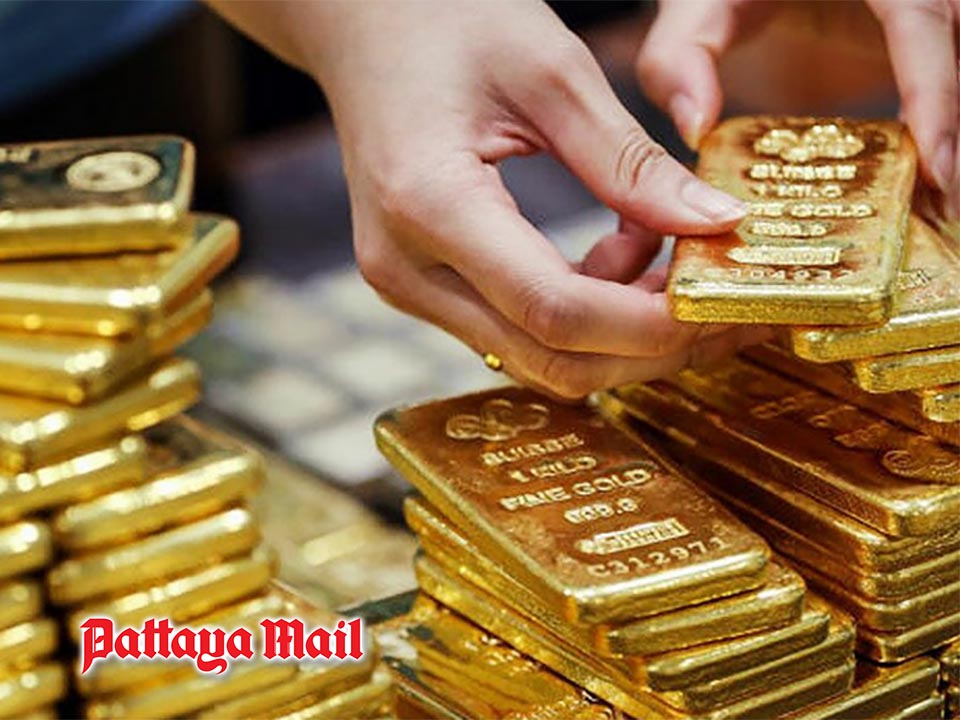
PATTAYA, Thailand – Thailand’s gold market is currently riding a historic surge, with prices climbing sharply amid a confluence of global and domestic factors. According to Pawan Nawawatthanasap, CEO of YLG Bullion International, global gold prices jumped $300 per ounce this week, surpassing $4,300. Translated into Thai baht, this puts gold at around 68,000 baht per baht-weight, and analysts suggest it could reach 80,000 baht by the end of the year if it breaks through $4,900 per ounce.
While the bullish momentum is undeniable, questions remain about the sustainability of these price levels. Pawan highlights short-term buying opportunities on pullbacks to $4,200–$4,100, $4,000, or even $3,700–$3,800 per ounce, reflecting a strategy aimed at riding the upward trend while mitigating risk. She also cautions that prices are unlikely to reach $5,000 per ounce without a major global shock that would push investors to liquidate almost all assets into gold.
Drivers Behind the Surge
Several global factors underpin the recent rally:
-U.S. Interest Rate Outlook: The Federal Reserve is widely expected to cut rates twice this year, with a 0.50% reduction anticipated, fueling gold’s appeal as a hedge.
-Political Influence on the Fed: The potential appointment of a dovish Fed chair aligned with Donald Trump’s stance raises concerns over central bank independence, reinforcing gold’s safe-haven status.
-Global De-dollarization: Central banks, especially in BRICS nations, are increasing gold reserves, purchasing over 1,000 tons annually in recent years, with 475 tons already acquired in H1 2025.
-U.S. Fiscal Instability: Rising U.S. national debt, currently $37 trillion, and recent federal government shutdowns amplify uncertainty.
Domestically, the surge raises both opportunities and risks. If Thai gold reaches 80,000 baht, the economic and social impact could be significant. While investors may profit, ordinary citizens could face sharply higher costs for jewelry, gifts, and savings. Gold has historically been seen as a store of wealth, but rapid price inflation may disproportionately benefit traders and investors while placing a strain on consumers.
The Bubble Question
Despite the strong upward momentum, Paworn asserts that Thailand is not facing a gold bubble yet, noting historical parallels with 1980, when gold rose 200% in a single year. Year-to-date, global gold has risen 64%, while Thai gold has gained 53%. Still, the speed of the current rally invites scrutiny. Rapid gains can attract speculative capital, and a sudden reversal could trigger market volatility, especially in a small domestic market like Thailand’s.
Investors should remain cautious. While global demand remains robust—from China, India, BRICS nations, central banks, and ETF funds—the interplay of international politics, currency fluctuations, and speculative flows could create risks that are easily overlooked in bullish sentiment.