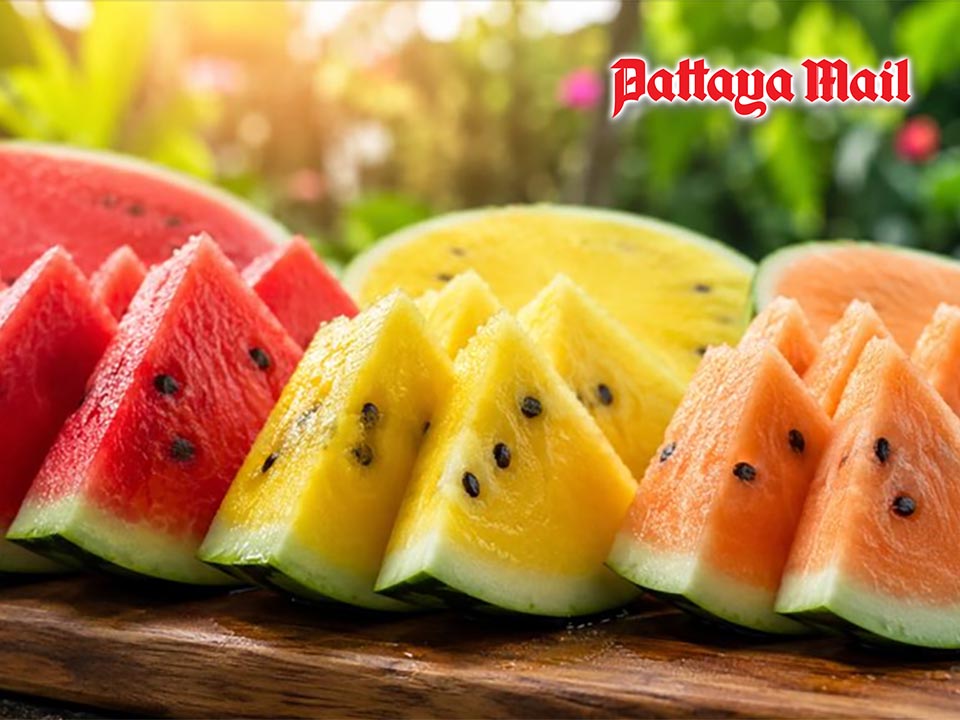
PATTAYA, Thailand – When people think of Thailand’s favorite fruit for beating the heat, watermelon is often one of the first that comes to mind. With its juicy flesh, refreshing sweetness, and high water content, watermelon has long been a popular choice during the country’s hot weather. For generations, many people were familiar mainly with the classic bright red watermelon. However, Thai farmers have continued developing and introducing new varieties, bringing more colorful options to markets across the country. Today, watermelons with yellow and orange flesh are becoming increasingly popular, offering not only eye-catching colors but also different textures, flavors, aromas, and nutritional qualities.
Red Watermelon: The Classic Favorite
Red watermelon remains the most familiar and widely enjoyed variety in Thailand. Popular varieties such as Kinnaree and Sonia are known for their juicy texture, refreshing sweetness, and, in some varieties, a soft and slightly grainy flesh when fully ripe. The flavor of red watermelon is typically bright and sweet, delivering the refreshing taste that has made it a long-time summer favorite. The deep red color comes from lycopene, a natural antioxidant also found in tomatoes. Lycopene is known for its antioxidant properties and is associated with supporting heart and blood vessel health while helping protect cells from damage caused by environmental factors.
Yellow Watermelon: A Gentle Sweetness
Yellow-fleshed watermelon varieties, including Run Run and honey watermelon types, have become increasingly common in Thai markets. Unlike red watermelon, yellow varieties usually offer a firmer, crisp texture with a slightly different eating experience. The flavor is often described as smooth and mild, with a gentle sweetness and a subtle honey-like aroma. Many people enjoy yellow watermelon for its delicate taste and refreshing texture. Its yellow color comes from carotenoids such as beta-carotene and lutein, natural compounds associated with eye health and supporting the body’s immune system.
Orange Watermelon: A New Favorite
Orange-fleshed watermelons, including varieties such as King Orange and Som Saen Dee, are newer additions that have attracted attention among fruit lovers. These varieties combine a crisp, slightly fluffy texture with balanced juiciness. Their distinctive feature is their sweet aroma and smooth flavor, which some people compare to cantaloupe or Japanese melon. The orange color comes from natural pigments that the body can convert into vitamin A. These nutrients are important for maintaining healthy skin and supporting normal body functions.
One Fruit, Many Benefits
Although each watermelon color contains different natural pigments and nutrients, all varieties share one important feature: they are made up of around 92% water, making them an excellent fruit for hydration and refreshing the body. Watermelon also contains citrulline, an amino acid that plays a role in blood vessel function and has been studied for its potential benefits related to circulation and blood pressure. With so many varieties now available, choosing watermelon no longer means selecting only between sweet or sweeter. Trying different colors can provide a wider range of flavors, textures, and natural nutrients while keeping one of Thailand’s favorite fruits at the center of a healthy and refreshing diet.