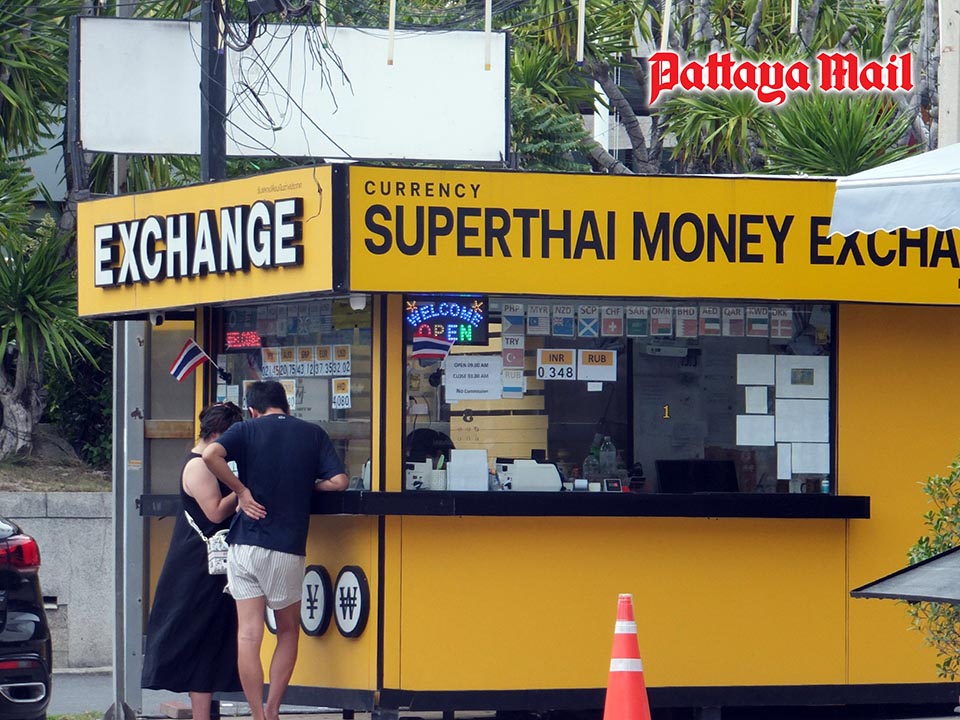
PATTAYA, Thailand – For Pattaya’s long-term visitors and foreign tourists, the romance of the Thai beach lifestyle is increasingly colliding with harsh economic reality. The baht recently strengthened past 31.7 against the US dollar, pushing the exchange rate below 32 and quietly shrinking wallets for those used to spending in dollars, pounds, euros, yen, or dirhams.
It’s not just those who rely on the US dollar — the economic strain extends to tourists from the UK with the pound, Europe with the euro, Japan, and even Gulf nations like Dubai and Kuwait. With local prices remaining largely stable while their currencies weaken against the baht, everyday expenses from hotel rooms to dining, drinks, and recreational activities have suddenly become more costly. For a city that depends heavily on discretionary spending, this shift matters.
According to Ms. Kanjana Chokpaisalsilp, a research executive at Kasikorn Research Center, the Thai baht closed at 31.77 per dollar on September 10, up slightly from 31.67 the day before. This comes after a period of strong appreciation, driven in part by global investors readjusting positions. While some may celebrate a “strong baht” as a sign of economic stability, in Pattaya it translates into noticeably thinner spending power for foreigners. Restaurants, shops, and tourist services are beginning to feel the pinch.
The US dollar’s recent strength, partly attributed to the chaos in Washington, has exacerbated the impact. “It’s not the Thai baht weakening — it’s the dollar being pumped up by political and economic mismanagement overseas,” one Pattaya-based expatriate remarked dryly, referencing the erratic US fiscal policies that continue to unsettle global markets.
Local financial flows underscore the shift. Foreign investors sold a net 1.8 billion baht in Thai stocks while simultaneously increasing their holdings in Thai bonds by over 4 billion baht. The result is a mixed picture: capital flows remain, but day-to-day tourism spending faces a squeeze as the baht’s strength makes luxury, dining, and leisure pricier for visitors who aren’t budgeting in local currency.
Economists warn the situation is unlikely to reverse quickly. Key factors to monitor include the Bank of Thailand’s policy stance on currency intervention, foreign fund flows, gold prices, ECB decisions, and upcoming US economic indicators, including CPI and weekly unemployment claims.
For Pattaya’s long-term residents and business owners, the concern is tangible: “It’s not the smiles or the beaches anymore — it’s the exchange rate that decides whether I stay or go,” a seasoned expat commented. While tourist arrivals remain robust, the spending power of each visitor is quietly eroding. In other words, Thailand may be enjoying strong headline numbers, but the economic reality on the ground tells a far more nuanced story.
Pattaya’s charm remains, but as the baht strengthens and global economic uncertainty looms, the city’s famously vibrant foreign-driven economy may start to feel the real bite of currency and policy shocks. Tourists who came expecting value are now recalculating their budgets, leaving local businesses to adjust to a subtle but significant shift in the flow of money.