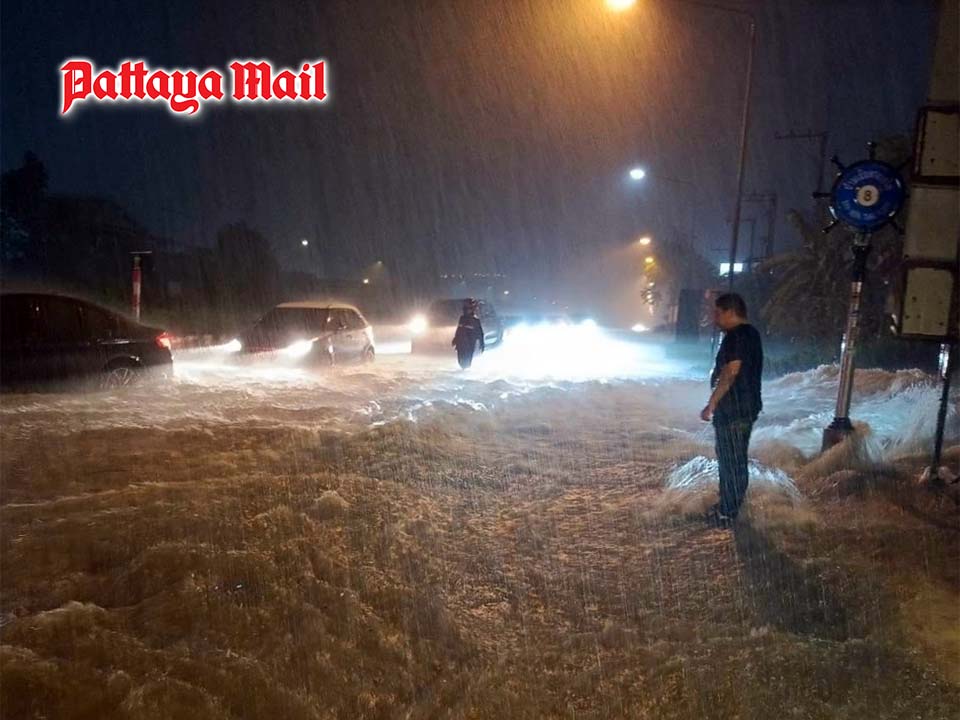
PATTAYA, Thailand – Once again, Pattaya finds itself under a 24-hour weather alert, as the Thai Meteorological Department warns of heavy rain and thunderstorms sweeping the upper regions of Thailand, including the eastern seaboard. The monsoon trough, combined with a moderate southwest monsoon, has turned familiar streets into potential flood zones, while local authorities scramble to keep pace.
Official warnings cite risks of flash floods, runoff, and water accumulation, especially in low-lying areas and near hill slopes. In theory, Pattaya’s floodgates, drainage pumps, and municipal response teams should be prepared—but in practice, past storms suggest a gap between preparation and reality. Heavy rains last year caused widespread waterlogging along Sukhumvit and Second Road, leaving residents and tourists wading through ankle- to knee-deep water. Reports of clogged drains, delayed response from city officials, and traffic paralysis continue to haunt Pattaya’s reputation as a reliable coastal city.
Fishermen and recreational boat operators are also on edge. The Andaman Sea and upper Gulf of Thailand are experiencing waves up to two meters, higher in areas of thunderstorms. Yet local advisories often fail to reach long-tail boat operators and small tour operators in time. Pattaya’s waters may be calmer than the Andaman, but the city’s reliance on tourism means any disruption has outsized consequences.
Residents in neighborhoods prone to flooding remain skeptical of repeated “24-hour alerts.” Many cite repeated failures to manage drainage, blockages in canals, and insufficient public communication during previous storms. While authorities urge caution and the use of emergency contacts, there’s little evidence of lasting infrastructure improvements.
The core question remains: will Pattaya manage to withstand this monsoon better than past seasons, or will the city once again be caught flat-footed, with streets, shops, and tourist areas submerged, despite a full day of alerts? Until municipal planning and flood prevention are taken seriously, a 24-hour warning may feel more like a routine press release than an actual lifesaving measure.
Pattaya is a popular tourist hub, but repeated weather disruptions highlight the urgent need for long-term flood mitigation and emergency preparedness that goes beyond temporary alerts and superficial readiness drills. Residents and visitors alike deserve more than just warnings—they deserve actionable safety measures and infrastructure that can withstand Thailand’s increasingly unpredictable monsoon season.