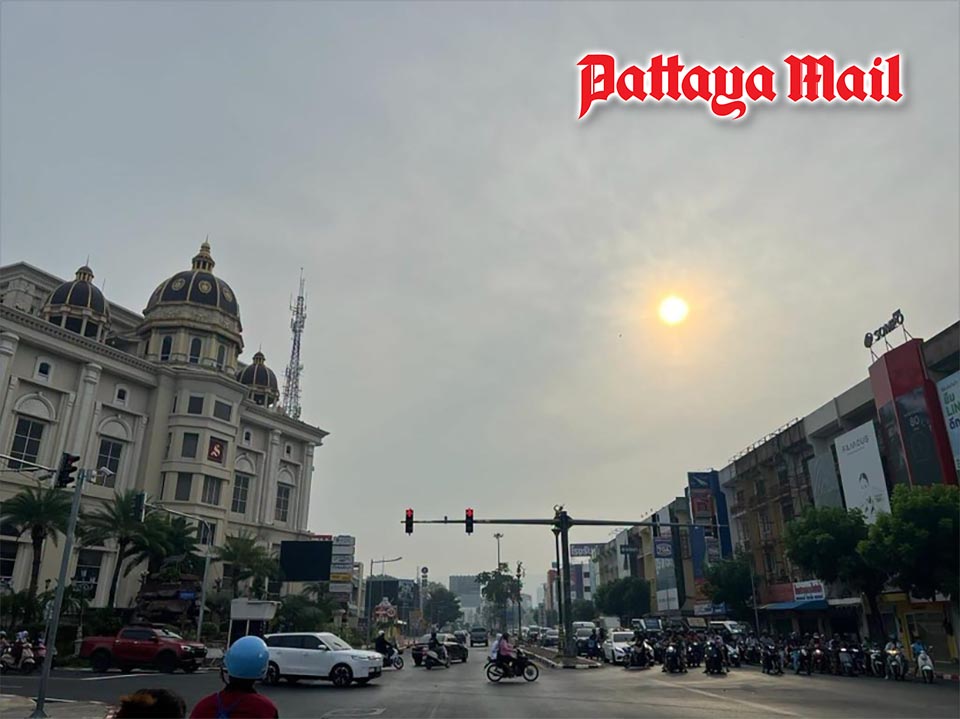
HAT YAI, Thailand – Residents across southern Thailand are being urged to prepare for deteriorating air quality after PM2.5 levels began rising in several areas, with haze reported across parts of the southern border provinces. The Air Pollution and Health Impact Research Center at Prince of Songkla University said PM2.5 concentrations in several southern provinces, particularly the lower South, had increased into the moderate air-quality range. In Hat Yai, Songkhla, hourly PM2.5 readings during the evening had climbed steadily to around 30 micrograms per cubic metre. Similar increases were reported in Pattani, Phatthalung, Satun, Phuket and Yala.
The research center said the situation was linked to regional smoke haze, with the ASEAN Specialised Meteorological Centre (ASMC) maintaining Alert Level 2 for the southern ASEAN region amid increased hotspot activity in Indonesia. ASMC’s latest regional haze monitoring shows clusters of hotspots in West and South Kalimantan, along with isolated hotspots in central and southern Sumatra. Moderate to dense smoke plumes have also been observed over parts of Kalimantan and Sumatra. The prevailing winds in the southern ASEAN region are expected to blow from the southeast to southwest in the coming days, while dry conditions are forecast to persist across many areas. These conditions could increase the risk of transboundary haze if hotspot activity continues.
The regional haze situation has already affected neighbouring Malaysia, where several areas of Sarawak have recorded unhealthy air quality amid smoke drifting northward from Kalimantan.
Residents in southern Thailand are therefore being advised to monitor air-quality readings, particularly during periods when haze becomes more visible or PM2.5 concentrations increase.
The research center has urged vulnerable groups, including children, older people and those with respiratory conditions or allergies, to reduce outdoor activities during periods of elevated pollution.
People who need to go outdoors are advised to wear masks capable of filtering PM2.5 particles and to limit prolonged exposure to polluted air.
Residents can monitor real-time PM2.5 levels and air-quality conditions through Thailand’s official Air4Thai website and application. Authorities and researchers are continuing to monitor the movement of regional smoke and weather conditions, with the situation expected to depend heavily on hotspot activity, rainfall and prevailing winds across southern ASEAN.