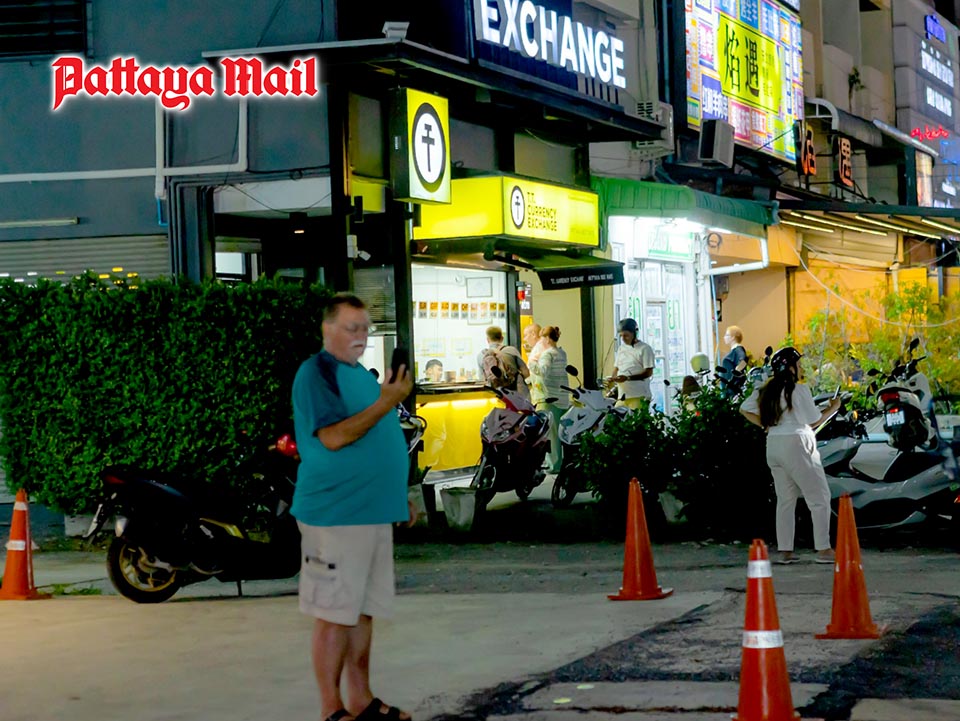
PATTAYA, Thailand – Long-stay tourists and short-term visitors arrive in Pattaya expecting sun, nightlife, and a vibrant tourism scene—but when it comes to currency, the Thai baht is giving mixed signals. For those exchanging dollars, a weaker baht could have been a boon, but with rates expected to stay around 31–32 per US dollar through the end of the year, spending power is constrained—sad but true.
Analysts at SCB Financial Markets say a combination of factors—Fitch Ratings’ downgrade of Thailand’s credit outlook to “negative,” weak August exports, slowing domestic consumption, and global financial pressures—keeps the baht from falling further. For incoming tourists, a softer baht could have meant more value for every dollar spent on hotels, food, nightlife, and excursions. Instead, the currency remains stubbornly soft, allowing only modest gains in spending power.
Tourism operators in Pattaya were hoping for a softer baht in the 36–38 range, which would have significantly boosted visitor spending and accelerated the city’s recovery. At 31–32, long-term visitors and retirees still feel the pinch, forcing careful budgeting despite the city’s allure. It squeezes those depending on fixed pensions, who find themselves standing on tiptoe every time they check the exchange rates, hoping for even a slight improvement in their spending power.
The reality is clear: the baht’s current range gives some relief to incoming tourists, but it is not enough to fully energize Pattaya’s tourism sector. Until Thailand’s fiscal policies, export performance, and economic fundamentals improve, visitors will have to bear it—and the city’s tourism rebound will grow at a slower pace than hoped. Many are reluctant to spend freely on extras like beers, drinks for ladies, or companion services, tightening budgets even further despite the city’s attractions.