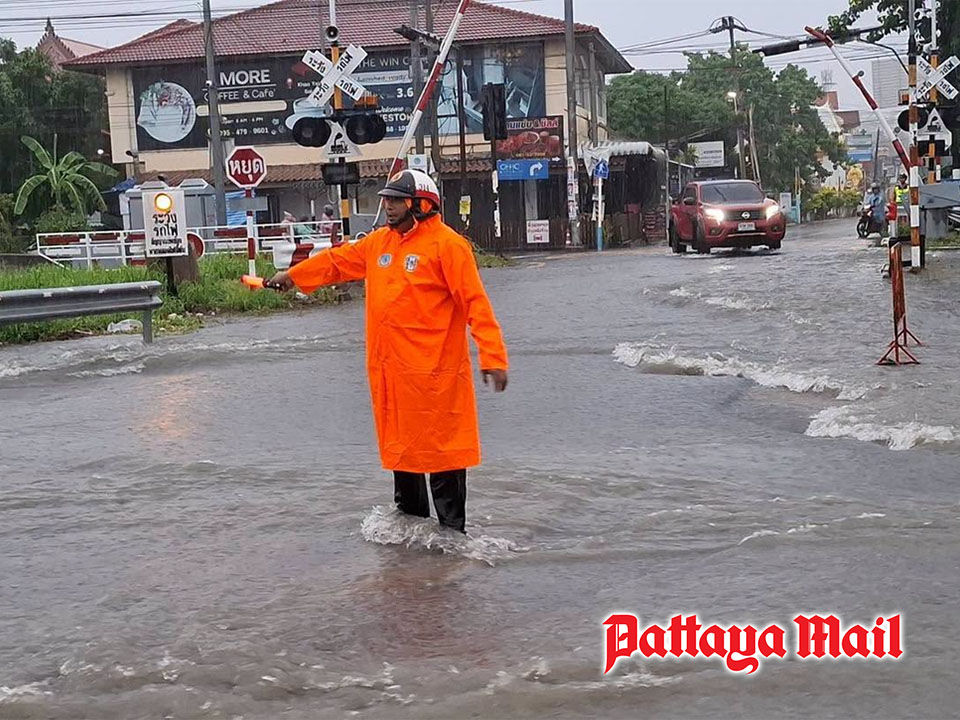
PATTAYA, Thailand – Heavy rainfall once again tested Pattaya’s flood defenses as parts of the city were temporarily submerged, disrupting traffic and prompting concerns among residents, businesses and tourists. Despite dramatic scenes of flooded streets, the water receded within hours after the rain stopped, allowing roads and daily activities to quickly return to normal. The latest flooding underscored Pattaya’s ongoing challenge of coping with intense downpours during Thailand’s rainy season. Several major roads experienced temporary water accumulation, slowing traffic and forcing motorists to navigate flooded sections with caution, while city officials and emergency personnel were deployed to assist road users and monitor conditions.
Officials said the flooding was caused by exceptionally heavy rainfall over a short period rather than overflowing waterways. The Pattaya City administration said many flooding incidents are temporary water accumulation caused by intense rain, with water levels often returning to normal within a few hours thanks to ongoing drainage improvements and faster water discharge. In recent years, the city has invested heavily in expanding drainage capacity, replacing ageing pipes and improving flood-prone intersections. While these projects have helped reduce the duration of flooding in many areas, residents continue to call for further upgrades to prevent recurring problems during periods of intense rainfall.
The latest flooding came as Thailand remains under the influence of the southwest monsoon, with weather authorities warning of heavy rain, flash floods and runoff in many provinces. Although Typhoon Bavi is not expected to directly affect Thailand, the storm may enhance monsoon conditions over parts of the country, bringing periods of heavy rain and rough seas. For Pattaya, the rainy season serves as a reminder that while progress has been made, flood management remains one of the city’s most important infrastructure priorities. Officials continue to advise motorists to avoid flooded roads, monitor weather forecasts and exercise caution during periods of heavy rain, particularly in low-lying coastal areas.