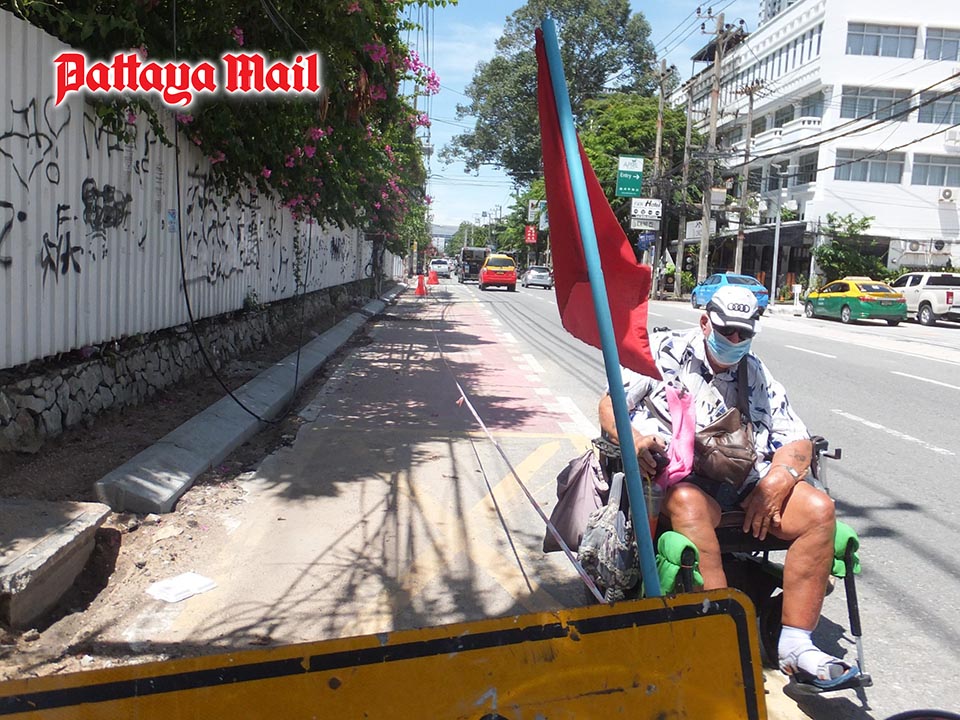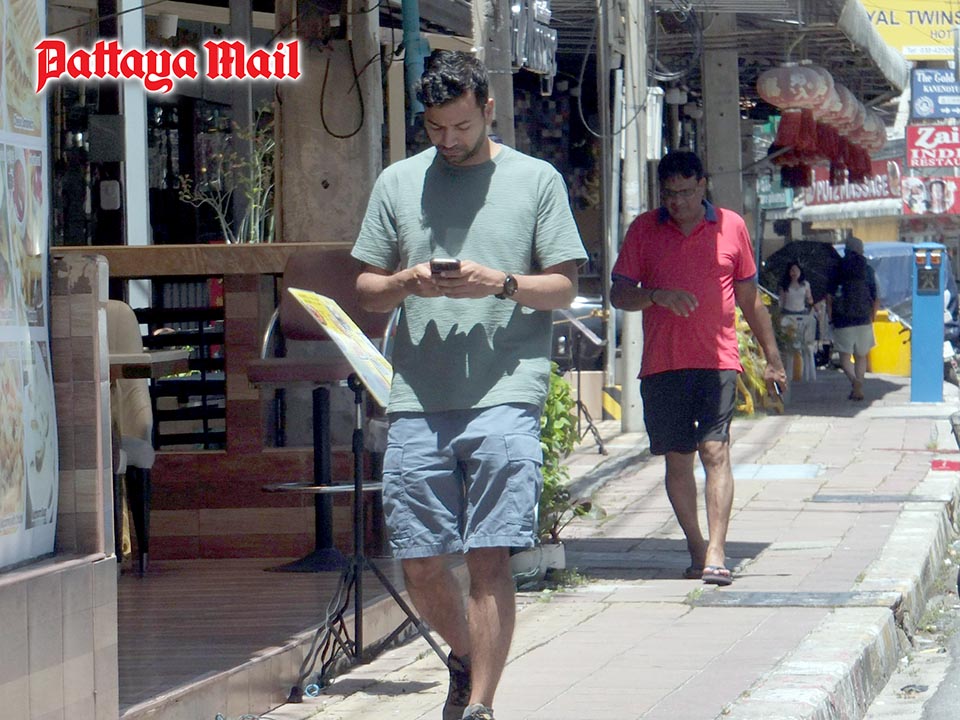
PATTAYA, Thailand – For visitors to Pattaya and many tourist spots across Thailand, the lack of functional sidewalks is more than an inconvenience—it’s a hazard. Foreign tourists, especially those with mobility or visual impairments, often face city streets where sidewalks vanish, are blocked, or are perilously unsafe. A simple stroll can turn into a struggle through uneven pavement, potholes, street vendors, motorcycles, and casual street clutter.
Even well-meaning infrastructure, such as braille tiles for the visually impaired, can become a trap. Tourists report being guided into poles, steep curbs, or abrupt drops, showing a gap between accessibility intentions and actual safety. Crowded stretches like Pattaya’s Second Road, from Central Pattaya to Soi 6, exemplify the problem: sidewalks, if they exist at all, are obstructed by businesses, pedestrians, and traffic spilling from nearby streets.
Many foreign visitors choose to walk on the road itself, often facing oncoming traffic to avoid broken, blocked, or nonexistent sidewalks. After dark, they tend to stay home, citing poor lighting and chaotic footpath conditions. For long-term tourists and wheelchair users, the lack of reliable pedestrian infrastructure limits mobility and undermines Pattaya’s reputation as an accessible international destination.

The issue is not unique to Pattaya. Cities across Thailand—from Bangkok to Chiang Mai—struggle with footpath maintenance, encroachments by street vendors, and a prioritization of vehicles over pedestrians. Sidewalk neglect signals deeper systemic problems: urban planning that prioritizes traffic flow and commercial interests over pedestrian safety, and a lack of enforcement that leaves sidewalks effectively unusable.
For Thailand to truly cater to international visitors—and to its citizens with disabilities—sidewalks must be treated as critical infrastructure rather than optional extras. Until then, tourists will continue to navigate a cityscape where walking is risky, pedestrian rights are ignored, and the simple pleasure of a city stroll remains out of reach.