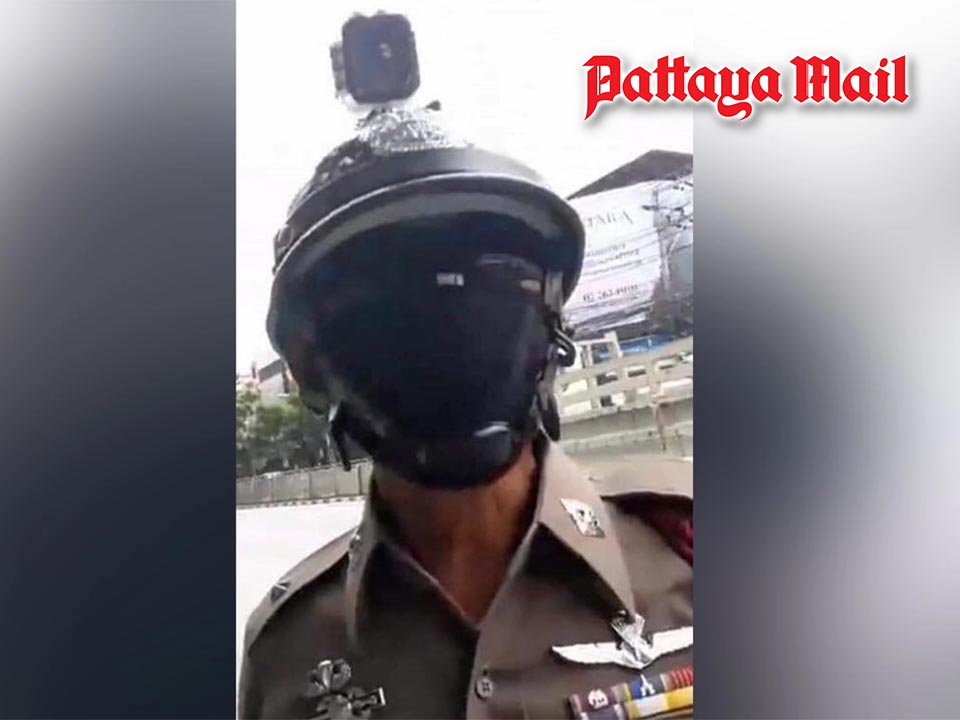
PATTAYA, Thailand – Following Pattaya Mail’s report, “Thai police chief bans face-covering hoods, suspends checkpoints in extreme heat,” reader Tyron Moussa would like to raise a broader concern about traffic enforcement in Thailand.
I believe authorities should carefully review the use of TikTok and other social media platforms by police officers who film members of the public at traffic checkpoints to build personal followings, attract subscriptions or increase online visibility.
Enforcing the law is distinct from using a position of authority to create personal social media content. This concern is particularly serious when officers appear to take unnecessary risks in stopping riders, not solely for legitimate enforcement purposes, but also to produce riding-related content or promote their online profiles.
To be clear, individuals who ride without helmets, operate unroadworthy vehicles or commit genuine traffic offences should be dealt with appropriately. Nobody is above the law. However, enforcement should be fair, professional and consistent, not focused on humiliation, online attention or making ordinary motorists feel targeted. Officers should not endanger themselves, riders or other road users to produce social media content.
There are cars and trucks on the roads with bald tyres and obvious defects, yet a disproportionate amount of attention sometimes appears to be directed towards superbike riders because of their exhaust systems. Noise violations should be assessed objectively. If a motorcycle exceeds the legal noise limit, it should be measured using the correct equipment and procedures, and the law should then be enforced accordingly. An assumption based solely on how loud a motorcycle sounds is not a sufficient substitute for proper testing.
Some small scooters, including PCXs and Honda Clicks, also have aftermarket exhausts that produce excessive noise. Standards should apply consistently, regardless of vehicle type. At the same time, Thailand may wish to consider whether a separate registration or licensing framework for high-performance superbikes, with clearly defined technical standards and appropriate fees, would provide a more suitable regulatory approach.
I also recognize that some foreign riders behave irresponsibly on Thai roads. Dangerous riding, reckless overtaking and conduct that places others at risk should not be defended. However, the actions of a minority should not be used to judge every foreign rider, particularly those who maintain their motorcycles, hold valid licenses and ride responsibly.
The wider picture must also be considered. Reckless driving and dangerous riding are not limited to foreign nationals. Thai motorists and motorcyclists can be equally irresponsible, and anyone who regularly uses these roads is aware of the risks.
The point is simple: enforce the law, but enforce it fairly. Police officers deserve respect when they perform their duties professionally, and the public deserves the same respect in return. A traffic checkpoint should focus on road safety and lawful enforcement, not entertainment, online subscriptions or personal promotion. Officers should not undertake unnecessary pursuits or abrupt stops merely to film riders or generate social media engagement.
If senior police officers are being encouraged to show greater compassion at checkpoints, the next step should be to ensure that compassion is accompanied by consistency, professionalism and accountability. This should include clear rules governing the use of enforcement activities and footage of members of the public for personal social media promotion. Respect the law, respect the public, and do not treat responsible riders as automatic suspects simply because they ride a superbike.