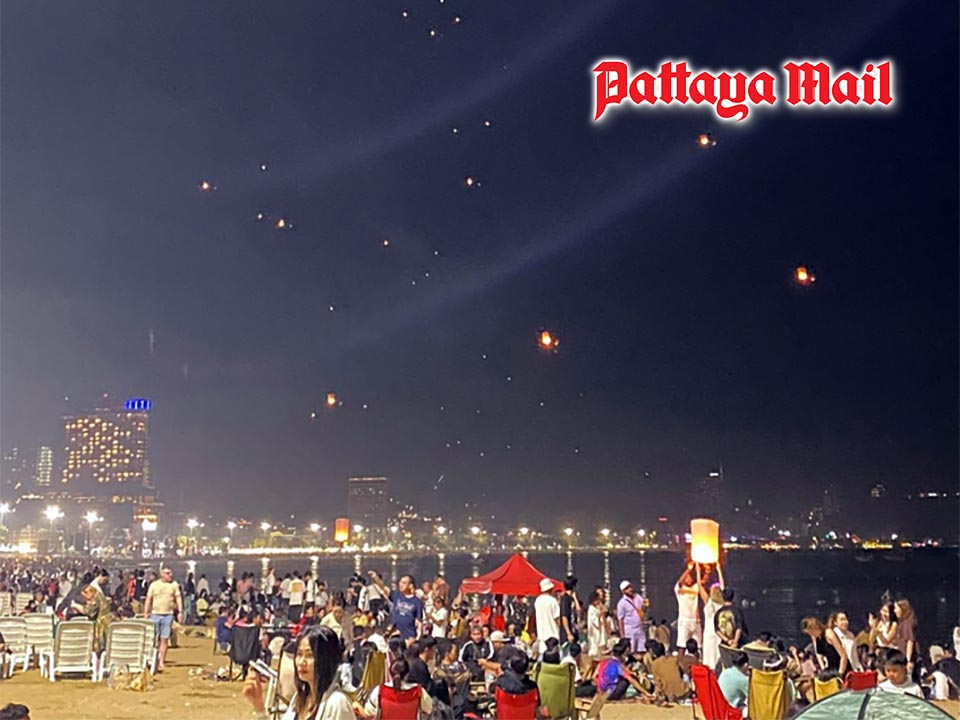
PATTAYA, Thailand – Despite annual warnings, patrols, and repeated reminders, flying lanterns once again filled Pattaya’s night sky during New Year celebrations — only to come down scattered across the sea and shoreline hours later.
This year, many residents say the number of lanterns was noticeably higher than in previous years. By morning, the result was plain to see: lantern frames and burned paper floating in the water, washing up along the beach, and drifting into marine areas already under environmental pressure.
The issue is not new. Pattaya City and relevant agencies regularly announce measures banning or restricting flying lanterns due to fire risks, aviation safety concerns, and environmental damage. Patrols are deployed. Warnings are issued. Yet every New Year, enforcement appears to fade the moment celebrations begin.
Lanterns released along the beach do not simply disappear. They fall — onto rooftops, into the sea, onto boats, or into coastal ecosystems. What begins as a fleeting moment of celebration often ends as debris, danger, or pollution handled later by clean-up crews rather than prevented in the first place.
Residents and long-term visitors question how such a visible activity continues unchecked in one of Thailand’s most heavily policed tourist zones. Pattaya Beach is monitored by city officials, tourism police, and security teams, especially on New Year’s Eve. Yet lanterns are launched openly, in full view, with little intervention.
The problem highlights a familiar weakness: regulations exist, but consistent enforcement does not.
Pattaya promotes itself as a world-class beach destination. That image depends not only on fireworks and festivities, but also on responsible management of public space and the marine environment. Allowing lantern debris to end up in the sea undermines that message and places unnecessary strain on cleanup workers and environmental volunteers.
As Pattaya looks ahead to future festivals and peak tourism nights, residents are calling on relevant agencies to move beyond announcements and patrols on paper, and toward visible, effective action on the ground — before celebration once again turns into cleanup.