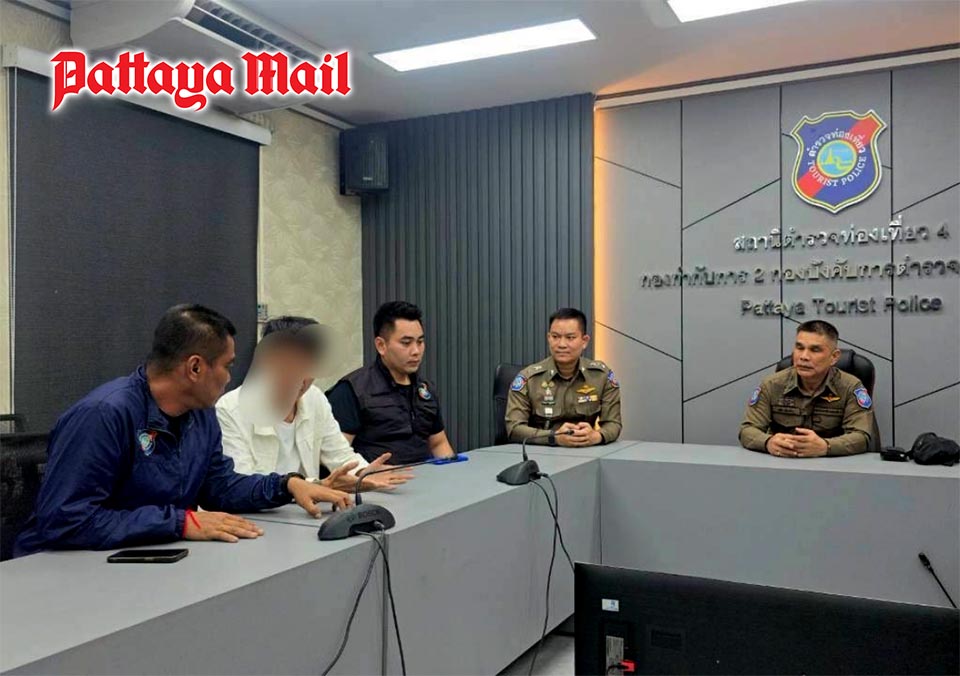
PATTAYA, Thailand – Thai Immigration Police in Chonburi, working jointly with Pattaya Tourist Police, have rescued a Chinese national who was allegedly kidnapped and held for ransom by fellow countrymen at a hotel in central Pattaya. One suspect has been arrested, while authorities are pursuing another who remains at large.
The operation was led by Pol. Col. Naphatphong Khositsuriyamanee, Superintendent of Chonburi Immigration, together with officers from Chonburi Immigration and Tourist Police Division 4, following a complaint filed by the victim’s wife.
According to police, the victim, a 32-year-old Chinese man identified as Mr. Liu, arrived at Suvarnabhumi Airport on February 7. He was later persuaded by Chinese acquaintances to participate in gambling activities, where he was allegedly told he had lost 300,000 baht. The suspects then demanded ransom payments, pressuring his wife to transfer 3,000 USDT (approximately 100,000 baht) in digital currency.
In the early hours of February 10, the victim managed to send his location via Telegram, indicating he was being held at a hotel on Pattaya South Road. Officers rushed to the scene and discovered the hotel room locked from the outside. Police forced entry and found the victim inside, along with one suspect, a 33-year-old Chinese national identified as Mr. Liang.
A second suspect, identified as Mr. Zhang, 32, was not present at the scene. Authorities have since moved to suspend his passport and are actively tracking him down.
Mr. Liang has been charged with jointly detaining and extorting a person for ransom. He has denied the allegations. The victim was safely rescued and is now under police protection.
Thai authorities have issued a warning to tourists to remain cautious of gambling invitations and digital money transfers involving unverified individuals, noting that such schemes are increasingly linked to transnational crime networks.