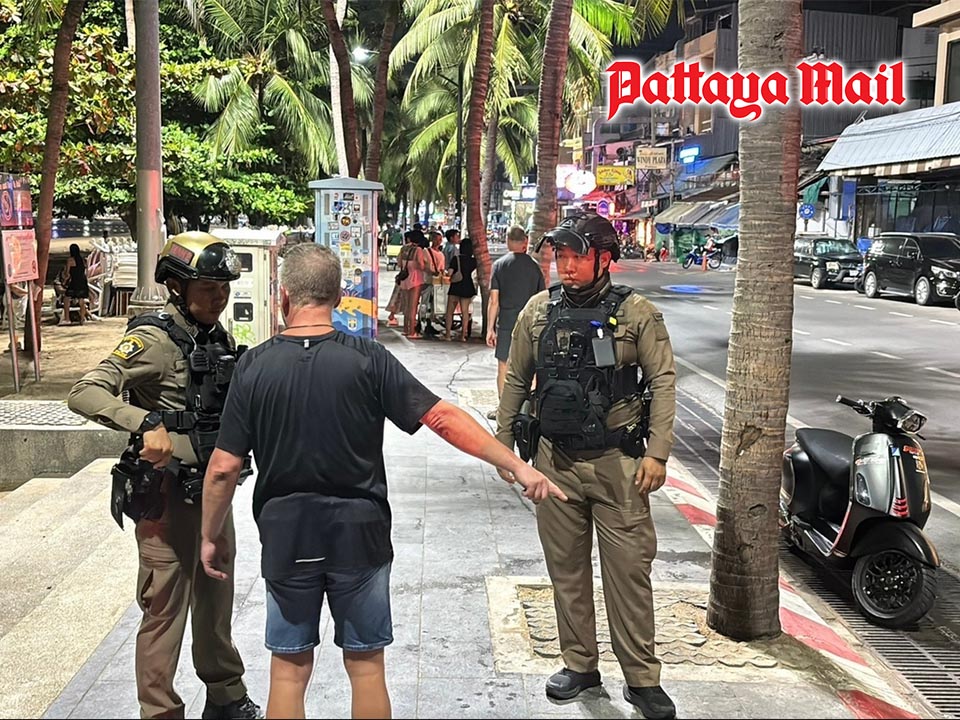
PATTAYA, Thailand – A recent assault involving a German tourist on Pattaya Beach has reignited debate over who bears responsibility when street crime occurs in the city’s nightlife zones.
While authorities have pledged stricter enforcement against theft and disorder along Beach Road and Walking Street, public reaction has once again split into two camps — those blaming organized street gangs and those pointing to risky behavior by some visitors themselves.
In online forums and expat circles, some argue that certain tourists arrive in Pattaya ill-prepared for its late-night environment, mixing alcohol, unfamiliar surroundings and impulsive decisions. Others counter that no matter the circumstances, robbery and assault are criminal acts that cannot be excused or shifted onto victims.
Local officials have periodically launched high-visibility crackdowns targeting theft rings, unlicensed operators and street disturbances. These enforcement campaigns often produce short-term improvements and strong headlines, but critics say consistency remains the key challenge.
Business owners along Beach Road acknowledge the delicate balance. Pattaya’s economy depends heavily on international tourism, including nightlife-driven spending. At the same time, maintaining a perception of safety is essential for long-term sustainability.

Some long-term residents say tensions flare whenever incidents involve gender identity or nightlife workers, with public discussion quickly turning emotional. Advocacy groups have also warned against stereotyping entire communities based on isolated criminal cases, emphasizing that the vast majority of workers in entertainment zones are law-abiding.
Police have reiterated that theft, assault and intimidation will not be tolerated, regardless of who is involved. They are also urging visitors to exercise common-sense precautions — avoid excessive intoxication, remain aware of surroundings, and report suspicious behavior promptly.
Tourism analysts note that Pattaya has always thrived on its vibrant, sometimes chaotic energy. However, as visitor numbers continue to rebound strongly since January, expectations around safety and professionalism are rising as well.

For many observers, the larger issue is not assigning blanket blame to tourists or local workers, but addressing repeat patterns of street-level crime before they damage the city’s global reputation.
As one hospitality operator put it, “Pattaya can handle nightlife — it always has. What it can’t afford is the perception that disorder runs the beach.”
With authorities promising renewed patrols and targeted enforcement, the coming weeks will show whether the latest incident becomes another brief flare-up — or a turning point in how the city manages safety in its most visible tourism zones.