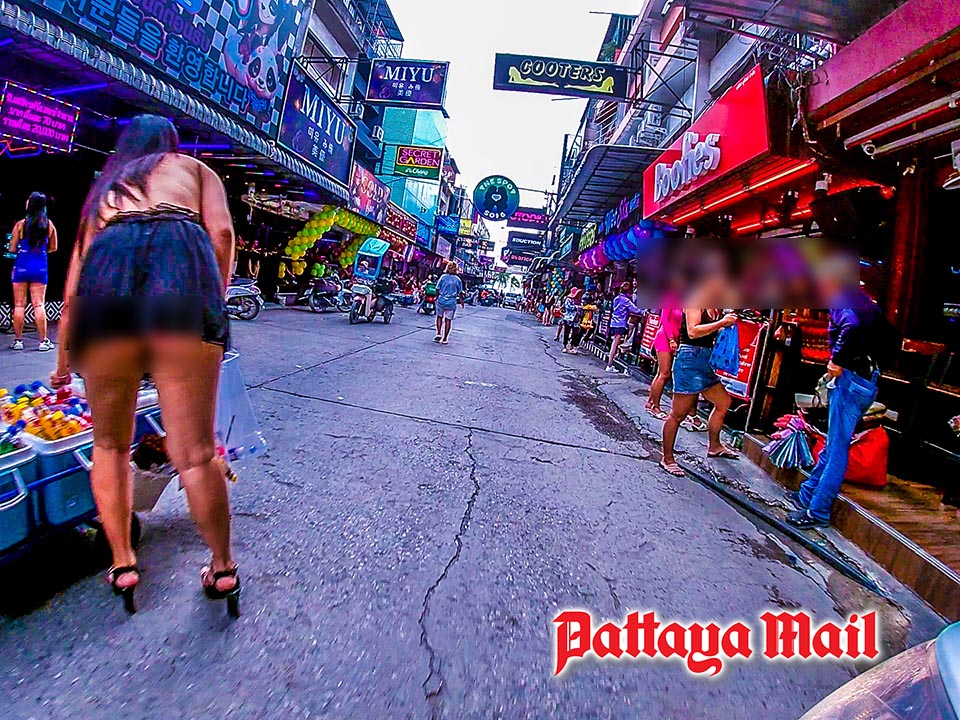
PATTAYA, Thailand — Pattaya may be known for its bright lights and nightlife, but behind the city’s neon glow, bar workers and small entertainment businesses are facing a difficult green season as fewer tourists translate into lower incomes. Many nightlife venues remain open during the quieter period, but customer numbers are well below those seen during the high season. Workers are relying more heavily on tips and customer spending, while everyday costs such as rent, food, transportation and family expenses continue regardless of how busy the streets are.
A survey of Pattaya’s entertainment areas on September 1 found that many venues were operating normally but seeing noticeably fewer customers. Some workers were spending more time outside venues inviting customers in and promoting their businesses, while some operators were reducing the number of staff working each shift to control costs. For smaller businesses, the challenge is keeping the doors open long enough to reach the high season. Rent, wages, electricity, water and other fixed expenses continue even when revenues fall, leaving some operators concerned they may not have enough financial reserves to make it through the quiet months.
A female bar worker in her 20s or 30s described the impact of the slowdown, saying that she can arrive at work in the early evening but sometimes waits until late at night before seeing customers.
She said her income depends not only on wages but also on tips and money spent by customers. When visitor numbers fall, her earnings immediately decline, while her rent, food and other living expenses remain unchanged.
She said she does not expect anyone to give her money, but simply wants more tourists to visit Pattaya so that she can work and send money home to her family. Older workers face additional challenges. A female bar worker in her 40s or 50s said finding alternative employment becomes increasingly difficult with age, particularly for those who still have children or elderly parents to support.
She said that some nights leave little money to save, but she continues working because stopping means having no income to take home. Business owners are also feeling the pressure. Bar owner said the green season affects not only business owners but workers and other people throughout the tourism chain, including drivers, restaurant employees and small vendors.
He said operators want to keep their businesses open and continue employing staff, but when customers are scarce, income may not cover rent, utilities, wages and other monthly expenses.
Businesses with stronger financial reserves may be able to wait for the high season, he said, but some smaller operators may not be able to survive until tourism picks up again. He also said tourism promotion should be continuous rather than relying on a particular group of visitors or short-term events.
The recent arrival of about 5,000 US Navy personnel has generated optimism among Pattaya’s tourism and entertainment businesses, but some operators view the visit as a short-term injection rather than a long-term solution. While large groups of visitors can bring significant spending to the city, businesses need tourists arriving consistently throughout the year. Once a particular event or visitor group leaves, smaller businesses can quickly return to the same quiet conditions. At the national level, the Ministry of Tourism and Sports is promoting the “Thai Tiew Thai Plus” domestic tourism initiative to stimulate travel during the green season. The scheme is designed to encourage domestic spending and distribute tourism income more widely among businesses and communities.
The government has also proposed a tourism fee for foreign visitors, with revenue intended for tourism development, tourist safety and environmental rehabilitation. The policy is part of a broader effort to build a more sustainable tourism system over the longer term. For Pattaya’s nightlife workers, however, the immediate concern remains much simpler: having enough customers to earn a living.
Under the neon lights and colourful signs of the entertainment districts, the quiet nights are a reminder that Pattaya’s tourism economy depends on thousands of workers and small businesses operating at the bottom of the tourism chain. They are not simply looking for sympathy. They need customers, businesses need sustainable revenue, and Pattaya needs tourism spending to circulate throughout the city all year.
The challenge for future tourism measures will be ensuring that increased visitor numbers translate into income not only for major hotels and attractions, but also for the small businesses and workers who depend on Pattaya’s daily tourism economy.