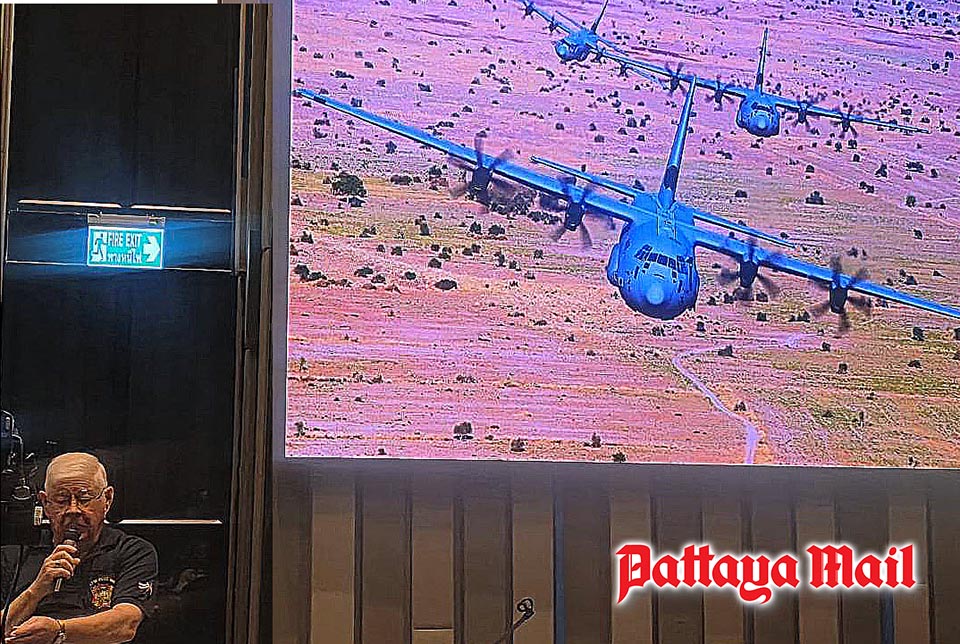
PATTAYA, Thailand – Members and guests of the Pattaya City Expats Club (PCEC) were treated to a vivid and deeply personal account of military service on April 8, 2026, as U.S. Air Force veteran Dave Anderson delivered a compelling presentation recounting his experiences during the Vietnam War and the Cold War. The presentation combined technical insight with powerful storytelling, offering attendees a rare glimpse into the realities of military aviation and life in combat zones.
Dave began his talk by describing his upbringing in North Dakota and his decision to join the Air Force during the era of the draft. Motivated by both duty and a long-standing desire to fly, he entered a rigorous training pipeline that included officer training and highly technical navigator schooling. He was soon assigned to the C-130 aircraft, where he began his operational career as a navigator.
One early experience left a lasting impression: the fatal crash of a crew that pushed unsafe conditions in poor weather. Anderson described how this tragedy shaped his lifelong approach to aviation safety, warning against the dangers of “get-home-itis,” or the pressure to complete a mission despite risks.
A significant portion of the presentation focused on Anderson’s deployment during the Vietnam War. He described flying long-duration reconnaissance missions over Southeast Asia, involving electronic surveillance and signal interception in highly classified operations. These missions, often lasting up to 12 hours. One particularly dramatic moment occurred when Anderson’s aircraft experienced engine trouble while supporting a rescue operation. Despite the risk, the crew remained on station, using electronic warfare techniques to disrupt enemy communications and protect downed American personnel.
Later in his tour, Dave joined a covert special operations unit tasked with low-level night missions. These flights required flying as low as 500 feet using terrain-following radar in hostile territory and involved inserting small teams behind enemy lines. In one notable mission in Cambodia, a team was dropped in severe weather near enemy forces and immediately required emergency extraction. The situation underscored the ever-present danger faced by both aircrew and ground teams.
Beyond operational details, Dave spoke candidly about the emotional toll of the war. He recalled witnessing the struggles of fellow service members, including an incident involving a soldier’s overdose on the journey home—a moment that highlighted the psychological scars of combat.
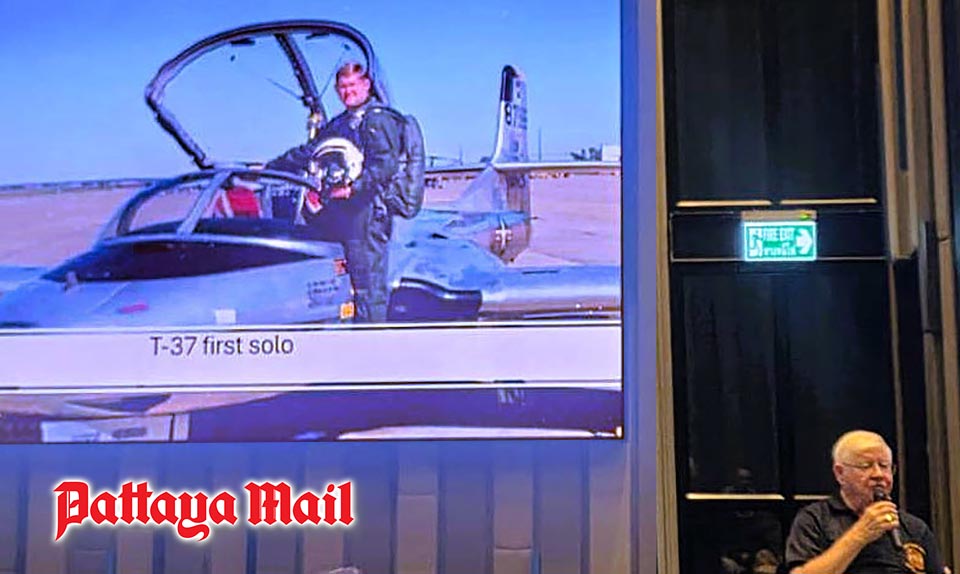
In a rare career transition, he was selected for pilot training. Dave described his progression through various training aircraft, including Cessna trainers and jet aircraft such as the T-37 and T-38. This new role marked the beginning of the next phase of his career.
Following his service in Vietnam, Dave was stationed in Europe, where he flew high-level diplomatic and transport missions. His assignments included transporting government officials, supporting U.S. ambassadors, and operating in sensitive Cold War air corridors to Berlin. He also assisted in multinational operations under the CENTO alliance, navigating logistical challenges across countries such as Turkey, Iran, and Pakistan.
Throughout the presentation, Dave emphasized the importance of teamwork, discipline, and decision-making under pressure. His experiences highlighted the complexities of military logistics, the necessity of precision in aviation, and the value of strong leadership. The presentation concluded to enthusiastic praise from PCEC attendees, many of whom described the talk as “like a miniseries” due to its vivid and cinematic storytelling. Dave said he would do a future follow-up talk focusing on his later career flying the C-5 aircraft, currently the largest cargo plane flying.
After the presentation, MC Ren Lexander brought everyone up to date on upcoming Club events. This was followed by the Open Forum where questions are asked and comments made about Expat living in Thailand. To learn more about the PCEC, visit their website at https:/pcec.club. To view the video of the presentation, visit the PCEC’s YouTube Channel at https://www.youtube.com/watch?v=yRK8LXykhBI.